🧢 Beautiful ✨ Detailed πŸ’ Adorable

Penny, The Tennis Player Amigurumi Pattern

Penny, The Tennis Player Amigurumi Pattern
4.3β˜… Rating
8-10 Hours Time Needed
3.4K Made This
βœ‚οΈ

Intermediate Level

Ideal for those with basic crochet experience, featuring slightly more advanced stitches and techniques to expand your skills.

⏱️

All-Day Adventure

Requires 8-10 hours, ideal for a full day of immersive crocheting.

🧸

Cute Companion

An adorable friend to cherish, handcrafted with love to bring comfort and joy for years to come.

About This Penny, The Tennis Player Amigurumi Pattern

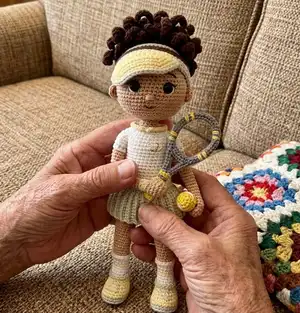
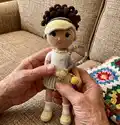
This pattern creates a 11.02 inch (approx) crochet doll named Penny, styled as a tennis player with a skirt, visor, racket and ball. The design features a wired skeleton for poseability, detailed sneakers and wristbands, and embroidered T-shirt logo. Instructions include shaping for head, arms, legs, body, skirt and finishing notes for accessories.

Penny, The Tennis Player Amigurumi Pattern crochet pattern - detailed view of completed project

You will learn color-changing techniques, working in BLO/FLO, 3dc bubble stitch, and assembling wired limbs. Photos and video links are referenced for specific techniques like making the oval foot and triple decrease.

Why You'll Love This Penny, The Tennis Player Amigurumi Pattern

I absolutely love this pattern because it balances charming detail with clear shaping, giving you a finished doll that looks professionally made. I enjoyed designing the little tennis outfit and adding a wired skeleton so Penny can be posed. The combination of tiny accessories β€” visor, racket and ball β€” makes the project fun and rewarding. I find the color-change sections and pleated skirt especially satisfying, and they let you personalize Penny's style easily.

Penny, The Tennis Player Amigurumi Pattern step 1 - construction progress Penny, The Tennis Player Amigurumi Pattern step 2 - assembly progress Penny, The Tennis Player Amigurumi Pattern step 3 - details and accessories Penny, The Tennis Player Amigurumi Pattern step 4 - final assembly and finishing

Switch Things Up

I love how easy it is to customize Penny with different color palettes; you can swap the sporty yellow and grey for bright pinks or classic navy and white to match your style.

If you want a bigger doll, choose a bulkier yarn and a larger hook β€” the whole pattern scales up nicely, giving you a chunkier, cuddlier version.

For a mini keychain, change to finer thread and a smaller hook and reduce the wire skeleton; this creates a tiny portable Penny perfect for bags.

I often add embroidered facial expressions or small accessories like a tiny headband or a necklace to personalize each doll's personality.

Try different skirt styles: longer pleats, a simple skirt, or a pair of shorts to alter the character's look without changing body shaping.

Play with hair styles β€” add longer curls, braids, or a bun using the same brown yarn to give Penny a new personality each time I make her.

Instead of safety eyes, I sometimes embroider eyes for a softer, child-safe toy version that’s ideal for little ones.

Add a tiny removable outfit by crocheting a little jacket or sweater that fits over the body so you can change Penny's look after finishing the base doll.

I also like to paint the racket with different patterns and add small decals using polymer clay for an individualized accessory set.

For a display set, make a series of Pennis in varying colors and poses β€” they look great grouped together and show the versatility of the pattern.

Common Mistakes & How to Fix Them

βœ— Skipping stitch markers when joining legs to the body causes misaligned seams; place a marker exactly at the back before joining to keep placement consistent. βœ— Overstuffing the head or limbs leads to a distorted shape and difficulty attaching parts; stuff gradually and firmly but allow some flexibility for joining. βœ— Changing thread colors without securing tails can make seams loose and messy; carry or weave in color changes as instructed and cut threads only where specified. βœ— Placing increases or decreases off-center will break the doll symmetry; count stitches carefully and follow notes about "must be exactly aside" and shifting sc when needed.

Penny, The Tennis Player Amigurumi Pattern

Create Penny, a charming handmade crochet tennis player doll with detailed instructions for arms, legs, body, skirt and head. This pattern walks you through shaping, wire skeleton placement, and finishing touches so you can make a polished amigurumi ready for display or gifting. Perfect for crafters who enjoy character design and small accessories.

Intermediate 8-10 Hours

Materials Needed for Penny, The Tennis Player Amigurumi Pattern

β€” Main Fabric

  • 01
    YarnArt Jeans, 50g/160m, 55% cotton 45% acrylic - color 07 (beige) for the body
  • 02
    YarnArt Jeans, 50g/160m - color 187 (yellow) for cap, T-shirt accents, sneakers and stockings
  • 03
    YarnArt Jeans, 50g/160m - color 62 (white) for T-shirt, pants, stockings and scrunchie; also used for face embroidering
  • 04
    Alpina Vera, 100g/280m, 55% cotton 45% acrylic - color 29 (grey) for skirt, stockings, sneakers and cap (or YarnArt Jeans color 49 or Alize Cotton Gold color 200 as alternatives)
  • 05
    Alpina Rene, 50g/125m, 100% cotton - color 229 (brown) for hair
  • 06
    Small amounts of other colors for details: yellow paper/plastic clay for ball details and acrylic paint (white, grey, yellow) for racket and ball

β€” Tools Required

  • 01
    Crochet hook Tulip 1.5mm (recommended)
  • 02
    Optional slightly larger hook for skirt (same number or a bit bigger)
  • 03
    Aluminium wire 2mm thick (2 pieces approximately 11.02 inches long)
  • 04
    Aluminium wire 1/1.5mm thick (1 piece approximately 9.06 inches long)
  • 05
    Adhesive plaster (to wrap wire skeleton)
  • 06
    Scissors
  • 07
    Pliers (for bending wire)
  • 08
    Pins for assembly
  • 09
    Tapestry needle and a long needle
  • 10
    Stitch markers
  • 11
    Fiberfill (fibrefill)
  • 12
    10mm safety eyes (2 pieces) or glueable eyes and strong glue
  • 13
    Mouline thread in black and brown for face embroidery
  • 14
    Oil pastel brown and peach/pink (or blusher) and a paint brush for tinting
  • 15
    Piece of plastic or cardboard for insoles (approx 3.9 x 3.9 inches and an oval approx 0.98 x 1.38 inches)
  • 16
    Cardboard for racket/ball (approx 7.87 x 7.87 inches), PVA glue, thin paintbrush, acrylic paints
  • 17
    Piece of tulle (approx 3.9 x 3.9 inches), checkered paper and pencil, yellow paper 0.79 x 0.79 inches, small piece of polymer clay (yellow)

Progress Tracker

0% Complete

β€” Arms :

Info :

Beige color. 2 pieces. Don't fill with fiber

Round 1 :

5sc in MR (5)

Round 2 :

5inc (10)

Round 3 :

10sc (10)

Round 4 :

1 3dc bubble -9sc (10)

Round 5 :

(1dec-3sc)*2 (8) (the 1st dec must be exactly above 3dc bubble)

Round 6 :

8sc (8)

Info :

Work 3 shifting sc in the left arm. Then work wristbands. I've worked wristbands of different colors for each arm, but you can make them of one color.

Right arm :

Change color into white one, but don't cut beige thread.

Round 7 :

8sl st (work loose)

Info :

Change color into yellow one, cut white thread.

Round 8 :

8sc (BLO and sc of the 6th row)

Info :

Link to the video to get known how to change thread color. Change color into grey one, cut yellow thread.

Round 9 :

8sc

Info :

Change color into beige one, cut grey thread.

Left arm :

Change color into yellow, but don't cut beige thread.

Round 7 :

8sl st (work loose)

Round 8 :

8sc (BLO and sc of the 6th row)

Round 9 :

8sc

Info :

Change color into beige one, cut yellow thread.

Round 10 :

8sl st (work loose)

Round 11 :

8sc (BLO and sc of the 9th row)

Round 12-17 :

8sc (6 rows)

Round 18 :

(1inc-3sc)*2 (10)

Info :

Inc must be exactly in both sides of the arm.

Round 19-24 :

10sc (6 rows)

Info :

Work 5 shifting sc in the right arm, and 4 shifting sc for the left one to make color changing exactly in the center of inner side of the arm.

Info :

Change color into white one, cut beige thread.

Round 25 :

10sl st (work loose)

Info :

Change color into grey one, but don't cut white thread.

Round 26 :

10sc (BLO and sc of the 24th row)

Info :

Change color into white one, cut grey thread.

Round 27 :

10sc

Info :

Fix and cut thread, hide tail thread.

β€” Legs :

Info :

Grey color. 2 pieces. Don't fill with fiber. Chain 8, turn the work, from the 2nd ch.

Round 1 :

6sc-3sc in 1 stitch-5sc-2sc in 1 stitch (16)

Round 2 :

1inc-5sc-3inc-5sc-2inc (22)

Round 3 :

1sc-1inc-5sc-(1sc-1inc)*3-5sc-(1sc-1inc)*2 (28)

Round 4 :

BLO 28sc

Info :

Change color into yellow one, cut grey thread.

Round 5 :

28sl st (work loose)

Round 6 :

28sc (BLO and sc of the 4th row)

Info :

Insert insole right now. Cut an oval insole from plastic or cardboard of the length of the foot (in the pattern case, it's an oval of 0,98 x 1,38 inches). Insert (or glue) it inside the foot. I recommend to cut the 2nd insole at once to have them of the same size.

Info :

Dec must be exactly in the center from 7 - 9 rows, if it's necessary make shifting sc.

Round 7 :

8sc-5dec-10sc (23)

Round 8 :

7sc-3dec-10sc (20)

Round 9 :

7sc-2dec-9sc (18)

Info :

Insert wire right now. Take a wire of 2 mm thick and 11.02 inches long and twist it in spiral and wrap ends with adhesive plaster. Bend it to make a form of foot.

Info :

Insert wire skeleton with wrapped part down. Fill the foot with fiber tightly with the help of a skewer or sushi stick. Then fill the leg with fiber in the process.

Round 10 :

BLO 3sc-1dec-(2sc-1dec)*2-3sc-1dec (14)

Round 11-15 :

14sc (5 rows)

Info :

Work 1 shifting sc to have color change exactly above the heel in the back. Change color into yellow one, but don't cut white thread.

Round 16 :

14sl st (work loose)

Info :

Change color into white one, cut yellow thread.

Round 17 :

14sc (BLO and sc of the 15th row)

Info :

Change color into grey one, don't cut white thread.

Round 18 :

14sl st (work loose)

Info :

Change color into white one, cut grey thread.

Round 19 :

14sc (BLO and sc of the 17th row)

Round 20 :

14sc

Info :

Change color into beige one, cut white thread.

Round 21 :

BLO 14sc

Round 22-25 :

14sc (4 rows)

Round 26 :

3sc-1inc-7sc-1inc-2sc (16)

Info :

Inc must be exactly along both sides of the leg. If it's necessary make required number of shifting sc.

Round 27-29 :

16sc (3 rows)

Round 30 :

4sc-1inc-8sc-1inc-2sc (18)

Round 31-35 :

18sc (5 rows)

Info :

Work 3 shifting sc to have color changing exactly in the center of the back. Change color into white one, cut beige thread.

Round 36 :

18 sl st (work loose)

Round 37 :

18sc (BLO and sc of the 35th row)

Round 38 :

18sc

Info :

Leave unfinished 4 shifting sc in the left leg; fix and cut thread, hide tail thread. Work 5 shifting sc in the right leg, don't cut thread, we go on working the body.

Info :

Bind off foot: Attach thread of grey color to FLO of the 3rd row, as it's shown in the photo and work 28sc. Fix and cut thread, hide tail thread.

Info :

Bind off the edge of the sneaker: Attach thread of yellow color to FLO of the 9th row, as it's shown in the photo and work by the scheme.

Round 1 (sneaker edge) :

18sc

Info :

Change color into grey one, cut yellow thread.

Round 2 (sneaker edge) :

18sl st (work loose)

Round 3 (sneaker edge) :

18sc (BLO and sc of the 1st row)

Info :

Fix and cut thread, hide tail thread.

Info :

Bind off stockings: Attach thread of white color to FLO of the 20th row, as it's shown in the photo and work 14sc. Fix and cut thread, hide tail thread. Embroider shoelaces on the sneakers with grey color.

β€” Body :

Info :

Continue to work. Fill the body with fiber in the process. Place the legs to make them face with toes exactly straight. Legs attachment must be exactly along the center of inner part of hip. 4ch, sl st in the last sc of the 2nd leg. Twist wire of both legs together as it's shown in the photo.

Round 39 :

18sc along one leg-4sc along chain-18sc along the 2nd leg-4sc along chain (44)

Info :

Place the marker, which must be exactly in the back.

Round 40-47 :

44sc (8 rows)

Info :

Work several shifting sc to have the marker aside the body (in the pattern author's case, i've made 9 shifting sc). Change color into grey one, but don't cut white thread.

Round 48 :

44sc

β€” Skirt :

Info :

Yarn of grey color, use hook of the same number or a bit bigger one. Work in turning rows. Probably, you have to use hook of bigger number or add/remove 1-2 rows. Check to your work. 12ch, turn the work, from the 2nd ch.

Round 1 :

BLO 9sc-BLO 2sl st, 1ch, turn the work (11)

Round 2 :

BLO 2sl st-BLO9sc, 1ch, turn the work (11)

Info :

Repeat the 1st and the 2nd rows 26 times; there must be 54 rows.

Round 55 :

BLO 9sc-BLO 2sl st, 1ch, turn the work (11)

Info :

Fold the piece in halves and work 11 sc in both sides. Fix and cut thread, hide tail thread.

Round 49 :

Catch stitches of the skirt and the body - 44sc

Info :

Wrap twisted wire with adhesive plaster to make the skeleton safer.

Info :

Change color into yellow one, cut grey thread.

Round 50 :

44sl st (work loose)

Round 51 :

44sc (BLO and sc of the 49th row)

Info :

Change color into white one, cut yellow thread.

Round 52 :

44sl st (work loose)

Round 53 :

BLO and sc of the 51st row: 1dec-2osc-1dec-20sc (42)

Info :

Dec must be exactly aside the body.

Round 54 :

(5sc-1dec)*6 (36)

Round 55-57 :

36sc (3 rows)

Round 58 :

(4sc-1dec)*6 (30)

Round 59-62 :

30sc (4 rows)

Info :

Attach the arms. Attach arms in 1 sc. If it's necessary shift the marker to have it exactly before right arm attaching (the author shifted in 2 sc). Place the arms to the body to make the fingers face straight.

Round 63 :

10sc along left arm-14sc along the body-10sc along right arm-14sc along the body (48)

Round 64 :

48sc

Round 65 :

3sc-1 triple dec-21sc-1 triple dec-18sc (44)

Info :

Dec in 65, 66, 67 rows must be exactly aside in the center of shoulder. Link to the video to get known how to make a triple dec.

Round 66 :

2sc-2dec-18sc-2dec-16sc (40)

Round 67 :

1sc-2dec-16sc-2dec-15sc (36)

Round 68 :

(4sc-1dec)*6 (30)

Round 69 :

(3sc-1dec)*6 (24)

Info :

Work 2 shifting sc to have the marker aside. Change color into beige one, cut white thread.

Round 70 :

BLO (2sc-1dec)*6 (18)

Round 71 :

(1sc-1dec)*6 (12)

Round 72-79 :

12sc (8 rows)

Info :

Work required number of shifting sc to have the marker aside. Fix and cut thread, hide tail thread.

β€” Collar :

Info :

Attach thread of yellow color to FLO of the 69th row and work by the scheme: 12sc-1hdc-4dc-1sl st-4dc-1hdc-1sc. Make sure, sl st must be exactly in the center.

Info :

Logo: Embroider a logo on the T-shirt with yellow and white color.

β€” Head :

Info :

See the photo next page. Beige color. Fill the head with fiber in the process. 13ch, turn the work, from the 2nd ch.

Round 1 :

11sc-3sc in 1 stitch-10sc-1inc (26)

Round 2 :

1inc-10sc-3inc-10sc-2inc (32)

Round 3 :

1sc-1inc-10sc-(1sc-1inc)*3-10sc-(1sc-1inc)*2 (38)

Round 4 :

2sc-1inc-10sc-(2sc-1inc)*3-10sc-(2sc-1inc)*2 (44)

Round 5 :

3sc-1inc-10sc-(3sc-1inc)*3-10sc-(3sc-1inc)*2 (50)

Round 6 :

4sc-1inc-10sc-(4sc-1inc)*3-10sc-(4sc-1inc)*2 (56)

Round 7 :

25sc-1inc-27sc-1inc-2sc (58)

Info :

Inc must be exactly aside.

Round 8 :

58sc

Round 9 :

26sc-1inc-28sc-1inc-2sc (60)

Info :

Inc must be exactly aside.

Round 10-17 :

60sc (8 rows)

Round 18 :

4sc-1dec-(8sc-1dec)*5-4sc (54)

Round 19 :

(7sc-1dec)*6 (48)

Info :

If you use eyes on safe fastening, insert them between 11 and 14 rows in the distance of 6 sc.

Round 20 :

3sc-1dec-(6sc-1dec)*5-3sc (42)

Round 21 :

(5sc-1dec)*6 (36)

Round 22 :

2sc-1dec-(4sc-1dec)*5-2sc (30)

Round 23 :

(3sc-1dec)*6 (24)

Round 24 :

1sc-1dec-(2sc-1dec)*5-1sc (18)

Round 25 :

(4sc-1dec)*3 (15)

Round 26 :

BLO 15sc

Round 27-33 :

15sc (7 rows)

Info :

Fix and cut thread, hide tail thread. Fill the head with fiber. Push the lower part of the head inside the head with the help of sushi stick. Make sure, the head is filled with fiber tightly, but it can easily be put on the neck. Attach the head to the body. Firstly decorate the face and then fix it to the body.

Assembly Instructions

  • Push the lower part of the head inside the head with the help of a sushi stick and fill the head firmly; attach the head to the body securely and then decorate the face before final fixing.
  • Insert wire skeleton into the legs and twist the two leg wires together; wrap the twisted wire with adhesive plaster, bend to form the foot and place the legs so toes face straight before joining the body.
  • Attach arms to the body in one single crochet each; adjust marker placement so arms sit correctly and sew edges with neat secure stitches to keep fingers facing forward.
  • Attach the skirt by catching stitches along the body (Round 49) and sew folded skirt halves together; then continue working body rounds to integrate the skirt seamlessly.
  • Insert thin wires into the arms (1/1.5mm pieces), wrap ends with adhesive plaster, and fill palms tightly to support the wrist and hand shaping before final attachment.
  • Embroider the T-shirt logo with yellow and white thread and add shoelaces on sneakers with grey thread; secure all loose ends and hide tail threads for a polished finish.

Important Notes

  • πŸ’‘Use stitch markers to keep track of the start of rounds and to mark the back when instructed; this ensures decreases and joins are placed correctly.
  • πŸ’‘Stuff firmly but not overly tight so joints and the head can be assembled without ripping stitches; use a skewer or sushi stick to push fiber into tight spaces.
  • πŸ’‘Wrap wire skeleton with adhesive plaster to protect yarn and make the skeleton safer inside the doll; secure wire ends and bend gently to shape.
  • πŸ’‘When changing colors follow the exact rows indicated and carry or cut threads as instructed to avoid bulky seams and visible tails.
  • πŸ’‘Place insoles and glue them inside the foot early as instructed to preserve the shoe shape while stuffing and inserting the wire skeleton.

This Penny tennis player pattern brings a sporty, handmade charm to your craft collection and makes a delightful gift. The wired skeleton and detailed outfit let you pose and style her just the way you like. Finish with embroidered details and a tiny racket for a gallery-ready amigurumi. 🧢🎾

You ask,

we answer.

FAQs

What size will the finished piece be?

The completed doll is approximately 11.02 inches tall when using the recommended yarn and hook sizes.

Do I need wire for this pattern?

Yes, the pattern uses a wired skeleton: two pieces of 2mm wire for the legs and one piece of 1/1.5mm wire for the arms for poseability and shape; wrap with adhesive plaster for safety.

Can I use different yarn weights?

You can substitute yarn weights, but it will change the final size; if you choose a different weight, adjust hook size accordingly and check gauge by making test pieces.

How long will this project take to complete?

Most crocheters complete this project in about 8-10 hours, depending on experience and time spent on details and assembly.

Are there video resources for tricky techniques?

Yes, the pattern references videos for changing thread color, making the oval foot, and creating the triple decrease; check the linked icons in the original PDF for tutorials.