🧶 Beautiful ✨ Detailed 💝 Adorable

Crochet bumblebees Amigurumi Pattern

Crochet bumblebees Amigurumi Pattern
4.1★ Rating
2-3 Hours Time Needed
3.2K Made This
✂️

Intermediate Level

Ideal for those with basic crochet experience, featuring slightly more advanced stitches and techniques to expand your skills.

⏱️

Bite-Sized Project

Finishes in 2-4 hours—perfect for an afternoon of creative relaxation.

🎁

Tiny Treasure

Small, sweet, and gift-worthy creations that fit perfectly in the palm of your hand with detailed charm.

About This Crochet bumblebees Amigurumi Pattern

This pattern teaches you how to crochet small, fuzzy bumblebees in different tail colours using simple amigurumi techniques. It includes step-by-step round instructions, colour-change guidance and wing instructions so you can finish each bee neatly. The pattern is written in US crochet terms and is ideal for making gift-sized bumblebees with a lovely fuzzy texture.

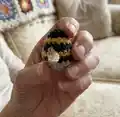
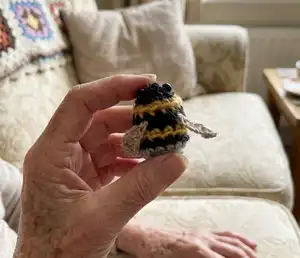
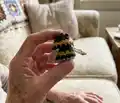
Crochet bumblebees Amigurumi Pattern crochet pattern - detailed view of completed project

Youll learn how to make neater colour changes by closing rounds and carrying yarn between strips, plus how to attach tiny wings and 7 mm eyes. The pattern also gives variations for white-tailed, red-tailed, tree and early bumblebees.

Why You'll Love This Crochet bumblebees Amigurumi Pattern

I absolutely love this pattern because it turns tiny scraps of yarn into delightful little bumblebee characters with just a few rounds. I love how quickly each bee comes together—you can make a small collection in an afternoon. The colour-change technique I use gives very neat stripes and a professional finish, which always makes the finished piece feel special. I also enjoy the mix of textures created by using fuzzy lopi yarn and a thin yarn for wings, it adds character and charm.

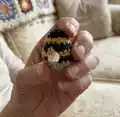
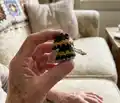
Crochet bumblebees Amigurumi Pattern step 1 - construction progress Crochet bumblebees Amigurumi Pattern step 2 - assembly progress Crochet bumblebees Amigurumi Pattern step 3 - details and accessories Crochet bumblebees Amigurumi Pattern step 4 - final assembly and finishing

Switch Things Up

I love customizing these tiny bumblebees by mixing colour stripes and tail colours to create different species; try pastel stripes for a softer look or bold contrasts for more graphic bees.

I often change the yarn weight and hook to make different sizes: use bulkier yarn and a larger hook for cuddly chunky bees, or thin thread and a small hook for micro bees.

I sometimes skip the safety eyes and embroider tiny eyes instead for a safer toy for small children.

I add a tiny loop of thread at the top to turn a bee into an ornament or keychain—a quick way to make gifting options.

I like to experiment with wing shapes: try a taller chain and extra dc rows for larger wings, or use felt for a sturdier wing variation.

I often embroider small stripes or cheek details to change personality and expression on each bee.

I recommend trying different stuffing densities to alter the final silhouette; firmer stuffing makes a plump bee, lighter stuffing keeps it squishier.

I sometimes add a short wire inside the wings to make them poseable for display options.

I create small outfits or tiny crowns from leftover yarn to make collectible characters from the same base pattern.

I also combine two different yarn textures—fuzzy for the body and smooth for accents—to create contrast and visual interest in each bee.

Common Mistakes & How to Fix Them

✗ Skipping stitch markers during the rounds can make your rounds slip and end up misaligned; place a stitch marker at the start of each round to keep track of your stitches and colour changes. ✗ Pulling the yarn too tightly when changing colours will distort the shape and make the rounds uneven; change colour in the last loop of the stitch and maintain even, relaxed tension. ✗ Forgetting to work in BLO where indicated results in incorrect shaping and placement; always read the round line fully and work in the back loops only when the pattern directs you. ✗ Overstuffing the bee can create a lumpy or distorted bottom; stuff gradually and check the shape often, adding small amounts to achieve a smooth oval base.

Crochet bumblebees Amigurumi Pattern

Make a collection of tiny, fuzzy crochet bumblebees with this clear pattern by Sonja van der Wijk. Youll work small rounds, neat colour changes and add delicate wings to create adorable little bees. The pattern includes full materials, abbreviations and step-by-step rounds so you can crochet a whole swarm of charming bumblebees.

Intermediate 2-3 Hours

Materials Needed for Crochet bumblebees Amigurumi Pattern

— Main Fabric

  • 01
    Worsted weight yarn (left-over bits are enough): sheep or mixed black (0052 or 0005) - small amounts
  • 02
    Worsted weight yarn yellow (1703) - small amount for stripes
  • 03
    Worsted weight yarn orange (1704) - small amount for red-tailed and tree bumblebee variations
  • 04
    Worsted weight yarn light grey (0054) - small amount for white-tailed tail
  • 05
    Lace weight yarn (Lopi Einband) beige heather (0886) for wings; or split a lopi strand in half if Einband not available
  • 06
    Istex Lett lopi or similar fuzzy wool for main fuzzy texture (100% wool)

— Tools Required

  • 01
    Crochet hook size E US / 3.5 mm
  • 02
    Scissors
  • 03
    Embroidery needle for sewing and weaving ends
  • 04
    Stitch markers or paper clips
  • 05
    7 mm animal safety eyes (2 per bee)
  • 06
    Polyester fibrefill stuffing
  • 07
    Yarn needle for sewing wings and closing the hole

Progress Tracker

0% Complete

Info :

Before you start. This pattern is written in standard American crochet terms. It's useful to read it before you start. If you use the recommended yarn, your bumblebees will be 3 inch / 5 cm long. Because the size of the bee is dependent on the yarn you use and how tight you crochet, it's useful to experiment with the eye size, despite my recommendations. I would strongly recommend a fuzzy yarn for the bumblebees. The yarn I've used is Istex Lett lopi, a 100% wool. Use a stitch marker to mark the beginning of a round, move it up each time you start a new round. The colour changes are written after the description of the round, so read the whole line before you start. Always change colour in the last loop of a stitch, so the loop on the hook you end with is the new colour. That means the next stitch is in the new colour, not the one you changed in. At Son's Popkes is a tips & tricks category. Here you can find useful info regarding my patterns.

Info :

Materials. For these bumblebees you'll need worsted weight yarn and an E US/3.5 mm crochet hook. You'll also need some lace weight yarn (Lopi Einband) for the wings: beige heather (0886). You need four colours of worsted weight yarn (left-over bits are enough): sheep or mixed black (0052 or 0005), yellow (1703), orange (1704) and light grey (0054). For the eyes I've used 7 mm animal eyes. You will also need fibrefill to stuff the bees.

Info :

Accessories. Hook E US / 3.5 mm, scissors, embroidery needle, stitch markers or paper clips.

Info :

Abbreviations: ch = chain, sc = single crochet, st = stitch, sl st = slip stitch, hdc = half double crochet stitch, dc = double crochet stitch, s2tog = invisible decrease.

— Body :

Info :

White-tailed bumblebee. Start in black, change colour when indicated. To get neater colour changes, you aren't working in a spiral but closing each round with a sl st. At the end of each round, sl st in the first sc of the next round, then ch 1 and sc in that same stitch. This is the 1st stitch of the next round. At the end of each round you will skip over the sl st and ch and crochet a sl st, ch, sc in the following stitch. Don't cut the yarn between the colour changes but carry it along.

Round 1 :

magic ring of 4 = 4

Round 2 :

(sc in next, 2 sc in next) x 2 = 6

Info :

Mark the stitches of round 3 in which you'll make the 2nd and the 6th stitch with a coloured strand. (Insert the strand into the gap of the stitch you normally put your hook in.) When the strand is placed, just do the stitch like you always do. You've now marked where you later attach the eyes.

Round 3 :

(sc in next 2, 2 sc in next) x 2 = 8, change colour to yellow in last st, sl st in 1st

Round 4 :

ch 1, sc in same, [2 sc in next, (sc in next, 2 sc in next) x 3] in BLO = 12, change colour to black in last, sl st in 1st

Round 5 :

ch 1, sc in same, [sc in next 11] in BLO = 12, sl st in 1st

Info :

Attach the eyes permanently in the marked spots. It helps turning the piece inside-out when you attach the caps. After I attached the eyes, I inserted a little bit of stuffing between them, as shown in the images below.

Round 6 :

ch 1, sc in same, sc in next 11 = 12, change colour to yellow in last st, sl st in 1st

Round 7 :

ch 1, sc in same, [sc in next 11] in BLO = 12, change colour to black in last and cut yellow, sl st in 1st

Round 8 :

ch 1, sc in same, [sc in next 11] in BLO = 12, change colour to light grey in last and cut black, sl st in 1st

Round 9 :

ch 1, sc in same, [sc in next 11] in BLO = 12, sl st in 1st

Round 10 :

ch 1, sc in same, s2tog, (sc in next, s2tog) x 3 = 8, sl st in 1st

Info :

Stuff the bumblebee.

Round 11 :

ch 1, sc in same, sc in next, s2tog, sc in next 2, s2tog = 6, sl st in 1st

Info :

Add a little bit of stuffing if needed and then sew the hole closed by putting the needle from the inside out through all the outside loops of the 6 st, clockwise. If you do it correctly, you can now pull the end and it will close the gap. Make sure your bombus has a nice oval bottom.

— Red-tailed bumblebee :

Round 1-3 :

Follow the instructions for the white-tailed bee but skip the sl st and ch 1 and don't change colour to yellow in round 3.

Round 4 :

In BLO: (sc in next, 2 sc in next) x 4 = 12

Round 5 :

sc in each around = 12

Info :

Attach the eyes in the marked spots.

Round 6-7 :

sc in each around = 12

Round 8 :

sc in each around = 12, change colour to orange in last and cut black, sl st in 1st

Round 9 :

ch 1, sc in same, sc in next 11 = 12, sl st in 1st

Round 10-11 :

follow the instructions for the white-tailed bumblebee.

— Tree bumblebee :

Round 1-3 :

Follow the instructions from the white-tailed bumblebee, change colour to orange instead of yellow.

Round 4 :

ch 1, sc in same, [2 sc in next, (sc in next, 2 sc in next) x 3] in BLO = 12, sl st in 1st

Round 5 :

ch 1, sc in same, sc in next 11 = 12, change colour to black in last st and cut orange, sl st in 1st

Info :

Attach the eyes in the marked spots.

Round 6 :

ch 1, sc in same, [sc in next 11] in BLO = 12, sl st in 1st

Round 7 :

ch 1, sc in same, sc in next 11 = 12, sl st in 1st

Round 8 :

ch 1, sc in same, sc in next 11 = 12, change colour to light grey in last and cut black, sl st in 1st

Round 9 :

ch 1, sc in same, [sc in next 11] = 12, sl st in 1st

Round 10-11 :

follow the instructions for the white-tailed bumblebee.

— Early bumblebee :

Info :

To make this bee, follow the instructions for the white-tailed, but make the bottom in orange instead of light grey. That's all.

— Wings :

Info :

Make two for each bumblebee, use the thinner yarn with the same hook. If you use Lopi yarn but don't have the Einband weight, split a lopi strand in half. Make the starting chain as long as the end, so you can use both ends together to attach the wings.

Round 1 :

ch of 6, in 3rd ch from hook dc, dc in same, hdc in next, sc in next, sl st in next and leave yarn ends for sewing.

Info :

Use both yarn ends to sew the wings to the body. Sew them on top of the third round behind the head, as shown in the images. The head ends at the first round you do in BLO.

Info :

Wow, how cute is this? Have fun with your bumblebee collection. You now have the ability to make even more kinds!

Info :

Feedback. If you have any questions or trouble while making the pattern, don't hesitate to contact me at svanderwijk@gmail.com. Also, if you see a mistake in the pattern please let me know! To find info, useful tips and more patterns, please visit Son's Popkes. For updates and more you can follow me on Instagram.

Assembly Instructions

  • Mark the round 3 stitches where you will place the eyes by inserting a coloured strand into the stitch gap; this marks the positions for permanent eye placement.
  • Attach 7 mm safety eyes in the marked spots and insert a little bit of stuffing between them before securing the caps to create slight eye shaping.
  • Sew wings using both yarn ends; attach them on top of the third round behind the head, using the long starting chain ends to hold them securely.
  • Stuff the bumblebee gradually and close the bottom hole by sewing from the inside out through all outside loops of the 6 stitches, pulling the yarn end to close the gap.
  • Weave in and secure all yarn ends, and trim any excess; pin parts in place while sewing to ensure symmetrical placement.

Important Notes

  • 💡Always change colour in the last loop of the stitch so the loop on the hook is the new colour for a neater stripe transition.
  • 💡Use a stitch marker to mark the first stitch of each closed round when you are not working in a spiral.
  • 💡Turn the piece inside-out to attach eye caps; this helps achieve a neat finish and lets you add a tiny bit of stuffing between the eyes if desired.
  • 💡When sewing the bottom closed, pass the needle through all outside loops of the closing round and pull gently to form a neat oval bottom.

This tiny bumblebee pattern is perfect for making a sweet handmade collection to display or gift. The small size, fuzzy texture and neat stripes give each bee lots of character and charm. Have fun experimenting with colours and variations to build a whole buzzing family of bees. 🐝🧶
You ask,

we answer.

FAQs

What size will the finished piece be?

The finished bumblebee measures approximately 3 inches (5 cm) long when using the recommended yarn (Istex Lett lopi) and a 3.5 mm hook.

Can I use different yarn weights for this pattern?

Yes, but changing yarn weight will affect final size; use an appropriate hook for your chosen yarn and expect different texture and scale.

Do I need prior crochet experience for this pattern?

Basic amigurumi experience is recommended: know how to work magic ring, single crochet, increases, decreases and back loop only (BLO) stitches for best results.

How long does this project typically take to complete?

Most crocheters complete one bumblebee in about 2-3 hours, though the time may vary depending on experience and finishing detail work.