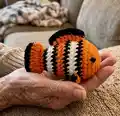
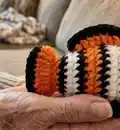
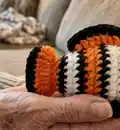
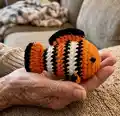
About This Clownfish (Nemo) Amigurumi Pattern
This pattern creates a small, striped clownfish (Nemo-style) amigurumi worked from the body up to the tail with no-sew construction. It features easy color changes to make the classic orange, white and black stripes and simple fins made separately. The pattern uses super bulky yarn for a quick, squishy finish.
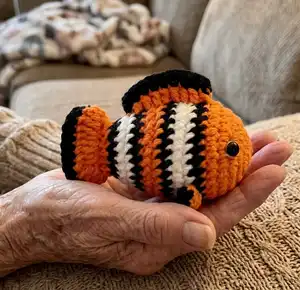
Step-by-step rounds include increases, decreases and short rows for shaping. Clear instructions and photo prompts help you assemble the fish and attach details like safety eyes.
Why You'll Love This Clownfish (Nemo) Amigurumi Pattern
I absolutely love this pattern because it turns simple stitches into a charming, striped clownfish with a lot of personality. The no-sew body construction makes assembly fast and neat, which I always appreciate when making gifts. I enjoy the bit of colorwork between orange, white and black—it creates a bold, playful look without complicated techniques. This pattern works up quickly with super bulky yarn, so you get satisfying, fast results that are great for gifting or decorating.
Switch Things Up
I love customizing this pattern to create different species of fish by simply changing color combinations, such as pastel shades for a softer look.
I sometimes use thinner yarn and a smaller hook to make a mini keychain version that is perfect for gifts or bag charms.
I also like to add embroidered smiles or small felt cheeks to give the fish different facial expressions and personality.
Want a sturdier toy? I add a drop of fabric glue under safety eyes and use slightly firmer stuffing to help the shape hold up to play.
Try using variegated yarn for a fun, marbled stripe instead of distinct color changes for a unique finish.
For a reef set, I make multiple fish in complementary colors and different sizes to display together as a fun grouping.
I sometimes stitch a tiny loop at the top so the fish can be hung as an ornament or mobile decoration.
To create a weighted bottom for stable standing, add a few dried beans in a small pouch inside the base before final stuffing.
I enjoy adding wire inside the fins for poseable features — bendable fins let you display the fish in many playful poses.
If you want to simplify, skip the dorsal fin Part 2 and just make Part 1 for a quicker, still-cute version of the fish.
I often experiment with different eye sizes for varied looks — smaller eyes for a delicate look or larger eyes for extra cuteness.
Common Mistakes & How to Fix Them
✗ Skipping stitch markers when working in continuous rounds can make it hard to identify the start of each round; place a stitch marker at the first stitch of every round so you always know where to count from.
✗ Changing colors without securing ends can cause loose tails or gaps at the stripe joins; carry the yarn neatly or weave in ends immediately and use a tight tension at color joins to reduce gaps.
✗ Forgetting to stuff before closing will make shaping difficult and lumpy; stuff gradually while you decrease and check the shape frequently to create an even, firm body.
✗ Counting mistakes during increases and decreases will alter the fish shape; recount your stitches after every increase/decrease round to ensure the correct stitch total is maintained.
✗ Pulling the finishing tail too tight when weaving in ends can distort the stitches around the join; weave in ends gently and adjust tension to keep the shape even.