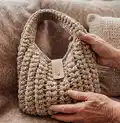
🧢 Beautiful ✨ Detailed πŸ’ Adorable

Winter Fairytail Pattern

Winter Fairytail Pattern
4.5β˜… Rating
5-7 Hours Time Needed
3.9K Made This
βœ‚οΈ

Beginner Friendly Level

Perfect for those just starting their crochet journey, with clear instructions and simple techniques

⏱️

Weekend Treat

Takes 5-7 hours, making it an enjoyable project to finish over a couple of days.

✨

Stylish Touch

An elegant detail to elevate any look, combining traditional techniques with contemporary design sensibilities.

About This Winter Fairytail Pattern

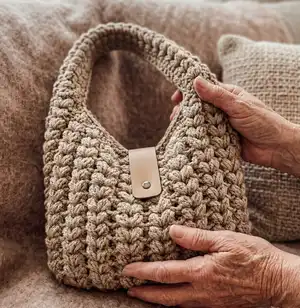
This pattern creates a chunky, textured handbag worked with puff stitches for a bold, cozy look. You will crochet the base and body, make two handle parts, sew a cotton lining, and attach a valve closure. The design uses bulky alpaca-blend yarn and a 5 mm hook for a squishy, structured finish. Clear step-by-step instructions and photos guide you through shaping and assembly.

Winter Fairytail Pattern crochet pattern - detailed view of completed project

The finished bag measures approximately 13 inches wide and 10.25 inches tall with a 20 inch handle. The pattern includes full row-by-row instructions, lining cutting layout, and sewing directions for a neat professional finish.

Why You'll Love This Winter Fairytail Pattern

I absolutely love this pattern because the puff stitch texture gives the bag a luxurious, handcrafted look with very little effort. I enjoy how quickly the bulky yarn builds up into a sturdy, wearable shape that still feels soft and tactile. Sewing the lining and adding the valve makes each bag feel finished and gift-ready, and I love the satisfaction of that polished result. This design is versatile, so I often customize colors and hardware to suit different outfits and moods.

Winter Fairytail Pattern step 1 - construction progress Winter Fairytail Pattern step 2 - assembly progress Winter Fairytail Pattern step 3 - details and accessories Winter Fairytail Pattern step 4 - final assembly and finishing

Switch Things Up

I love how easy it is to change the look of this bag by switching yarn colors β€” try a two-tone body and contrasting handle for a modern twist.

You can make the bag larger or smaller by changing yarn weight and hook size: bulky yarn and a larger hook gives a chunkier bag while lighter yarn makes a delicate version.

I often experiment with different puff stitch heights and tension; pulling the puff loop slightly shorter creates a subtler texture and gives a neater profile.

Try different lining fabrics β€” a patterned cotton pocket inside or a bright lining color adds a fun pop when you open the bag.

Use decorative hardware for the valve or replace it with a magnetic snap for a sleeker closure option if you prefer.

I sometimes add a small external pocket by crocheting an extra rectangle and stitching it to the front before adding the valve β€” perfect for keys or phones.

If you want a crossbody version, lengthen the handle pieces and join them into one long strap before sewing it to the base.

For a dressier bag, use a blend with silk or a yarn with subtle shine to catch light beautifully while keeping the texture.

I also like embroidering initials on a small felt patch and sewing it to the lining or front for personalization and gift-ready presentation.

Finally, don’t hesitate to mix stitch patterns: replace one row of check marks with single crochet rows for a mixed-texture panel that still complements the design.

Common Mistakes & How to Fix Them

βœ— Skipping the second-loop start on the base chain will change your foundation stitch count; begin working from the 2nd loop from the hook exactly as written to get the correct edge. βœ— Not pulling the puff loop up to the recommended length will make puff stitches look flat and inconsistent; pull each puff loop to about 27-30 mm to match the texture in the photos. βœ— Forgetting to place markers when folding the base for the handle results in uneven handles; fold the base, count the check marks and place markers before starting the handle. βœ— Sewing the lining without matching side seams can cause puckering and misalignment; pin the lining carefully, align the middle marks and side seams before stitching to ensure a smooth fit.

Winter Fairytail Pattern

Make a cozy, chunky winter handbag with this easy-to-follow crochet pattern. You will work bold puff stitches to create a warm textured bag, sew a neat cotton lining, and attach a sturdy handle and valve. The pattern is designed for beginners who want a stylish hand-knit accessory with professional finishes. Follow the step-by-step instructions and photos to finish a beautiful, wearable bag.

Beginner Friendly 5-7 Hours

Materials Needed for Winter Fairytail Pattern

β€” Main Fabric

  • 01
    Alpaca blend bulky yarn, 130 m / 100 g (approximately 400 yards / 370 m per 3 skeins used in example) β€” 3 skeins in sample
  • 02
    Fabric for lining (stiff cotton or linen), approximately 12 x 28 inches (30 x 70 cm) β€” cut two parts plus pocket if desired

β€” Tools Required

  • 01
    Crochet hook size 5.0 mm
  • 02
    Valve hardware 6 x 1 1/4 inches (15 x 3 cm) or similar closure
  • 03
    Scissors
  • 04
    2 stitch markers
  • 05
    Plastic needle with large eyelet (for sewing handle parts)
  • 06
    Sewing needle and sewing thread to match the yarn (for attaching valve and lining)
  • 07
    Pins for holding lining
  • 08
    Iron and damp cloth (to steam and shape base and handles)

Progress Tracker

0% Complete

β€” Base of the bag :

Info :

Crochet chain with 21 CH.

Round 1 :

Crochet from the 2nd loop from the hook: 19 SC, 3 SC in 1, turn, 18 SC, 2 SC in 1 (=42), SlSt in the 1st SC, 3 CH.

Round 2 :

Skip 1 loop with SlSt and next loop. Crochet in the 3rd loop: PC (make 3 yarn over and pull up 3 loops (7 loops on the hook); yarn over and pull through all 7 loops on the hook; chain one to close the puff stitch).

Info :

Pull up the loop to the level of the hook 27-30 mm long.

Round 2 (continued) :

Crochet CH and one more PC in the same loop. We got a "check mark" with 2 PC with one base and 1 CH between the peaks.

Round 2 (placement) :

Skip 2 loops, crochet next "check mark" with 2 PC and 1 CH in the middle. Crochet 4 more "check marks" to the end of the row, skipping 2 loops of the previous row.

Round 2 (side) :

Then crochet 1 "check mark" in the top of the side part. Turn, crochet 6 "check marks", skipping 2 loops of the previous row. Next 1 more "check mark" in the top of the another side part.

Info :

The "check marks" should be opposite each other. There should be 14 "check marks" in total (28 PC).

Round 2 (finish) :

Crochet SlSt in the 4th loop of the previous row, 3 CH.

Round 3 :

Next, crochet the base of the "check marks" in this and each subsequent row in the "check mark" (under CH between the "check marks" of the previous row).

Round 3 (corner increase) :

First, make an increase in the corner. For this, crochet: PC, CH, PC, CH, PC in the 1st "check mark" of the previous row.

Round 3 (body) :

Next crochet 4 "check marks". Increase in the corner again: PC, CH, PC, CH, PC.

Round 3 (cont) :

Then crochet 1 "check mark". Increase in the corner: PC, CH, PC, CH, PC.

Round 3 (cont 2) :

Next crochet 4 "check marks". Increase in the corner again: PC, CH, PC, CH, PC.

Round 3 (finish) :

Crochet last 1 "check mark", SlSt, 3 CH.

Round 4 :

Crochet 18 "check marks" in each "check mark" of the previous row, SlSt, 3 CH.

Round 5 :

18 "check marks", SlSt, 3 CH.

Rounds 5-15 :

18 "check marks", SlSt, 3 CH.

Round 16 :

18 "check marks", SlSt.

β€” Base trim :

Info :

Crochet this row with SlSt on the back loop only.

Info :

Crochet to the end of the row. Cut the thread, pull out the end. Close the row with the end. Strengthen and hide the end.

Info :

Steam the base of the bag with an iron through a damp cloth on the wrong side to shape and even stitches.

β€” Lining :

Info :

For the lining, it is better to take a stiff cotton fabric, for example cotton or linen. Take a sheet of paper and outline the base. Put the pattern on the fabric. Cut out 2 parts with a seam allowance of 5-7 mm for sewing.

Info :

If desired, you can cut a pocket. First, sew the pocket on one part. Then sew two parts of the lining. Wrap and hem the edge on top.

Info :

At this stage, you can give it to the atelier (optional) or continue sewing the lining in yourself.

β€” Handle :

Info :

Fold the base in half, on the sides in the middle, 1 "check mark". Count 2 "check marks" on the right and left of it. Place the markers. There are 5 "check marks" between markers.

Round 1 :

Insert the hook between "check marks", where the first marker is. Crochet 3 CH with 2 threads.

Round 1 (cont) :

Next crochet 5 "check marks". Crochet DC with the base between the "check marks", where the second marker is.

Info :

Next crochet the turning rows.

Round 2 :

Crochet 25 SlSt from the 2nd loop from the hook on the back loop only.

Round 3 :

3 CH, PC in the 1st "check mark" of the 1st row, 3 "check marks", PC in the 5th "check mark" of the 1st row, DC in the 1st SlSt of the previous row.

Round 4 :

Crochet 19 SlSt from the 2nd loop from the hook on the back loop only.

Round 5 :

3 CH, 3 "check marks", DC in the 1st SlSt of the previous row.

Round 6 :

Crochet 15 SlSt from the 2nd loop from the hook on the back loop only.

Round 7 :

3 CH, 3 "check marks", DC in the 1st SlSt of the previous row.

Round 8 :

Crochet 15 SlSt from the 2nd loop from the hook on the back loop only.

Round 9 :

3 CH, 3 "check marks", DC in the 1st SlSt of the previous row.

Round 10 :

Crochet 15 SlSt from the 2nd loop from the hook on the back loop only.

Rounds 11-24 :

Crochet repeating rows 9-10 until you reach the desired length or row 24 as given. Cut the thread, pull out the end. Strengthen and hide the end.

Info :

Similarly crochet the 2nd part of the handle. Leave the end for sewing on the second part of the handle about 28 inches (70 cm) long. Steam both parts of the handle with an iron through a damp cloth on the wrong side.

Info :

Fold the parts of the handle with the front sides together, sew with a plastic needle. Insert the needle under two loops of each part. Strengthen and hide the end. Steam the seam with an iron through a damp cloth on the wrong side.

β€” Sew on the valve :

Info :

Top part: Sew the top part of the valve with the sewing needle and thread in the middle of the base part, between "check marks" of the 14th and 15th rows. Strengthen the end on the wrong side.

Info :

Lower part: Fold the valve. Try on where the lower part will be (example: in the middle of the 13th row). Sew the lower part of the valve with the sewing needle and thread. Strengthen the end on the wrong side.

β€” Sew in the lining :

Info :

Put the lining inside and straighten it with your hands. The top of the lining should be about 2 rows below the edge of the base. The side seams of the lining should match the middle of the side "check marks".

Info :

Fold the bag in half so that the side seams match. Mark the middle of the lining and align it with the middle of the base. Do the same on the other side. Pin with pins.

Info :

Take sewing thread to match the color of the handbag. Sew in the lining to the handbag with neat, small stitches. Insert the needle behind the edge of the lining and make fixing stitches in 3-4 places. If desired, steam the seam through a damp cloth to finish.

Assembly Instructions

  • Sew the valve top in the middle of the base between the 14th and 15th rows, then fold and sew the lower part of the valve (example placement: middle of the 13th row) and secure the ends on the wrong side.
  • Fold the base in half and mark handle placement: place stitch markers two check marks to the right and left of the middle check mark, then crochet handle pieces and sew them to the marked positions.
  • Insert the lining: align the side seams of the lining with the middle of the side check marks, pin the lining so the top sits about two rows below the edge, then sew the lining in with small neat stitches.
  • Sew handle parts together by folding each handle front sides together, inserting a plastic needle under two loops of each part, sewing, strengthening and hiding ends, then attach handles to bag.
  • Steam the base and handle seams through a damp cloth with an iron to shape and strengthen the bag before final assembly.

Important Notes

  • πŸ’‘Use stitch markers to mark the center and handle placement before starting the handle to ensure symmetry.
  • πŸ’‘Pull the puff stitch loops to the recommended 27-30 mm length to achieve the chunky textured look.
  • πŸ’‘Steam the base and handle seams through a damp cloth to shape and even out stitches for a professional finish.
  • πŸ’‘When attaching the lining, pin and check alignment before sewing to avoid misplacement and puckering.

This warm, textured handbag is a joy to make and even more delightful to wear β€” the puff stitches create a cozy, stylish statement. The pattern includes full instructions for the base, body, handles, valve and lining so you can finish a professional-looking bag. Make one for yourself or a special handmade gift that feels luxurious and personal. πŸ‘œπŸ§Ά

You ask,

we answer.

FAQs

What size will the finished piece be?

The finished bag measures approximately 13 inches (33 cm) wide by 10 1/4 inches (26 cm) tall with a handle length of about 20 inches (50 cm) when using the recommended yarn and hook size.

Can I use different yarn weights for this pattern?

Yes, you can change yarn weight; note that switching to a thicker yarn and larger hook will increase the bag size and change gauge while thinner yarn will create a smaller, more delicate bag. Adjust lining and handle length accordingly.

Do I need prior crochet experience for this pattern?

This pattern is rated beginner friendly, but you should be comfortable with chains, slip stitches, double crochets and working puff stitches.

How long does this project typically take to complete?

Most crocheters complete this project in 5-7 hours, though time may vary depending on experience, stitching speed, and whether you sew the lining by hand or machine.

How should I care for the finished bag?

Handwash or gently spot clean and reshape while damp. Use steam from an iron with a damp cloth to restore shape but avoid aggressive machine washing to preserve the texture and structure.