🧶 Beautiful ✨ Detailed 💝 Adorable

Spring Kitty Amigurumi Pattern

Spring Kitty Amigurumi Pattern
4.2★ Rating
5-7 Hours Time Needed
1.1K Made This
✂️

Intermediate Level

Ideal for those with basic crochet experience, featuring slightly more advanced stitches and techniques to expand your skills.

⏱️

Weekend Treat

Takes 5-7 hours, making it an enjoyable project to finish over a couple of days.

🧸

Cute Companion

An adorable friend to cherish, handcrafted with love to bring comfort and joy for years to come.

About This Spring Kitty Amigurumi Pattern

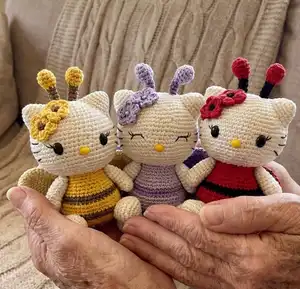
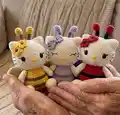
This pattern makes a sweet 12 cm tall Spring Kitty amigurumi (excluding antennae) with interchangeable costumes: butterfly, bee, or ladybug. You will crochet the head, body, limbs, ears, wings and small accessories using single crochet in spiral, with clear round-by-round instructions. The design includes small decorative details like flowers, antennae bulbs, and embroidered whiskers to add personality.

Spring Kitty Amigurumi Pattern crochet pattern - detailed view of completed project

The pattern uses YarnArt Jeans colors shown for each costume and includes guidance for assembly and finishing touches. Perfect as a gift or a collectible, the kitten sits securely when legs and tail are attached as described.

Why You'll Love This Spring Kitty Amigurumi Pattern

I absolutely love this pattern because it combines simple amigurumi shaping with charming costume options that let your creativity shine. I enjoy how the interchangeable wings and little flowers let you personalize each kitty to match seasons or favorites. The construction is thoughtful — worked in spiral for smooth shaping and clear markers are suggested so you stay on track. Sewing techniques and clear placement guidance make assembly rewarding and the final toy very neat. Making a set of three different outfits is one of my favorite parts — they look great displayed together.

Spring Kitty Amigurumi Pattern step 1 - construction progress Spring Kitty Amigurumi Pattern step 2 - assembly progress Spring Kitty Amigurumi Pattern step 3 - details and accessories Spring Kitty Amigurumi Pattern step 4 - final assembly and finishing

Switch Things Up

I love how easy it is to change the costume colors to make a whole family of kitties: try pastel shades for a soft nursery set, or bold primary colors for a playful look.

You can make a mini keychain version by using thinner yarn and a smaller hook, or a larger cuddly version by using bulky yarn and a bigger hook.

I often swap out the bead eyes for embroidered eyes to make the toy safe for babies, and I alternate nose shapes by using felt or embroidery.

Try adding tiny crocheted hats, scarves, or a crown to create different characters or seasonal variations like a Christmas kitty or Halloween kitty.

I like to embroider different expressions by adjusting the position and length of the lashes and mouth for sleepy or curious faces.

For a posable build, I insert thin wire into the antennae and can bend them into fun shapes that hold their position.

Change the wing shapes and sizes to create unique fairy or dragonfly-inspired costumes by following the wing construction and altering rounds for more exaggerated curves.

If you want a weighted base so the kitty sits sturdier, add a small felt disk and a spoonful of steel shot in the bottom before final stuffing (seal well).

I recommend experimenting with different yarn textures like cotton for a crisp look or acrylic for extra softness; each gives a different final hand feel.

Personalize each kitty with tiny accessories like a crocheted bow, necklace, or tiny felt flower sewn to the ear for a custom finish.

I sometimes mix two yarn brands for contrast stripes in the body, just keep similar weights so the gauge remains consistent.

Don't be afraid to mix embroidery styles — chain stitch, satin stitch and french knots can add delightful facial and floral details.

Common Mistakes & How to Fix Them

✗ Skipping stitch markers during the spiral construction makes counting rounds difficult; place a marker or contrast thread at the beginning of key rounds to avoid losing track and to align the head and body correctly. ✗ Stuffing too much or too little will change the toy's shape; stuff evenly as instructed, add stuffing gradually, and check shape frequently to keep smooth contours. ✗ Not leaving long tails for sewing will make assembly awkward; always leave the specified long tail for attaching limbs and details so you can sew securely and hide ends inside the piece. ✗ Ignoring placement guidelines for eyes and facial embroidery may unbalance the face; follow the placement grid and count rounds from the bottom of the head (eyes between rounds 9 and 10) before finalizing eyes and lashes.

Spring Kitty Amigurumi Pattern

Create an adorable Spring Kitty amigurumi dressed as a butterfly, bee, or ladybug with this full crochet pattern. You will find complete rounds, materials, and step-by-step assembly instructions so you can make a charming toy to gift or display. The pattern includes alternate outfit color suggestions and small accessory details such as flowers, antennae and wings.

Intermediate 5-7 Hours

Materials Needed for Spring Kitty Amigurumi Pattern

— Main Fabric

  • 01
    Yarn 'YarnArt Jeans' - color №03 milk (main color for Kitty) - small amount for body and head
  • 02
    For Butterfly outfit: YarnArt Jeans color №89 light purple and №72 lilac - small amounts for body stripes and wings
  • 03
    For Ladybug outfit: YarnArt Jeans color №26 red and №53 black - small amounts for body stripes and wings
  • 04
    For Bee outfit: YarnArt Jeans color №35 yellow, №70 chocolate, and №88 light yellow - small amounts for stripes and wings
  • 05
    Contrast colors: small amounts of yarn for flowers and antennae bulbs as shown (choose one main costume color and one or several accent colors)

— Tools Required

  • 01
    Crochet hook №2
  • 02
    Thick needle for assembly and sewing needle
  • 03
    Sewing pins for positioning parts
  • 04
    Strong cotton thread (e.g. 'Iris') for arm fastening
  • 05
    Floss thread color black for face embroidery
  • 06
    Oval half-beads in black for eyes (8x10 mm) and yellow bead for nose (6x8 mm) or felt pieces and sewing thread for embroidering eyes and nose
  • 07
    Scissors
  • 08
    Yarn needle for sewing and hiding tails
  • 09
    Stitch markers
  • 10
    Fiberfill for toys (hollow fiber)
  • 11
    Small piece of wire to strengthen the antennae (optional)

Progress Tracker

0% Complete

— Arms :

Round 1 :

6 sc in MR (6)

Round 2 :

6 inc (12)

Round 3 :

12 sc (12)

Round 4 :

6 sc, 1 ps, 5 sc (12)

Round 5 – 10 :

12 sc (12)

Info :

Stuff the arms, less firmly at the end.

Round 11 :

6 dec (6)

Info :

Pull and cut the thread leaving a small tail. With a needle close the hole through the front loops only, fasten off and hide the tail into the detail.

— Legs :

Round 1 :

8 sc in MR (8)

Round 2 :

8 inc (16)

Round 3 :

(1 sc, inc) * 8 (24)

Round 4 – 6 :

24 sc (24)

Round 7 :

8 sc, 4 dec, 8 sc (20)

Round 8 :

8 sc, 2 dec, 8 sc (18)

Round 9 :

18 sc (18)

Info :

Pull and cut the thread leaving a long tail for sewing. Stuff the detail.

— Ears :

Ears (x2) :

1 round: 6 sc in MR (6). 2 round: (1 sc, inc) * 3 (9). 3 round: (2 sc, inc) * 3 (12). 4 round: (3 sc, inc) * 3 (15). 5 round: (4 sc, inc) * 3 (18). 6 round: (5 sc, inc) * 3 (21). 7 round: 3 sc, inc, (6 sc, inc) * 2, 3 sc (24). Pull and cut the thread leaving a long tail for sewing. Stuff the ears.

Ears (antenna bulb) (x2) :

1 round: 6 sc in MR (6). 2 round: 6 inc (12). 3 – 5 round: 12 sc (12). 6 round: 6 dec (6). Pull and cut the thread leaving a long tail for sewing. Insert a small piece of wire into antennae to make it steady. Stuff the detail. Change color to contrast. 7 – 10 round: 6 sc (6).

— Tail :

Round 1 :

6 sc in MR (6)

Round 2 :

6 inc (12)

Round 3 – 5 :

12 sc (12)

Info :

Pull and cut the thread leaving a tail for sewing.

— Flowers :

Flower (x2) - Round 1 :

5 sc in MR (5)

Flower (x2) - Note :

Change color to contrast and cut the previous thread.

Flower (x2) - Round 2 :

(sl st, hdc, 3 dc, hdc) * 5 (30)

Info :

Pull and cut the thread leaving a tail for sewing.

— Head :

Info :

Make ch of 14, begin crocheting from the 2nd loops of the hook.

Round 1 :

inc, 11 sc, 2 inc in the last loop, then crochet along other side of the chain: 11 sc, inc (30)

Round 2 :

2 inc, 11 sc, 3 inc, 13 sc, inc (36)

Round 3 :

inc, 1 sc, inc, 13 sc, inc, 1 sc, inc, 1 sc, inc, 13 sc, inc, 1 sc (42)

Round 4 :

42 sc (42)

Round 5 :

1 sc, inc, 2 sc, inc, 14 sc, inc, 2 sc, inc, 2 sc, inc, 14 sc, inc, 1 sc (48)

Round 6 :

48 sc (48)

Round 7 :

(7 sc, inc) * 6 (54)

Round 8 :

54 sc (54)

Round 9 :

(8 sc, inc) * 6 (60)

Round 10 :

60 sc (60)

Round 11 :

(9 sc, inc) * 6 (66)

Round 12 – 20 :

66 sc (66)

Round 21 :

(9 sc, dec) * 6 (60)

Round 22 :

1 sc, dec, (8 sc, dec) * 5, 7 sc (54)

Round 23 :

(7 sc, dec) * 6 (48)

Round 24 :

1 sc, dec, (6 sc, dec) * 5, 5 sc (42)

Round 25 :

(5 sc, dec) * 6 (36)

Round 26 :

1 sc, dec, (4 sc, dec) * 5, 3 sc (30)

Info :

Add stuffing, space it evenly inside the detail. Pull and cut the thread leaving a long tail for sewing. Close the hole with a needle. Pull the thread to the beginning of 27th round where we placed a marker.

Round 27 :

(3 sc, dec) * 6 (24)

Info :

Mark the beginning of 27th round!

Round 28 :

1 sc, dec, (2 sc, dec) * 5, 1 sc (18)

Round 29 :

(1 sc, dec) * 6 (12)

Round 30 :

6 dec (6)

— Body :

Info :

Make ch of 15, begin crocheting from the 2nd loops of the hook.

Round 1 :

inc, 12 sc, 2 inc in the last loop, then crochet along other side of the chain: 12 sc, inc (32)

Round 2 :

2 inc, 12 sc, 4 inc, 12 sc, 2 inc (40)

Round 3 :

(inc, 1 sc) * 2, 12 sc, (inc, 1 sc) * 4, 12 sc, (inc, 1 sc) * 2 (48)

Round 4 – 6 :

48 sc (48)

Info :

Attach the thread of contrast color and crochet next 2 rounds in it. Do not cut the main thread.

Round 7 – 8 :

48 sc (48)

Info :

Next 4 rounds in the main color.

Round 9 – 12 :

48 sc (48)

Info :

Next 2 rounds in contrast color.

Round 13 :

48 sc (48)

Round 14 :

(6 sc, dec) * 6 (42)

Info :

Cut the thread of additional color, now crochet only with main one.

Round 15 – 16 :

42 sc (42)

Round 17 :

(5 sc, dec) * 6 (36)

Round 18 :

36 sc (36)

Round 19 :

(4 sc, dec) * 6 (30)

Round 20 – 21 :

30 sc (30)

Info :

Crochet additional 2 sc to make the round finish at the side of the body. Pull and cut the thread, hide a tail inside the detail and stuff the detail firmly.

— Wings for bee and ladybug (x2) :

Round 1 :

6 sc in MR (6)

Round 2 :

6 inc (12)

Round 3 :

(1 sc, inc) * 6 (18)

Round 4 :

(2 sc, inc) * 6 (24)

Round 5 :

(3 sc, inc) * 6 (30)

Round 6 – 9 :

30 sc (30)

Round 10 :

(13 sc, dec) * 2 (28)

Round 11 :

(12 sc, dec) * 2 (26)

Round 12 :

(11 sc, dec) * 2 (24)

Round 13 :

(10 sc, dec) * 2 (22)

Round 14 :

(9 sc, dec) * 2 (20)

Round 15 :

(8 sc, dec) * 2 (18)

Round 16 :

(7 sc, dec) * 2 (16)

Round 17 :

(6 sc, dec) * 2 (14)

Info :

Crochet 2 additional sc to even the round, fold the piece edges in half and crochet 7 sc through both sides. Pull and cut the thread leaving a long tail for sewing. Do not stuff the detail.

— Spots for ladybug (x4) :

Round 1 :

6 sc in MR, sl st (6)

Info :

Pull and cut the thread leaving a long tail for sewing. Place the spots symmetrically on both wings and sew on.

— Wings for butterfly (x2) :

Lower wing part (detail №1) - Round 1 :

6 sc in MR (6)

Lower wing part - Round 2 :

6 inc (12)

Lower wing part - Round 3 :

(1 sc, inc) * 6 (18)

Lower wing part - Round 4 – 7 :

18 sc (18)

Lower wing part - Round 8 :

(7 sc, dec) * 2 (16)

Info :

Pull and cut the thread leaving a small tail.

Upper wing part (detail №2) - Round 1 :

6 sc in MR (6)

Upper wing part - Round 2 :

6 inc (12)

Upper wing part - Round 3 :

(1 sc, inc) * 6 (18)

Upper wing part - Round 4 :

(2 sc, inc) * 6 (24)

Upper wing part - Round 5 :

(3 sc, inc) * 6 (30)

Upper wing part - Round 6 – 9 :

30 sc (30)

Upper wing part - Round 10 :

(13 sc, dec) * 2 (28)

Upper wing part - Round 11 :

(12 sc, dec) * 2 (26)

Upper wing part - Round 12 :

(11 sc, dec) * 2 (24)

Upper wing part - Round 13 :

(10 sc, dec) * 2 (22)

Upper wing part - Round 14 :

(9 sc, dec) * 2 (20)

Upper wing part - Round 15 :

(8 sc, dec) * 2 (18)

Info :

In the next round we will connect both details. Do not cut the working thread.

Round 16 :

Holding the detail №2 on the hook, insert it into 1st sc of the last round of the detail №1 and crochet sc. Then crochet along the detail №1: 5 sc, dec, 8 sc, then crochet along the №2: 7 sc, dec, 9 sc (32)

Info :

Thus, we connected the parts of wing and continue crochet in spiral. In case there is a space in the corner between details sew it with a tail we leaved with detail №1.

Round 17 :

5 sc, dec, 14 sc, dec, 9 sc (30)

Round 18 :

4 sc, dec, 13 sc, dec, 9 sc (28)

Info :

Crochet additional 6 sc to make the round finish at the bottom of the wing. Fold the piece edges in half and crochet 14 sc through both sides. Pull and cut the thread leaving a long tail for sewing.

— Assembly :

Step 1 :

Attach the head to the body. Match the last round of the body with the 27th round of the head (which we previously marked), fix the details with pins. Make sure that the position of the head is straight (orient along the chain with which we started crocheting the head, it should be parallel to the body). Start sewing on the details hooking single crochets of each piece. Add stuffing between the neck and the head while sewing.

Step 2 :

Fix the ears at the level of 2–10 round of the head and sew on.

Step 3 :

Glue or embroider a nose in the center of a face between 9 and 10 round counting from the bottom of a head. Then embroider or glue eyes (it is more convenient to embroider lashes before eyes are glued). After that embroider whiskers with black thread — 3 stripes on each side. For placing of all the elements of the face be guided by the diagrams. You can correct the position according to your crochet density.

Step 4 :

Attach the arms to the body using the thread fastening. We will need a long needle and strong cotton thread folded in double (white color is better, dark thread is used for clarity). Insert a needle in any point on a back and pull it out on the side of the body between the 17th and 18th rounds, leave a tail of medium length on a back. Then pull a needle from inner side of the arm to outer (1). Next insert a needle in the same point from where the thread comes (2), and pull out from the inner side of the arm but at the distance of 2 sc from the first hole (3). After that insert a needle in the same point at the side of the body from where the thread comes (4), and pull out symmetrically on the other side of the body (5). Fasten the second arm in the same way. For reliable fastening, you can repeat the actions. After the both arms are fixed, pull the thread into a back, tie the ends tightly in a knot and hide them inside the detail.

Step 5 :

Sew the antennae to the top of the head.

Step 6 :

Sew the flowers under one of the ears, leave the petals free. You can additionally decorate the middles with beads.

Step 7 :

Fix the legs at the level of 3–7 rounds of the body with a distance of 9 stitches apart. The position of the legs may vary slightly, choose it so that the toy sits confidently. Sew on the legs, try to keep their round outline.

Step 8 :

Sew the wings to the back of the toy. They can be positioned raised or folded. If the wings dangle a lot, fix them with additional stitches.

Step 9 :

Fix the tail at the level of 5–8 rounds of the body and sew on. The tail will also be an additional support for toy while sitting.

Assembly Instructions

  • Attach the head to the body by matching the last round of the body with the 27th round of the head (marked earlier), pin in place, and sew hooking single crochets while adding stuffing between neck and head.
  • Fix the ears at the level of rounds 2–10 of the head and sew them securely with the long tail left for sewing.
  • Glue or embroider the nose centered between rounds 9 and 10 from the bottom of the head, place or glue eyes, embroider lashes before eyes are glued if preferred, then embroider whiskers (three short stripes on each side).
  • Fasten the arms using strong cotton thread folded double and a long needle as described: bring the needle through the back and body between rounds 17–18, pass through the arm and back several times symmetrically, knot and hide ends inside the body.
  • Sew the antennae to the top of the head, inserting a small piece of wire inside the stalk for extra stability before sewing if desired.
  • Sew wings to the back (position raised or folded), place legs at rounds 3–7 of the body spaced nine stitches apart and sew, then attach the tail at the level of rounds 5–8 to help the toy sit.

Important Notes

  • 💡All parts of the toy are crocheted in spiral without slip stitches and chains between rounds; use a stitch marker or contrast thread for easy round counting.
  • 💡Final size of the toy with recommended materials and tools is approximately 12 cm tall, excluding antennae.
  • 💡Stuff firmly but evenly inside each detail; avoid overstuffing which can distort shaping.
  • 💡Leave long tails where indicated for sewing and hide tails inside the details after fastening.
  • 💡Insert a small piece of wire into antennae before finishing if you want them to be posable and steady.

This delightful Spring Kitty set includes butterfly, bee and ladybug outfit options for joyful customization. Each tiny detail — from embroidered whiskers to felt or bead eyes — makes these kitties truly special. Perfect for gifting or collecting, they bring a handmade smile to any shelf or nursery. 🐱🌸🧶
You ask,

we answer.

FAQs

What size will the finished piece be?

The finished amigurumi measures approximately 12 cm tall using the recommended yarn and crochet hook, excluding antennae.

Can I use different yarn weights for this pattern?

Yes, you can change the yarn weight, but it will affect the final size; adjust your hook size accordingly and test gauge if you need a specific measurement.

Do I need prior crochet experience for this pattern?

This pattern is rated intermediate, so basic knowledge of single crochet, increases, decreases and crocheting in spiral is recommended for best results.

How long does this project typically take to complete?

Most crocheters complete this project in approximately 5-7 hours, depending on experience level and how many costume variations you make.

How should I place the eyes and whiskers for best results?

Reference the facial placement diagrams and count rounds from the bottom of the head; eyes are placed between rounds 9 and 10 and whiskers are embroidered as three short stripes on each side for balanced expression.