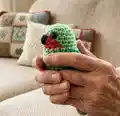
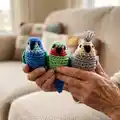
🧢 Beautiful ✨ Detailed πŸ’ Adorable

Mini Parrot Amigurumi Pattern

Mini Parrot Amigurumi Pattern
4.6β˜… Rating
2-3 Hours Time Needed
1.3K Made This
βœ‚οΈ

Beginner Friendly Level

Perfect for those just starting their crochet journey, with clear instructions and simple techniques

⏱️

Bite-Sized Project

Finishes in 2-4 hoursβ€”perfect for an afternoon of creative relaxation.

🎁

Tiny Treasure

Small, sweet, and gift-worthy creations that fit perfectly in the palm of your hand with detailed charm.

About This Mini Parrot Amigurumi Pattern

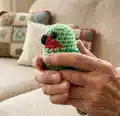
This pattern creates a tiny amigurumi parrot about 7 cm (3 in) tall, crocheted from the top down with lightweight cotton yarn. It features simple shaping, color changes for a two-tone face and an embroidered beak for personality. You will enjoy quick rounds, minimal sewing and an adorable result that makes lovely gifts or decorations.
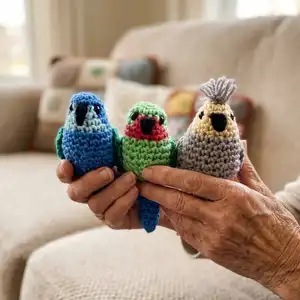
Mini Parrot Amigurumi Pattern crochet pattern - detailed view of completed project

Designed to be crocheted with Phildar Coton 3 (or similar cotton), each parrot works up quickly and holds shape well with fiberfill. Explanatory pictures are included to help with the beak and wing assembly.

Why You'll Love This Mini Parrot Amigurumi Pattern

I absolutely love this pattern because it captures a lot of personality with very few stitches and simple shaping. I enjoy how quickly a whole flock can be made, allowing for playful color combinations and gifting. The tiny size makes these parrots perfect for keychains, decor or little surprises that brighten someones day. I also love that the pattern uses common stitches and minimal sewing, so its satisfying and accessible.

Mini Parrot Amigurumi Pattern step 1 - construction progress Mini Parrot Amigurumi Pattern step 2 - assembly progress Mini Parrot Amigurumi Pattern step 3 - details and accessories Mini Parrot Amigurumi Pattern step 4 - final assembly and finishing

Switch Things Up

I love how easy it is to customize this mini parrot by changing yarn colors β€” try pastel palettes for a soft look or neon brights for extra fun.

You can change the size by swapping yarn weight and hook; bulky yarn with a larger hook makes a chunky parrot, while finer yarn and a smaller hook makes a tiny keychain bird.

I often add embroidered details like tiny eyelashes or cheek spots to change the expression and personality of each bird.

For more interest, vary the tail: make it longer, add stripes, or work extra rows to create a fan-shaped tail.

I sometimes substitute safety eyes with French knot embroidered eyes for a fully handmade look and to keep them toy-safe for all ages.

Try different wing shapes β€” longer, narrower or layered wings β€” by adjusting rounds and adding small picot edges for texture.

I occasionally add a small felt or crocheted leaf as a perch accessory for display or gift presentation.

To make a set, mix colors and sizes and mount the birds on a wooden dowel or branch with hot glue for a charming decorative piece.

If you want posability, you can insert a small wire stem into the body before stuffing and closing to gently shape the neck or tail.

Don't hesitate to add tiny accessories like a crocheted hat, scarf, or tiny beads for a collar β€” small touches make each parrot unique and gift-ready.

Common Mistakes & How to Fix Them

βœ— Skipping stitch markers during rounds can lead to losing track of the beginning of rounds; place a stitch marker at the start of every round and move it up as you go. βœ— Not changing colors at the exact stitch can cause uneven color transitions around the face; always change yarn in the last stitch as instructed to keep edges neat. βœ— Overstuffing the body makes shaping difficult and causes bulging in small pieces; stuff gradually and lightly to keep a smooth rounded shape. βœ— Sewing wings and eyes without pinning first can result in uneven placement; pin or baste the parts in place and check symmetry before final sewing. βœ— Rushing the invisible decrease will leave gaps; take time to do the invisible decrease correctly and check your stitch count after each decrease round.
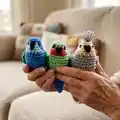
Mini Parrot Amigurumi Pattern

These tiny parrots are quick, fun and full of charm β€” perfect for a small gift or a sweet home accent. You can make them with lightweight cotton yarn and a small hook to achieve a neat, firm finish. The pattern is easy to follow with minimal sewing and clear steps to guide you through shaping, color changes and finishing. Make a colorful flock to brighten your day or turn them into keychains and keepsakes.

Beginner Friendly 2-3 Hours

Materials Needed for Mini Parrot Amigurumi Pattern

β€” Main Fabric

  • 01
    Phildar Coton 3 (lightweight cotton yarn, 50 grams, 121 m / 132 yards) - one skein of each color used
  • 02
    Lightweight cotton yarn in turquoise (main), blue (head/accents) and green (face) - small amounts each
  • 03
    Scheepjes Catona or Hobbii Rainbow 8/4 (alternative to Phildar Coton 3)
  • 04
    Scheepjes Maxi Sweet Treat (used for the white parrot pictured), small amount - used with 1 mm hook

β€” Tools Required

  • 01
    Crochet hook size 2.0 mm (main)
  • 02
    Crochet hook size 1.0 mm (optional, for very fine variant shown in white)
  • 03
    Black safety eyes 6 mm (2 pieces)
  • 04
    A stitchmarker to keep track of rounds
  • 05
    A strand of black embroidery yarn to embroider the beak
  • 06
    Filling material: fiberfill
  • 07
    Yarn needle for sewing and weaving ends
  • 08
    Scissors
  • 09
    Pins for assembly (optional)

Progress Tracker

0% Complete

β€” Body :

Info :

We are crocheting the parrot from the top down, so start with turquoise.

Round 1 :

6 sc in a magic circle [6]

Round 2 :

2 sc in each sc [12]

Round 3 :

(3 sc, inc) 3x [15] change in the last sc to green

Round 4 :

4 sc, change to turquoise, 11 sc, change in the last sc to green [15]

Round 5 :

4 sc, change to turquoise, 10 sc, change in the last sc to green, sc [15]

Round 6 :

5 sc, change to turquoise, 8 sc, change in the last sc to green, 2 sc [15]

Round 7 :

6 sc, change to turquoise, 3 sc, inc, sc, inc, sc, inc, sc [18]

Round 8 :

2 sc, inc, sc, inc, 13 sc [20]

Info :

Embroider a beak with black and attach the eyes alongside the green face between round 4 and 5. You can also embroider the eyes if you like. The beak is actually a small triangle. Embroider the beak like this, start with the vertical stitches and end with the horizontal stitch. (see pic 1 and 2 on page 3)

Info :

Change colors exactly as indicated: the pattern alternates turquoise and green for the face area, changing in the last stitch as instructed to keep neat transitions.

Round 9 :

20 sc [20]

Round 10 :

20 sc [20]

Round 11 :

(sc, inc) 4x, 12 sc [24]

Round 12 :

2 sc, dec, 2 sc, dec, and on the middle of the back 2 inc. [24]

Round 13 :

3 sc, dec, 3 sc, dec., 14 sc [22]

Round 14 :

2 sc, dec, 2 sc, dec., 14 sc [20]

Round 15 :

2 sc, dec, 2 sc, dec., 12 sc [18] and start filling the body

Round 16 :

(sc, dec) 6x [12]

Round 17 :

change to blue, (2 sc, dec) 3x [9]

Round 18 :

9 sc [9]

Round 19 :

9 sc [9]

Round 20 :

2 sc, dec, 2 sc, dec, sc [7]

Round 21 :

sc, dec, 2 sc, dec [5]

Info :

Cut thread and weave the thread through the 5 front loops of round 21. Fasten off.

β€” Wings :

Info :

Make two with dark blue:

Round 1 :

9 sc in magic circle [9]

Round 2 :

(2 sc, inc) 3x [12]

Round 3 :

ch 6, starting in the second stitch from the hook: sc, hdc, dc, 3 tc. The third tc should go in the foundation of the last sc of round 2 (see arrow on pic 3). Skip 2. Then make a sl.st. to attach the tip of the wing to the circle. Leave a long thread.

Info :

Sew both wings on both sides of the body.

Info :

Offcourse you can vary with the colours. Or go freestyling on the tail: make it longer, wider, put a coloured stripe in it. The birds in the picture on the front page of this pattern are attached to their tree with hot glue. Or make them into keychains and give them to your local pirate. He will appreciate the gesture. ;-)

Info :

Have fun making your own mini parrot.

Assembly Instructions

  • Embroider the beak with black embroidery yarn, starting with the vertical stitches and finishing with the horizontal stitch to form a small triangle; attach the eyes alongside the green face between rounds 4 and 5.
  • Sew both wings to the sides of the body, positioning them symmetrically and using the long threads left from the wings to secure them firmly.
  • Stuff the body starting at round 15 and before finishing round 16; continue stuffing as you decrease so the body stays smooth and evenly filled.
  • After completing round 21, cut the thread and weave it through the 5 front loops of round 21, pull to close slightly and fasten off securely.
  • If desired, attach finished birds to a small branch or backing with hot glue for display, or add a keyring to transform them into keychains.

Important Notes

  • πŸ’‘Use a stitch marker to mark the start of each round so you don't lose track of rounds during increases and decreases.
  • πŸ’‘Stuff gradually and evenly as you shape the body; overstuffing small pieces can distort the shape.
  • πŸ’‘Change colors in the last stitch as instructed to keep color transitions neat and avoid visible gaps.
  • πŸ’‘Weave in ends neatly and leave long tails for sewing wings and attaching beaks or eyes for easier finishing.

This adorable mini parrot pattern is a joyful, quick make that fits in the palm of your hand and sparks creativity. Make a colorful flock to gift, display or use as keychains β€” they are perfect tiny treasures to share. Have fun mixing colors and creating your own charming bird family! 🧢🎁

You ask,

we answer.

FAQs

What size will the finished piece be?

The finished amigurumi measures approximately 7 cm (3 inches) tall when using the recommended Phildar Coton 3 and a 2.0 mm hook.

Can I use different yarn weights for this pattern?

Yes, you can use different yarn weights, but this will change the final size; use an appropriate hook for your chosen yarn and expect the parrot to be larger or smaller.

Do I need prior crochet experience for this pattern?

This pattern is beginner friendly, so basic knowledge of single crochet, increases and decreases is helpful; the instructions are straightforward and include explanatory pictures.

How long does this project typically take to complete?

Most crocheters complete this project in 2-3 hours, though time may vary depending on experience and whether you add extra details or variations.