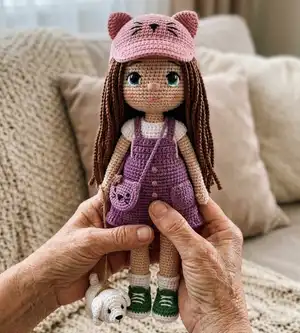
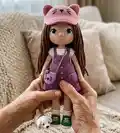
🧢 Beautiful ✨ Detailed πŸ’ Adorable

Mimosa Baby Amigurumi Pattern

Mimosa Baby Amigurumi Pattern
4.5β˜… Rating
12-15 Hours Time Needed
2.2K Made This
βœ‚οΈ

Intermediate Level

Ideal for those with basic crochet experience, featuring slightly more advanced stitches and techniques to expand your skills.

⏱️

Multi-Day Project

A rewarding 12+ hour journeyβ€”perfect for dedicated crafters who love detailed work.

🧸

Cute Companion

An adorable friend to cherish, handcrafted with love to bring comfort and joy for years to come.

About This Mimosa Baby Amigurumi Pattern

This pattern teaches you to crochet a detailed Mimosa Baby amigurumi doll, including head shaping, eye embroidery, arms, legs and clothing accents. It includes step-by-step rounds and photo guidance for facial processing and finishing. You'll learn stocking-style shaping, surface embroidery for realistic eyes and a full assembly workflow for a polished end result.

Mimosa Baby Amigurumi Pattern crochet pattern - detailed view of completed project

Built for crafters with some experience, it blends simple amigurumi shaping with advanced finishing like embroidered eyes and lip shaping. Expect clear instructions, many photos, and helpful notes to guide you through every stage.

Why You'll Love This Mimosa Baby Amigurumi Pattern

I absolutely love this pattern because it brings a sweet, expressive face to life through simple crochet and detailed embroidery. I enjoy the way the embroidered eyes transform the doll and add character without using plastic eyes. The pattern balances easy amigurumi rounds with thoughtful finishing techniques so you can stretch your skills while still enjoying a satisfying make. I poured care into the step-by-step photos and notes so you can achieve professional-looking results.

Mimosa Baby Amigurumi Pattern step 1 - construction progress Mimosa Baby Amigurumi Pattern step 2 - assembly progress Mimosa Baby Amigurumi Pattern step 3 - details and accessories Mimosa Baby Amigurumi Pattern step 4 - final assembly and finishing

Switch Things Up

I love how many ways you can personalize the Mimosa Baby: change hair color, try different yarn textures, or swap the dress color for a seasonal look.

I often adjust eye colors and embroidery to create different expressions; a wider iris makes a sweeter look while darker outlines add drama.

If you want a pocket-sized version, use thinner yarn and a smaller hook for a mini doll perfect as a keychain or ornament.

For a chunkier, cuddly doll try bulky yarn and a larger hook β€” it becomes a plush friend quicker and with less embroidery detail needed.

I sometimes add tiny crocheted accessories like a hat, bag or shoes; these small details really change the personality of the doll.

Consider adding wire to the arms or neck for a posable version so your doll can hold tiny props or stand in playful poses.

Experiment with skin tones and blush placement using dry crayon for aging to make each doll unique and full of character.

Want realistic hair? Use the viburnum etamine in layered lengths and root it densely for full hairstyles, then style with a bit of water or steam if the fiber allows.

I recommend trying different eye distances or pupil sizes to create different expressions β€” mark and pin first to preview before embroidering.

Finally, create a matching outfit set or a small pet accessory to turn one pattern into a full set of handmade gifts and keep the process fresh and fun.

Common Mistakes & How to Fix Them

βœ— Skipping stitch markers at the start of rounds makes counting difficult; place a marker at the first stitch of each round so you always know where the row begins. βœ— Not filling evenly causes distorted limbs and legs; stuff gradually in 4-6 row increments and check shape frequently to keep the form smooth. βœ— Pulling yarn too tight during eye embroidery will pucker the head; use moderate tension and anchor stitches gently so the surface remains flat. βœ— Ignoring the placement instructions for eyes leads to misaligned features; follow the marking guidance exactly (align with 12th row and midpoint between 21st and 22nd rows) before embroidering. βœ— Cutting yarn too short when finishing will make sewing pieces difficult; always leave a long tail for sewing and shaping to make assembly neater.

Mimosa Baby Amigurumi Pattern

Create a charming Mimosa Baby amigurumi doll with this full crochet recipe. You will follow step-by-step rounds, eye embroidery, facial detailing and complete body construction. The pattern includes materials, abbreviations, and clear photos so you can build a beautiful handcrafted doll. Perfect for gifting or display, this pattern guides you through every stitch.

Intermediate 12-15 Hours

Materials Needed for Mimosa Baby Amigurumi Pattern

β€” Main Fabric

  • 01
    Peria Baby Soft Cotton skin color 17 - 2 pieces (main skin yarn)
  • 02
    Peria Baby Soft Cotton white 13 - 1 piece (white details and socks)
  • 03
    Schachenmayr Catania green 419 - 1 ball (shoes/green details)
  • 04
    Schachenmayr Catania purple 240 - 1 ball (dress color)
  • 05
    Gazzal Baby Cotton lilac 3422 - 1 ball (dress/accents)
  • 06
    Trade Diva 55 - 1 ball (hair or accessory yarn)
  • 07
    Paper rope dark straw - quantity for bag strap/shoelaces
  • 08
    Viburnum Etamine 840 - 2 skeins for hair
  • 09
    Domino cotton perle 8 light blue K0028 - small amount for eye details
  • 10
    Domino cotton perle 8 dark blue K00147 - small amount for eye details
  • 11
    Domino cotton perle 8 brown K0035 - for eye outlines/details
  • 12
    Domino cotton perle 8 white - for eye whites and highlights
  • 13
    Domino cotton perle 8 black - for pupil and lashes
  • 14
    Orenbayan cotton perle pink 465 - for lips and blush

β€” Tools Required

  • 01
    Crochet hook 2.00 mm
  • 02
    Crochet hook 2.20 mm
  • 03
    2.5 size skewer (for eye processing and shaping)
  • 04
    Bead fiber (polyester stuffing)
  • 05
    3 x 8mm white buttons for the back of the t-shirt
  • 06
    1 x 8mm purple button for the back of the dress
  • 07
    7 x 6mm white buttons for the front of the dress
  • 08
    Etamine needle for sewing
  • 09
    Quilt needle for eye embroidery
  • 10
    Scissors
  • 11
    Yarn needle for sewing parts
  • 12
    Pins for assembly and marking
  • 13
    Pacifier chain rope parachute rope half meter for shoelaces
  • 14
    70 cm 2.5 mm electrical wire to put on neck and arms
  • 15
    Dry crayon for make-up and aging

Progress Tracker

0% Complete

β€” Head :

Info :

Start with skin color.

Row 1 :

6x into the magic ring

Row 2 :

6v (12)

Row 3 :

(x, v)*6 (18)

Row 4 :

(2x,v)*6 (24)

Row 5 :

(3x,v)*6 (30)

Row 6 :

(4x,v)*6 (36)

Row 7 :

(5x,v)*6 (42)

Row 8 :

(6x,v)*6 (48)

Row 9 :

(7x,v)*6 (54)

Row 10 :

(8x,v)*6 (60)

Row 11 :

(9x,v)*6 (66)

Row 12 :

(10x,v)*6 (72)

Rows 13-27 :

(15 rows):72x

Info :

Go to eye processing. After the eye embroidery is finished, the head will continue to be knitted.

β€” Eye Processing :

Info :

Identifying eye locations: Align with the third increment loop of the head in the 12th row and place a marker between the 21st and 22nd rows with a pin. This is the midpoint between the two eyes. Make a mark with a pin by counting 6 sc to the right of the pin and 5 to the left of the pin. Remove the pins by placing dots in the designated places with the flying pen. Pupils will be embroidered on the marked places.

Step 1 :

Draw a circle with a flying pencil so that the diameter of the pupils corresponds to two single needles. Attach a single layer of black domino thread to the needle. Complete the first step by basting the circumference of the circle from the multiples of the frequent needles. In the second stage, complete the tour as in the image by passing from the outside to the inside under each of the stitches you have worked on.

Step 2 :

Remove the needle from the upper part of the eye and pass under the opposite stitches to fill the pupil. Process horizontally all the way down, taking care not to overlap the threads while embroidering.

Step 3 :

Draw the iris of the eye in a circle, leaving a single needle around the pupil. Starting from the upper part of the eye with dark blue thread, embroider around the iris by basting from the fold of the loops. Complete the round as in the image by passing under each of the stitches you have embroidered from the outside to the inside.

Step 4 :

Process one more round into the iris.

Step 5 :

Embroider the upper half of the iris with another round of dark blue thread. The remaining half will be embroidered with light blue thread.

Step 6 :

With a double layer of light blue thread, embroider the half part under the pupil.

Info :

The width and length of the iris is 4 sc. Process the other iris in the same way. If there are gaps in the processed areas, retouch the gaps by sinking into the head.

Step 7 :

To embroider the white part of the eye, draw a circle starting from the bottom row of the inner part of the eye and ending at the highest point of the outer part of the eye, as in the image. The part of the circle on the nose side of the eye should be the width of a single needle, expand a little more towards the outer part, and taper a little more towards the top.

Step 8 :

Complete the first step by basting around the circle you have drawn, starting from the top. At the end of the first stage, remove the needle from the starting point and complete the tour by doing the second stage.

Step 9 :

Do one more round in the same way.

Step 10 :

Since the upper white part of the eye is full, start the new round from the untreated area and process one more round. If there are 3 rounds of processing on the white part, but there are still empty spaces, one more round can be made or the empty spaces can be retouched.

Step 11 :

A round will be made with the same technique between the blue and white part of the eye with the black rope. Process the other eye in the same way.

Info :

Lash bottom line: one - sink into the second row from the bottom of the outer part of the eye. Baste up to the corner of the eye. Complete the tour by sinking in from the eye spring and leaving the starting point and embroidering over the basting stitches. Do one more round, starting from the top row of the lower lash line and up to the corner of the eye.

Info :

Eyelash: one - come out from the upper row of the lower line of the eyelash as in the image and sink into the root of the eyelash. Repeat the same action on the same eyelash. Determine the places of the other eyelashes as in the image and process them by sinking further than the point you have determined, insert the needle under the small eyelash and exit from the point you have determined and sink into the root of the eyelash. Complete the other eyelashes with this technique.

Info :

Eye shimmer: Attach two layers of white thread to the quilt needle. Process both eyes in the same way as in the pictures. Eye processing is finished. The head will continue to be knitted.

β€” Head Continued :

Rows 28-30 :

(3 rows):72x

Row 31 :

2x, a, (10x,a)*5, 8x (66)

Row 32 :

5x, a, (9x,a)*5, 4x (60)

Row 33 :

(8x,a)*6 (54)

Row 34 :

2x, a, (7x,a)*5, 5x (48)

Row 35 :

5x, a, (6x,a)*5, x (42)

Info :

You fill the head.

Row 38 :

2x, a, (5x,a)*5, 3x (36)

Row 39 :

(4x,a)*6 (30)

Row 40 :

(3x,a)*6 (24)

Info :

You fill the head. While filling the head, fill it as round as possible without disturbing its form. If you fill to the sides after the filling process is finished, the head will be more rounded.

Row 41 :

(x,a)*8, sl st (16)

Info :

Head done, cut the rope.

β€” Nose, Eyebrow & Lips :

Info :

Nose: It will be embroidered by leaving two single needles spaced, two rows below the eye, coinciding with the middle level of the two eyes. Separate the yarn into layers. Process the nose by sinking in and out 4-5 times as in the image.

Info :

Eyebrow: Embroider the eyebrows one row above the lashes, leaving 9 single needles with a width of 5 sc between the two eyebrows. Follow the images.

Info :

Lips: Determine the place of the lip with pins, leaving 3 single needles down the nose, and 3 frequent needles. Attach the thread to the needle in two layers. To embroider the lip, the triangle shape will be created. Enter through the neck space and exit from the designated point on the left. Dive into the middle of the lip in the upper row and exit from the determined point on the right. To form the other side of the triangle, sink to the upper point and exit the neck space. Enter from the left of the lip and enter from the right and exit the neck cavity.

Info :

LIP PROCESSING YOUTUBE LINK:https://youtu.be/Q3ZyjkKUoHQ

1st round :

Lip shaping will be created by wrapping the triangle. Insert the needle under the thread and exit from the top to embroider. Starting from the top left edge, loop the rope 5 times. Take care not to overlap the yarn and to keep it regularly side by side. Do the same to the right side of the upper lip. Complete the round by wrapping the bottom edge 6-7 times.

2nd round :

In the second round, if you make 3-4 loops on the outer lips and the loops on the lips towards the middle part, it will stop. Intensity of 4 to the lower lip, middle of the lower lip. Lip fullness can be increased upon request.

β€” Arm :

Info :

Start with skin color.

Row 1 :

6x into the magic ring

Row 2 :

2v, x, 2v, x (10)

Row 3 :

2x, v, 4x, v, 2x (12)

Row 4 :

3x, v, 5x, v, 2x (14)

Row 5 :

4x, v, 9x (15)

Rows 6-8 :

(3 rows):15x

Row 9 :

4x, a, 6x, a, x (13)

Row 10 :

11x (12)

Rows 11-36 :

(26 rows):12x, sl st, done break the thread.

Info :

The arms will not be filled with fibers. Knit the other arm in the same way.

β€” Foot Recipe :

Info :

Start with tan yarn. The two feet will be knitted with the same recipe and the right and left legs will be continued with separate recipes.

Row 1 :

9ch check. Starting from 2ch, into the first loop 2x, 6x, into the same loop 3x, 7x (18)

Row 2 :

v, 8x, v, 8x (20)

Rows 3-10 :

(8 rows):20x

Row 11 :

3x, 7ch and skip 9x, 8x

Row 12 :

3x, 7x on 7 chain, 8x (18)

Row 13 :

(x,a)*6 (12)

Row 14 :

6a, the heel is over, leave a long rope to collect the heel and break the rope.

Info :

Gather the needle and 6 sc needles from the flo loops, tighten them well, knot the thread inside the foot and hide it. The foot is over, the leg will be passed. Knit the other foot in the same way.

β€” Leg Recipe (Left leg recipe) :

Info :

Must read! Right and left leg nomenclature: represents the right and left legs of the baby. If this is not taken care of, the legs may fall out. The recipe is the same until the knee cap on the right and left legs; the fact that the calf of the right leg protrudes to the right and the calf of the left leg to the left is completely related to the filling. While filling, try to obtain the form in the visuals by checking the image by putting the leg a little farther.

Row 1 :

We turn the back of the foot and pull the 7th loop, attach the thread to the 4th loop, 4x on the chain, one sc in the gap between the front part and the sole, 9x in the front, one sc in the gap between the front part and the sole, 3x on the chain (18)

Row 2 :

4x, a, float 7x, a, 3x (16)

Rows 3-6 :

(4 rows):16x

Info :

Fill the wrist. When we turn the toe to ourselves, the left part of the right leg will be the calf (blue arrow side) and this side will be protruded. Always add more filling to the protruding part. Keep the leg away and check the image frequently. Proceed by making a filling in 4-5 rows.

Row 7 :

v, 15x (17)

Row 8 :

17x

Row 9 :

x, v, 15x (18)

Row 10 :

18x

Row 11 :

2x, v, 15x (19)

Row 12 :

3x, v, 15x (20)

Row 13 :

20x

Row 14 :

4x, v, 15x (21)

Row 15 :

21x

Row 16 :

5x, v, 15x (22)

Row 17 :

22x

Row 18 :

6x, v, 15x (23)

Rows 19-23 :

(5 rows):23x

Row 24 :

5x, a, x, a, 13x (21)

Row 25 :

21x

Row 26 :

4x, a, x, a, 12x (19)

Row 27 :

5x, a, 7x, 4v, x (22)

Row 28 :

22x

Row 29 :

11x, 4a, 3x (18)

Row 30 :

4x, v, x, v, 11x (20)

Row 31 :

20x

Row 32 :

6x, v, 13x (21)

Row 33 :

21x

Row 34 :

6x, v, x, v, 11x (23)

Row 35 :

23x

Row 36 :

8x, v, 14x (24)

Row 37 :

24x

Row 38 :

9x, v, 14x (25)

Row 39 :

25x

Row 40 :

10x, v, 14x (26)

Row 41 :

26x

Row 42 :

11x, v, 14x (27)

Row 43 :

27x

Row 44 :

12x, v, 14x (28)

Row 45 :

4x with tan, 24x with white thread (28)

Info :

White rope is used for the leg part of the shorts.

Row 46 :

28x

Row 47 :

4x, sl st, finish, break the thread. Left leg done.

β€” Right leg recipe :

Info :

When filling, the right foot and leg should always be filled to the right of the leg to create a protruding image on the calf. The right leg is knitted with the same recipe as the left leg until the 26th row. The difference in appearance in the two lower legs is all about filling.

Row 1 :

We turn the back of the foot and pull the 7th loop, attach the thread to the 4th loop, 4x on the chain, one sc in the gap between the front part and the sole, 9x in the front, one sc in the gap between the front part and the sole, 3x on the chain (18)

Row 2 :

4x, a, float 7x, a, 3x (16)

Rows 3-6 :

(4 rows):16x

Row 7 :

v, 15x (17)

Row 8 :

17x

Row 9 :

x, v, 15x (18)

Row 10 :

18x

Row 11 :

2x, v, 15x (19)

Row 12 :

3x, v, 15x (20)

Row 13 :

20x

Row 14 :

4x, v, 15x (21)

Row 15 :

21x

Row 16 :

5x, v, 15x (22)

Row 17 :

22x

Row 18 :

6x, v, 15x (23)

Rows 19-23 :

(5 rows):23x

Row 24 :

5x, a, x, a, 13x (21)

Row 25 :

21x

Row 26 :

4x, a, x, a, 12x (19)

Row 27 :

5x, a, 7x, 4v, x (22)

Row 28 :

22x

Row 29 :

13x, 4a, x (18)

Row 30 :

4x, v, x, v, 11x (20)

Row 31 :

20x

Row 32 :

6x, v, 13x (21)

Row 33 :

21x

Row 34 :

7x, v, x, v, 11x (23)

Row 35 :

23x

Row 36 :

8x, v, 14x (24)

Row 37 :

24x

Row 38 :

9x, v, 14x (25)

Row 39 :

25x

Info :

You fill the leg. When we turn the toe to ourselves, the right part of the left leg will be the calf (blue arrow side) and this side will be protruded. Always add more filling to the protruding part. Keep the leg away and check the image frequently.

Assembly Instructions

  • Attach the head to the body by aligning the final neck opening with the top of the body, sew securely using a whipstitch and hide tails inside the body.
  • Position and sew the arms on either side of the body between the specified body rows, using pins to check symmetry and angle the hands slightly forward before stitching.
  • Sew legs to the bottom of the body, spacing them evenly so the doll sits and stands balanced; reinforce the seam with several passes and hide the tails inside the body.
  • Embroider and attach facial features (eyes, lashes, nose, eyebrows, lips) following the marking and embroidery steps, then pin and attach hair using the viburnum etamine yarn in layers for fullness.
  • Attach clothing pieces and buttons: sew the 6mm white buttons along the front of the dress and use the 8mm purple button for the back of the dress and 3 x 8mm white buttons for the t-shirt back.
  • Add wire to neck and arms (70cm 2.5mm electrical wire as instructed) if making posable limbs, insert and secure wire before final stuffing and closing seams.

Important Notes

  • πŸ’‘After the row that ends with sl st, when rising by pulling 1 or 2 chains at the beginning of the row and make x or DC, dip into the loop at the bottom of the chain for a neat start.
  • πŸ’‘When the leg and arm are finished, sl st is done to close them; when knitting on the finished piece, these sl sts are accepted as frequent needles and frequent needles are made on it.
  • πŸ’‘Fill the pieces you have knitted in 5-6 rows and pay attention to homogeneous filling so the shapes match the visuals and the calf protrusions form correctly.
  • πŸ’‘The baby's height is around 35 cm and the size may change depending on hand difference and yarn tension; filling must be done carefully for correct proportions.

This Mimosa Baby amigurumi pattern is a lovingly crafted doll recipe that blends classic amigurumi shaping with delicate embroidered facial features. It guides you through every stitch, from head shaping to eye embroidery and full limb construction. Make a special handmade gift or keep a sweet companion to brighten your shelf. 🧢🧡

You ask,

we answer.

FAQs

What size will the finished piece be?

The finished amigurumi measures approximately 35 cm tall when using the recommended yarns, hooks and the specified filling and tension.

Can I use different yarn weights for this pattern?

Yes, you can use different yarn weights but the final size will change; adjust your hook accordingly and expect less detail with thicker yarns or more work with thinner yarns.

Do I need prior crochet experience for this pattern?

This pattern is rated intermediate, so basic crochet knowledge including increases, decreases, working in the round and surface embroidery is recommended.

How long does this project typically take to complete?

Most crafters will complete this multi-piece amigurumi in 12-15 hours total, depending on experience, embroidery time and assembly detail.

Is there guidance for the eye embroidery?

Yes, the pattern contains step-by-step numbered instructions and photos for pupil, iris, white processing and lashes to help you achieve consistent embroidered eyes.