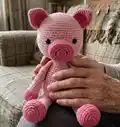
🧶 Beautiful ✨ Detailed 💝 Adorable

Lily the Piglet Amigurumi Pattern

Lily the Piglet Amigurumi Pattern
4.9★ Rating
5-7 Hours Time Needed
1.1K Made This
✂️

Intermediate Level

Ideal for those with basic crochet experience, featuring slightly more advanced stitches and techniques to expand your skills.

⏱️

Weekend Treat

Takes 5-7 hours, making it an enjoyable project to finish over a couple of days.

🧸

Cute Companion

An adorable friend to cherish, handcrafted with love to bring comfort and joy for years to come.

About This Lily the Piglet Amigurumi Pattern

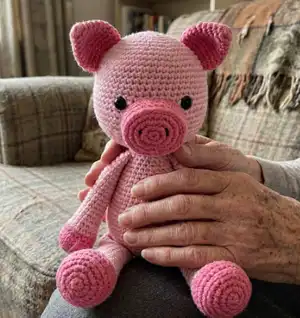
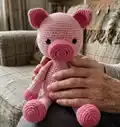
Lily the Piglet is a charming amigurumi pattern that creates a soft, poseable little piglet using sport weight yarn and simple shaping techniques. The pattern includes full instructions for head, body, limbs, ears and muzzle, plus tips for joints and finishing. Clear step-by-step photos and helpful sewing tutorials make assembly easy and enjoyable.

Lily the Piglet Amigurumi Pattern crochet pattern - detailed view of completed project

Designed for intermediate crocheters, this pattern uses standard amigurumi construction with color changes and shaping. You will learn to attach doll joints, embroider nostrils and shape the head for a professional finish.

Why You'll Love This Lily the Piglet Amigurumi Pattern

I absolutely love this pattern because it balances simple construction with sweet, characterful details that make Lily instantly lovable. I enjoy the shaping techniques used on the head and muzzle—they give so much personality with just a few stitches. The step-by-step assembly photos make finishing stress-free, which I always appreciate. Sewing the joints and adding embroidered nostrils is the part I find most satisfying; it transforms the work from a crocheted piece into a finished toy.

Lily the Piglet Amigurumi Pattern step 1 - construction progress Lily the Piglet Amigurumi Pattern step 2 - assembly progress Lily the Piglet Amigurumi Pattern step 3 - details and accessories Lily the Piglet Amigurumi Pattern step 4 - final assembly and finishing

Switch Things Up

I love to customize color palettes when I make this piglet — try pastel blues and greys for a modern nursery friend or mix different pinks for a striped look.

If you want a larger piglet, use a bulkier yarn and a larger hook; for a tiny keychain version, pick a thin yarn and a smaller hook. Gauge and stitches will change the final size, so adjust stuffing and eye size accordingly.

I often embroider small details like eyebrows or a tiny smile to change the expression and personality of the piglet.

Swap the safety eyes for embroidered eyes for a child-safe toy; use French knots or stitched ovals for adorable closed-eye looks.

Try adding tiny crocheted accessories — a bow, scarf or tiny hat — to give Lily a seasonal outfit or a gift-ready look.

For posable limbs, add craft wire inside the arms and legs before stuffing; this lets you pose Lily for photos or playtime.

Experiment with felt shapes for cheeks or inner ear details; glue or sew them on for contrast and texture.

I sometimes use variegated yarn for the body to give a soft mottled effect that hides slight tension variations in my stitching.

If you prefer a firmer toy, increase stuffing and use smaller hook size; for a soft cuddly friend, decrease stuffing and use a slightly larger hook.

Make a whole family by changing colors and sizes — a trio of piglets in coordinating shades makes a lovely handmade gift set.

Common Mistakes & How to Fix Them

✗ Skipping the stitch marker placement will make eye placement difficult; place the stitch marker between stitches 24 and 25 on round 16 to mark the center of the face and use it for accurate eye placement. ✗ Not stuffing as you work can cause lumps and uneven shaping; start stuffing early and add small amounts of fiberfill after every few rounds for firm even shape. ✗ Forgetting to count stitches after increases/decreases causes incorrect shaping; count your stitches at the end of each round, especially after increase or decrease rounds. ✗ Using weak threads for button-and-thread joints may fail; use strong cotton embroidery floss, doubled/tripled sewing thread or fishing line for secure attachment.

Lily the Piglet Amigurumi Pattern

Make your own sweet Lily the Piglet with this detailed crochet pattern. You will enjoy step-by-step instructions, clear stitch guidance and helpful assembly photos to bring this cuddly amigurumi to life. Perfect for gifting or adding a handmade friend to your collection—follow the pattern to create a neat, durable finished toy.

Intermediate 5-7 Hours

Materials Needed for Lily the Piglet Amigurumi Pattern

— Main Fabric

  • 01
    Alize 'Cotton Gold' sport weight cotton-acrylic blend 329 m = 100 g (14 wpi / 2: fine)
  • 02
    Light pink yarn - approximately 55 g (180 m)
  • 03
    Dark pink yarn - approximately 20 g (66 m)

— Tools Required

  • 01
    Crochet hook size 2.50 mm (US 1.5) - recommended 2.50 mm for sport weight
  • 02
    Crochet hook size 3.00 mm (optional according to yarn)
  • 03
    Polyester fiberfill stuffing
  • 04
    9 mm (3/8") safety eyes or buttons
  • 05
    Two 20 mm (4/5") and two 15 mm (3/5") plastic doll joints or safety eyes/buttons and thread
  • 06
    Black or dark brown embroidery floss for nostrils
  • 07
    Yarn needle for sewing
  • 08
    Scissors
  • 09
    Stitch marker
  • 10
    Pins for assembly (optional)

Progress Tracker

0% Complete

— Head :

Round 1 :

mr, sc 6 (6)

Round 2 :

inc x 6 (12)

Round 3 :

(sc, inc) x 6 (18)

Round 4 :

(inc, sc 2) x 6 (24)

Round 5 :

(sc 3, inc) x 6 (30)

Round 6 :

sc, inc, (sc 4, inc) x 5, sc 3 (36)

Round 7 :

(sc 5, inc) x 6 (42)

Round 8 :

sc 2, inc, (sc 6, inc) x 5, sc 4 (48)

Round 9 :

(sc 7, inc) x 6 (54)

Round 10-15 :

sc in each st (54)

Info :

On round 16 place a stitch marker between stitches 24 and 25 (around the loops on top of the 25th stitch). This marks the center of the face, use it as a guide when placing the eyes.

Round 16-17 :

sc in each st (54)

Round 18 :

sc 11, inc, (sc 2, inc) x 2, sc 13, inc, (sc 2, inc) x 2, sc 16 (60)

Round 19-21 :

sc in each st (60)

Round 22 :

sc 3, dec, (sc 8, dec) x 5, sc 5 (54)

Round 23 :

(sc 7, dec) x 6 (48)

Round 24 :

sc 2, dec, (sc 6, dec) x 5, sc 4 (42)

Info :

Attach safety eyes to either side of the stitch marker, between rows 16 and 17, leaving 10 stitches (count 9 holes) between them (see page 7). Start stuffing the head. Keep adding a bit of fiberfill after every few rounds, stuffing the head firmly.

Round 25 :

(sc 5, dec) x 6 (36)

Round 26 :

sc, dec, (sc 4, dec) x 5, sc 3 (30)

Round 27 :

(sc 3, dec) x 6 (24)

Round 28 :

(dec, sc 2) x 6 (18)

Info :

Sl st in next stitch. Cut the yarn, leaving a long yarn tail for sewing, and fasten off. Stuff the head firmly.

— Muzzle :

Round 1 :

mr, sc 6 (6)

Round 2 :

(inc3 x 2, sc) x 2 (14)

Round 3 :

sc 2, inc x 3, sc 4, inc x 3, sc 2 (20)

Round 4 :

sc 3, inc x 3, sc 7, inc x 3, sc 4 (26)

Round 5 :

bpsc in each st (26)

Round 6-7 :

sc in each st (26)

Info :

Sl st in next stitch. Cut the yarn, leaving a long yarn tail for sewing, and fasten off. Stuff the muzzle firmly and sew it to the head. Embroider the nostrils. Use yarn to shape the head (see page 7-8).

— Ears (make 2) :

Round 1 :

mr, sc 6 (6)

Round 2 :

sc in each st (6)

Round 3 :

(inc, sc) x 3 (9)

Round 4 :

(sc 2, inc) x 3 (12)

Round 5 :

sc, inc, (sc 3, inc) x 2, sc 2 (15)

Round 6 :

(sc 4, inc) x 3 (18)

Round 7-9 :

sc in each st (18)

Round 10 :

(dec, sc) x 6 (12)

Info :

Sl st in next stitch. Cut the yarn, leaving a long yarn tail for sewing, and fasten off. Flatten the ears and sew them to the head (see page 10).

— Arms (make 2) :

Round 1 :

mr, sc 7 (7)

Round 2 :

inc x 7 (14)

Round 3 :

(sc, inc) x 7 (21)

Round 4 :

sc in back loops only (21)

Round 5 :

sc 7, dec, (sc, dec) x 2, sc 6 (18)

Round 6 :

sc 4, dec, sc 7, dec, sc 3 (16)

Round 7 :

sc 8, dec, sc 6 (15)

Info :

Sc in next stitch, count it as the end of the round from now on. With light pink yarn change color for the hoof area as instructed below.

Round 8 :

sc in each st (15)

Round 9 :

sc 7, dec, sc 6 (14)

Info :

Stuff firmly. Turn the arm so the end of the round is at the back of the arm. Make a long vertical stitch along the front of the hoof with light pink yarn, going from round 7 straight down, draw it very tight and knot the yarn ends together (see page 8). Keep adding a bit of fiberfill after every few rounds, stuffing the arms firmly.

Round 10 :

sc in each st (14)

Round 11 :

sc 7, dec, sc 5 (13)

Round 12 :

sc in each st (13)

Round 13 :

sc 7, dec, sc 4 (12)

Round 14 :

sc in each st (12)

Round 15 :

sc 7, dec, sc 3 (11)

Round 16-23 :

sc in each st (11)

Info :

On the left arm only, sc in next 6 stitches. Count the last sc as the end of the round from now on. Attach the 15 mm joint between rounds 22 and 23, placing it so the stem is facing straight towards the body (see page 9).

Round 24 :

sc 5, dec x 3 (8)

Round 25 :

dec x 2, leave rest of the sts unworked (6)

Info :

Finish stuffing. Cut the yarn, leaving a long yarn tail, and fasten off. Pick up all the remaining stitches and close the opening (see page 9).

— Legs (make 2) :

Round 1 :

mr, sc 6 (6)

Round 2 :

inc x 6 (12)

Round 3 :

(sc, inc) x 6 (18)

Info :

Continue shaping the leg and change to light pink yarn for the hoof area as indicated in the pattern. Stuff firmly and create a vertical stitch to shape the hoof (see page 8).

Later rounds :

29: sc 9, dec, sc 2 (12). 30: sc 2, dec x 5 (7). 31: sc, dec, leave the rest of the sts unworked (6). Finish stuffing. Cut the yarn, leaving a long yarn tail, and fasten off. Pick up all the remaining stitches and close the opening (see page 9).

— Body :

Round 1 :

mr, sc 6 (6)

Round 2 :

inc x 6 (12)

Round 3 :

(sc, inc) x 6 (18)

Round 4 :

(inc, sc 2) x 6 (24)

Round 5 :

(sc 3, inc) x 6 (30)

Round 6 :

sc, inc, (sc 4, inc) x 5, sc 3 (36)

Round 7 :

(sc 5, inc) x 6 (42)

Round 8-14 :

sc in each st (42)

Info :

Turn the body so the last stitch of round 14 is at the center of the back. Attach the legs to either side of the body, between rounds 8 and 9 (see page 9).

Round 15 :

sc 9, dec, sc 5, dec, sc 6, dec, sc 5, dec, sc 9 (38)

Round 16 :

sc 18, dec, sc 18 (37)

Round 17 :

(sc 11, dec) x 2, sc 11 (35)

Round 18 :

sc 4, dec, sc 24, dec, sc 3 (33)

Info :

Start stuffing the body. Keep adding a bit of fiberfill after every few rounds, stuffing the body firmly.

Round 19 :

sc 16, dec, sc 15 (32)

Round 20 :

dec, sc 30 (31)

Round 21 :

sc 7, dec, sc 14, dec, sc 6 (29)

Later rounds :

22: sc 14, dec, sc 13 (28). 23: sc 10, dec, sc 6, dec, sc 8 (26). 24: (dec, sc 11) x 2 (24). 25: sc 6, dec, sc 9, dec, sc 5 (22). 26: sc 9, dec, sc 2, dec, sc 7 (20). 27: dec, sc 18 (19). 28: sc 9, dec, sc 8 (18). 29: sc in each st (18).

Info :

Sl st in next stitch. Cut the yarn and fasten off. Attach the arms to either side of the body between rows 24 and 25 (see page 9). Finish stuffing the body. Sew the head to the body (see page 10).

— Tail :

Round 1 :

ch 11, starting in 2nd ch from hook, 2 sc in each ch, crocheted into the loops on the back of the chain (20)

Info :

Cut the yarn, leaving a long yarn tail for sewing, and fasten off. Sew the tail to the body (see page 10).

— Assembly :

Item :

Sew ears to head: place the ear just below round 6 of the head, push ear flat and sew inserting needle through both layers. Sew head to body using whip or mattress stitch; add more stuffing before closing the seam. Sew the tail to the body just above round 9.

Item :

Finish arms and legs: insert plastic doll joints into limbs, pushing the stem through the fabric so the stem faces straight towards the body, then pick up remaining stitches and close the opening.

Item :

Attach safety eyes after finishing round 24 and secure washers. Embroider nostrils with black or dark brown embroidery floss making short vertical stitches to either side of round 2 on the muzzle.

Infos :

Use yarn to shape the head and hands/feet by making long vertical stitches and pulling tight; knot yarn ends and hide securely. Fasten off and weave in all yarn tails inside the toy.

Assembly Instructions

  • Place each ear just below round 6 on the head, push the ear flat and sew through both layers to secure; hide yarn tail under the head.
  • Attach the muzzle to the head placing it just below round 15 and sew with whip stitch; embroider nostrils with black or dark brown floss to match the photo guide.
  • Sew the head to the body with whip stitch or mattress stitch (preferred) aligning the neck to the body opening and adding more stuffing before closing the seam.
  • Insert plastic doll joints into the limbs (15 mm in arms, 20 mm in legs) between the specified rounds so the stem faces towards the body, then pick up remaining stitches to close the openings and hide yarn tails securely.

Important Notes

  • 💡Work in a continuous spiral; do not join rounds or turn your work unless instructed otherwise in the pattern.
  • 💡Use a stitch marker or a piece of yarn to mark the end or beginning of a round for accurate stitch counting and placement.
  • 💡Work all stitches in both loops unless instructed otherwise; use back post single crochet where specified for texture and shaping.
  • 💡Stuff pieces gradually and firmly; overstuffing can distort shaping, while under-stuffing yields floppy results.

Lily the Piglet is a sweet handmade friend perfect for nurseries, gifts or a cozy shelf companion. The pattern teaches shaping, color changes, and joint attachment for a polished finish. Create your own Lily and share the handmade joy—one stitch at a time! 🧶🐷
You ask,

we answer.

FAQs

What size will the finished piece be?

The finished amigurumi measures approximately 26 cm (10 1/4") from head to toe when crocheted with the recommended sport weight cotton-acrylic blend and a 2.50 mm hook.

Can I use different yarn weights for this pattern?

Yes, you can use different yarn weights, but this will affect the final size. Use an appropriate hook for your chosen yarn and adjust stuffing and joint sizes accordingly.

Do I need prior crochet experience for this pattern?

This pattern is rated intermediate and includes some less common techniques like back post single crochet, color changes and joint attachment, so basic amigurumi experience is recommended.

How long does this project typically take to complete?

Most crocheters complete this project in 5-7 hours, depending on experience level and assembly time for sewing and finishing.