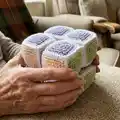
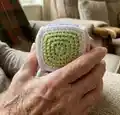
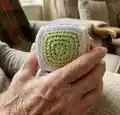
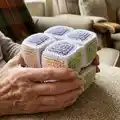
About This Infinity Cube Amigurumi Pattern
This pattern creates a soft, twistable Infinity Cube made from crocheted squares joined into small cubes, then assembled into a functioning fidget toy. It features colorful central faces with a crisp white border and simple corner increases for neat edges. The finished toy measures approximately 10 cm using the recommended yarn and a 2 mm hook.
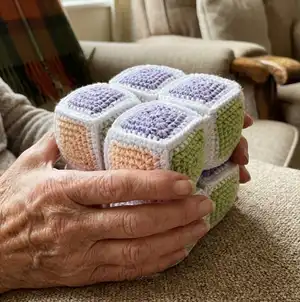
Instructions are written in US crochet terms and include all rounds, edging, assembly, and finishing notes. The pattern is ideal for making a set in calming pastel colors or bright hues for a playful look.
Why You'll Love This Infinity Cube Amigurumi Pattern
I absolutely love this pattern because it transforms basic crochet squares into a clever, interactive toy that keeps hands busy. I enjoyed choosing soft pastel color combinations that look charming together while still being practical for play. I appreciate that the design uses simple stitches so you can focus on assembly and shaping rather than complicated motifs. I also love how satisfying it is to steam and shape the finished cube — it makes each face crisp and tactile. Seeing the final toy twist and fold made from my own crochet always feels like a small triumph.
Switch Things Up
I love how easy it is to customize this pattern by changing color palettes; try monochrome shades for a modern look or rainbow hues for a playful feel.
You can make the cube larger or smaller by choosing a different yarn weight and adjusting the hook size — bulky yarn gives you a chunky cube while fingering weight makes a tiny keychain-sized version.
I often swap the white edging for a contrast color to make the faces pop; a darker border changes the whole personality of the toy.
For a baby-safe version, use soft, natural cotton yarn and securely weave in ends, avoiding any small detachable parts.
I sometimes embroider small symbols or numbers onto the center of the squares to create an educational version for color and number learning.
If you want a sturdier toy, insert small cardboard discs inside the faces before closing (make sure edges are well covered and safe for children).
To make a quieter version, use a denser stuffing or add a layer of felt inside faces to mute the sound during twisting and turning.
I like to create sets of cubes in themed colors (pastel nursery, bright primary, earthy neutral) and display them as decor as well as playthings.
Try adding a small loop of ribbon to one cube face as a handle or attachment point for hanging the toy on a stroller or bag.
Finally, experiment with decorative stitches on the white border like reverse single crochet or picot for a scalloped edge — small changes like these make each cube uniquely yours.
Common Mistakes & How to Fix Them
✗ Skipping the count of stitches after each round will cause your square to become misshapen; count stitches at the end of every round to ensure you have the correct number.
✗ Filling the cube too tightly will deform the shape and make it hard to twist; stuff lightly with holofiber and shape with your hands after assembly.
✗ Not hiding thread tails when joining edges can make seams bulky and visible; fasten off and weave ends into the inside of the cube before closing seams.
✗ Neglecting to make inc3 increases in the corners will result in rounded corners instead of square edges; follow the inc3 corner instruction carefully in the last round and edging.
✗ Using inconsistent tension across different colored squares will make some cubes larger than others; keep tension consistent and use the same hook for all squares.