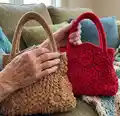
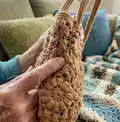
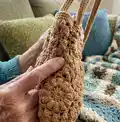
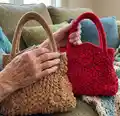
About This Ginanita Bag Amigurumi Pattern
This pattern creates the Ginanita Bag — a crochet bag constructed from 11 granny hexagons assembled into a shaped handbag or tote. It uses popcorn stitches and clusters to create textured petals and defined corners. The pattern includes both diagram and written rounds, hexagon measurements, assembly diagrams and handle instructions.
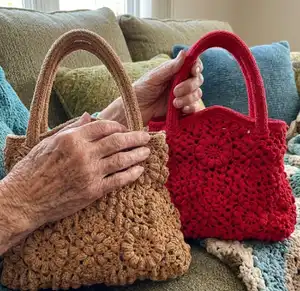
Choose fine yarn and a 2.5mm hook for a compact handbag, or DK yarn and a 3.0mm hook for a larger tote. Step-by-step photos and clear round counts are included to guide your progress.
Why You'll Love This Ginanita Bag Amigurumi Pattern
I absolutely love this pattern because it turns simple granny hexagons into a very wearable, textured bag with lots of personality. I enjoy the rhythmic flow of working popcorn clusters and corners — they create a beautiful 3D surface. The flexibility in yarn weight means you can make a petite handbag or a roomy tote with the same instructions. Finishing the bag and attaching the handles always feels so rewarding; the final result looks far more intricate than the effort required.
Switch Things Up
I love how easy it is to customize this pattern with different yarns; try cotton for summer bags or recycled t-shirt yarn for a chunky market tote.
I often change the color per hexagon to create a patchwork look; alternate two or three colors for a rhythmic color repeat.
If you want a smaller accessory, use a lighter weight yarn and a smaller hook to create mini hexagons for a mini bag or coin pouch.
For a more structured bag, add a fabric lining and interfacing; I sew a cotton lining and insert light interfacing for extra firmness.
Try different handle options: crocheted handles for a fully handmade look, or attach leather handles for a polished finish; I sometimes add metal rings for detachable straps.
I like to embellish with a small crocheted flower or a tassel on the front hexagon for personality; use leftover yarn to make coordinating details.
To make a crossbody, crochet longer handles or make adjustable straps using hardware; you can also attach clips to handles for versatility.
Experiment with stitch variations in the final rounds: replace the outer crab stitch with a scallop edging for a feminine look.
I recommend blocking each hexagon lightly to even out stitches before joining; a quick spray and pin helps everything line up neatly.
When assembling, I always pin and dry-fit the layout first, then whip stitch with the same yarn to ensure neat, nearly invisible seams that hold under use.
Common Mistakes & How to Fix Them
✗ Ignoring stitch counts at the end of each round leads to misshapen hexagons; always verify the number of stitches shown for each round before continuing.
✗ Skipping the slip stitch joins between motif sections can make assembly uneven; secure each join with the whip stitch in the order shown for a flat seam.
✗ Using inconsistent tension while making multiple hexagons will give you uneven sizes; keep your tension consistent and compare new hexagons to an earlier one.
✗ Not measuring the hexagon (corner-to-corner and side-to-side) causes layout problems when assembling; measure after round 7 and adjust hook or yarn if needed.