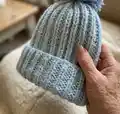
🧢 Beautiful ✨ Detailed πŸ’ Adorable

Freestyle Beanie Pattern

Freestyle Beanie Pattern
3.9β˜… Rating
2-3 Hours Time Needed
3.9K Made This
βœ‚οΈ

Beginner Friendly Level

Perfect for those just starting their crochet journey, with clear instructions and simple techniques

⏱️

Bite-Sized Project

Finishes in 2-4 hoursβ€”perfect for an afternoon of creative relaxation.

🧣

Snug Essential

Everyday comfort with practical charm, designed for both functionality and style through changing seasons.

About This Freestyle Beanie Pattern

This pattern creates a versatile ribbed beanie that can be made in any yarn weight and customized with pompoms, buttons, studs, or embroidered details. The method uses a simple rectangle worked in back loop HDC rows, then seamed and shaped across the top with SC decreases. It is designed to be adaptable β€” use it to make fitted slouchy, child-sized, or oversized hats by adjusting chains and rows.
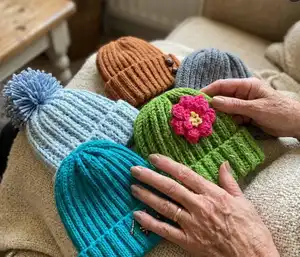
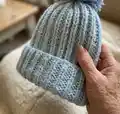
Freestyle Beanie Pattern crochet pattern - detailed view of completed project

Includes tips for measuring, stitch placement, and finishing to make a professional-looking hat. Optional instructions and ideas are provided for flowers, embroidery, studs, and pom-pom toppers.

Why You'll Love This Freestyle Beanie Pattern

I absolutely love this pattern because it takes a very simple set of stitches and turns them into a timeless, wearable beanie. I enjoy how customizable it is β€” you can swap yarn weights, change colors, and add your own embellishments to make each hat unique. The construction is honest and straightforward, which makes it satisfying to complete quickly and confidently. I also love that small adjustments (just a few chains or rows) let you size the hat for anyone, from baby to adult.

Freestyle Beanie Pattern step 1 - construction progress Freestyle Beanie Pattern step 2 - assembly progress Freestyle Beanie Pattern step 3 - details and accessories Freestyle Beanie Pattern step 4 - final assembly and finishing

Switch Things Up

I love how easy it is to customize this beanie by switching yarn weights and hook sizes; using bulky yarn and a larger hook will create a quick, chunky hat while fine yarn and a smaller hook gives you a neat, fitted beanie.

I often make a mini version for keychains by using sport or fingering yarn and a very small hook β€” it becomes a cute pocket-sized gift.

Try alternating two strands of different colors held together for a marled effect that still uses the same stitch pattern for texture and warmth.

Want a slouchy hat? Make the rectangle longer in height before seaming so you have more fabric to drape at the crown when worn.

Prefer a low-profile fitted beanie? Decrease the number of rows and make the long side of the rectangle closer to the head circumference (still slightly smaller so it stretches to fit snugly).

I like to add a faux fur pom-pom or an oversize pom for children β€” attach with a thread and knot through both layers so it sits securely even after washing (if using washable pom-poms).

Add embroidered accents like the cactus spines by using two strands of fingering yarn and whip-stitches along the ribs; you can also embroider small motifs or initials for personalization.

Swap the folded brim for a single-layer brim by making the foundation chains slightly shorter and not folding up the edge, or add button tabs to secure a decorative fold as shown in the samples.

For a dressier look, sew faux leather buttons or studs onto a hidden fabric square inside the brim as a reinforcement so they don't pull through the stitches.

I sometimes line my beanies with a soft knit fabric rectangle sewn into the brim for extra warmth and a clean interior finish β€” this also helps stabilize studs and pins.

Experiment with color stripes by carrying a second color along the WS for a neater color change, or change color every few rows to create bold bands.

If you'd like more texture, try working the rectangle in SC BLO rib instead of HDC BLO to create a tighter, denser fabric that still behaves like a classic rib.

Common Mistakes & How to Fix Them

βœ— Using the wrong hook for your chosen yarn weight can make the fabric too loose or too stiff; always swatch and adjust your hook to achieve a fairly firm gauge so there are no large holes between stitches. βœ— Not measuring the rectangle as you go can lead to a hat that is too small or too large; periodically measure across the long side and try the rectangle on or pin the ends together to check the circumference. βœ— Forgetting to work in the back loop only after the foundation row will change the rib texture; be consistent and double-check that each HDC row is worked into the back loop of each stitch. βœ— Skipping checks for an even number of rows can lead to the working loop ending on the wrong side; make sure you work an even number of rows so the working loop aligns opposite the beginning yarn tail. βœ— Rushing the top decreases causes uneven shaping; insert your hook into the ridges as shown and pull consistent loops when making SC2tog decreases to keep the top edge neat and even. βœ— Sewing the seam without blending edges will show a bulky seam; to make the seam blend well insert your needle under the top loop of the last row and under both loops of the foundation edge before whipping the seam.
Freestyle Beanie Pattern

Make a customizable, cozy ribbed beanie that you can adapt to any yarn weight or style. This pattern walks you through creating a rectangular ribbed piece, shaping the top with single crochet decreases, and finishing with a neat seam and optional embellishments. You will love how quickly a simple rectangle transforms into a flattering, wearable hat β€” perfect for gifts or last-minute projects.

Beginner Friendly 2-3 Hours

Materials Needed for Freestyle Beanie Pattern

β€” Main Fabric

  • 01
    Worsted weight yarn (#4): Kelbourne Woolens Germantown, 220 yds [201m]/3.5 oz [100 g]: Medium Gray Heather #030 (used for classic sample)
  • 02
    Super bulky weight (#6): Buttercream Luxe Craft Alpaca Solid, 130 yds [119m]/6 oz [170 g]: Light Blue #BCMA-421 (used for pom-pom sample)
  • 03
    Bulky weight (#5): We Crochet Brava Bulky, 136 yds [m]/3.5 oz [100 g]: Peapod #633894 (main for cactus hat) and Rouge #28353 (flower)
  • 04
    Fingering weight (4-ply) (#1) scraps: West Yorkshire Spinners Signature 4-ply fingering, 437 yds [400m]: Milk Bottle #230 and Butterscotch #240 (used for cactus spine embroidery and flower center)
  • 05
    Worsted weight: WeCrochet Wool of the Andes, 110 yds [100m]/1.75 oz [50 g]: Amber Heather #23893 (used for studded sample)
  • 06
    Heavy worsted: Happy Sheep Woolpower, 174 yds [160m]/3.5 oz [100 g]: Turquoise #19 (shown sample)
  • 07
    Yarn usage estimates: Worsted weight (#4) approximately 290 yds; Bulky weight (#5) approximately 225 yds; Super Bulky weight (#6) approximately 190 yds

β€” Tools Required

  • 01
    Crochet hook size G/6 (4.0 mm)
  • 02
    Crochet hook size I/9 (5.5 mm) - for bulky yarn option
  • 03
    Crochet hook size K (6.5 mm) or L (8.0 mm) - for super bulky yarn option
  • 04
    Small crochet hook (for tight gauge flower center)
  • 05
    Scissors
  • 06
    Yarn needle for sewing and weaving in ends
  • 07
    Sewing needle and thread (for attaching faux leather buttons)
  • 08
    Safety pins or sewing pins (for holding brim in place when attaching studs or pins)
  • 09
    Pom-pom or faux fur pom-pom (optional)
  • 10
    Studs and pin backings (optional) and a tool to set them
  • 11
    Measuring tape
  • 12
    Blocking tools (spray bottle, flat surface) - optional

Progress Tracker

0% Complete

β€” Instructions :

Info :

Making a beanie without a pattern is super simple! It can be very freeing to create something without having to follow someone else’s directions to the T. Basic beanies make excellent gifts and have so much potential for personalization! Be sure to watch the live event for a full tutorial!

Info :

For this project, you can make a beanie in whichever yarn weight you like. Choose a hook that will give you a fairly firm gauge so that you do not have large holes between your stitches. Just to give you a frame of reference, I often use a worsted weight yarn (this is a #4) with a G/6 (4.0mm) hook, or a bulky yarn (#5) with an I/9 (5.5mm) hook or a super bulky weight (#6) with a K (6.5mm) or L (8.0mm) hook.

Info :

Yarn usage is dependent on the thickness and type of yarn that you choose as well as the size of the beanie, how far the bottom of the hat is folded up, and gauge. Just for a ballpark idea of how much yarn is needed, I’ve listed my averages here for different yarn weights for a medium adult sized hat. You will need extra for a larger hat, less for a smaller hat, etc. Worsted weight (#4): approximately 290 yds; Bulky weight (#5): approximately 225 yds; Super Bulky weight (#6): 190 yds.

Info :

Next, determine how tall you would like your hat to be. You can use a beanie that you already own and measure it from the top to bottom, or you can use your head to determine this measurement. To use your head, use a measuring tape to measure where the bottom edge of the hat should be and measure up to where you imagine the center top of the hat should be. If you plan the hat to have a folded brim like the sample shown, you will need to add the height of the brim to the projected height of the hat. For instance, I wanted my rust colored hat to measure about 8" [20.5cm] tall and I wanted the brim to measure about 3" [7.5cm] up from the folded edge. So the total height of my hat should be 11" [28cm]. (The rust colored sample was made to fit a child, with a bit of extra height to the hat).

Round 1 :

Make a beginning chain that is just slightly longer than the desired beanie height by about 1" [2.5cm], then add 1 more stitch (this will count as a turning chain). In the worsted weight, rust colored sample I started with 49 chains.

Round 2 :

Beginning with the second chain from hook and working into the bottom of the chain, make a HDC (see note below) in each st across, until the piece is as long as your targeted height measurement. If there are extra chains leftover, these can be unraveled. As you continue making rows, continue to monitor the width of your rows (this is the height of the finished hat). Sometimes our gauge fluctuates a bit at the start of our project so it is important to double check after a few rows to make sure it is on target.

Info :

Note: Alternatively, you can begin with a SC row instead of a HDC row. I like to do this because then the first row + the foundation chain add up to be about the same height as 1 row of HDC. This means that this first row will blend in a bit better when we seam the hat together at the end.

Round 3 :

Next, *make a ch-2 for a turning chain (this will not count as a stitch- you will never work into these turning chains), turn your work and make 1 HDC in the back loop of each stitch across. Repeat from * until your hat has the desired circumference (you will need to measure across the long sides of the rectangle, or you can pin the shorter ends to each other and try it on). The long side of the rectangle should measure 1-3" [2.5-7.5cm] smaller than the head circumference so that it has to stretch a bit to fit. Make sure you work an even amount of rows; the working loop should be opposite where the beginning yarn tail is when you are finished. In my rust colored sample I worked 50 rows.

Info :

Rotate the piece in order to work along the top edge of hat, into the row-ends. Make SC decreases (SC2tog) as shown, across the top edge to help shape the top edge.

Round 4 :

To make the decreases across the top edge, **insert hook into the next ridge (see photo) YO, and pull up loop, insert hook into following ridge, YO and pull up loop, YO and pull through all 3 loops on hook.

Round 5 :

Repeat from ** across until all ridges have been worked. If one ridge remains at the end, work one SC into the last ridge.

Round 6 :

Fasten off leaving a long tail for sewing. Using yarn needle, weave yarn tail through each of the SC that were worked along top edge of hat and pull tight to close the top of the hat.

Round 7 :

Continue to use the yarn tail to whip stitch the seam in hat. To make your seam blend in really well, insert needle under just the top loop of the last row worked, but under both loops of the foundation edge as shown below.

Round 8 :

Weave in ends. Block.

β€” Optional Embellishments :

Item Name (Flower) :

I made a flower following this 3-D Flower pattern, except I started with a foundation chain of 19 instead of 9. I also added a little [ch-2, sl st in first ch] picot between the center 2 DC in each petal in the last row. This gave each of the petals a bit of a point. The yarn tails were used to stitch the coiled-up piece to itself (securing the base in a spiral), and then to the beanie.

Item Name (Flower Center) :

I held the same two sock yarns together to create the center of the flower using a small hook for a tight gauge. Center of flower was worked as follows: *chain 5, beginning with the 2nd chain from hook and working into the bottom of the chain, I made 1 sl st into each of the next 4 chains. I repeated from * 8 more times. My piece looked kind of like eyelashes at this point. I coiled up the bottom (the end where all of the wisps were connected), and then I stitched this to the center of the flower.

Item Name (Cactus Spine Embroidery) :

For the cactus spine embroidery I used 2 strands of a sock-weight yarn held together (one in off-white, and one in yellow) and a yarn needle to make some long whip-stitches along each of the ridges. I made sure that I added the spines on the WS of the hat near the bottom so that when it was turned upward, the stitches would be on the outside.

Item Name (Studs and Brim Finishing) :

I added a small rectangle of black knit fabric (like a scrap from a t-shirt) to the bottom of the beanie. I used a sewing needle and thread to stitch it to the right side of the beanie, below the fold line for the brim so it would be completely hidden when the edge was folded upward. This square allows you a place to securely fasten the studs and pin backing. I pierced the studs through both layers, and fastened them in place by bending the prongs inward. After I attached an enamel pin, I used a couple of safety pins (through all layers) to hold the brim in place. The studs and the pin do add a small amount of weight and the safety pins keep the folded edge in place. If you don’t like the look of the safety pins, you can use a small amount of matching yarn to tack the folded edge in place instead.

Assembly Instructions

  • Weave the long tail from the top decreases through each SC worked along the top edge, pull tight to close the hat top, and secure with a few stitches to lock the closure.
  • Whip stitch the side seam of the rectangle together: insert needle under the top loop of the last row worked and under both loops of the foundation edge to make the seam blend in smoothly.
  • Fold the brim upward to the desired width and attach any faux leather buttons through both layers using a sewing needle and thread, spacing as desired on the folded brim.
  • Sew the coiled 3-D flower to the outside of the hat by using the yarn tails to stitch the spiral base securely to the beanie.
  • Add cactus spine embroidery using two strands of fingering yarn and a yarn needle making long whip-stitches along each ridge on the wrong side so they show on the outside when folded up.

Important Notes

  • πŸ’‘Monitor both the length and the width of the rectangle as you work so the finished hat will fit properly; measure across the long side to check circumference.
  • πŸ’‘Work an even number of rows so the working loop ends opposite the beginning tail, making seaming and finishing easier to align.
  • πŸ’‘When seaming, insert your needle under the top loop of the last row and under both loops of the foundation edge for an invisible-looking seam.
  • πŸ’‘Block your finished hat to even out stitches and help the rib texture relax and sit nicely after weaving in ends.

This Freestyle Beanie pattern is a delightful, customizable go-to for quick handmade gifts and everyday warmth. Mix yarn weights, add a pom-pom, studs, or embroidery to make each hat your own. Try color-blocking, bright flowers, or subtle neutral tones for endless creativity. 🧢✨🧡

You ask,

we answer.

FAQs

What size will the finished piece be?

The finished beanie size depends on your yarn and hook choice; the example rust sample measured about 8" tall with a 3" brim folded up for a total of 11" [28cm], and the working rectangle was sized to be 1-3" smaller than the head circumference so it stretches to fit.

Can I use different yarn weights for this pattern?

Yes, you can use different yarn weights; adjust your hook size accordingly and be aware that yarn usage and final hat dimensions will changeβ€”check and measure your rectangle frequently.

Do I need prior crochet experience for this pattern?

This pattern is beginner friendly and uses basic stitches such as HDC and SC, but familiarity with working in back loops and simple decreases (SC2tog) will help you achieve the intended ribbed look.

How long does this project typically take to complete?

Most crocheters complete this beanie in 2-3 hours, though time may vary depending on yarn weight, embellishments, and your working speed.

How do I make the hat smaller or larger?

Change the number of starting chains (length of rectangle) and the number of rows to alter height; the long side should measure 1-3" smaller than the head circumference to allow stretch, so increase or decrease stitches to adjust circumference.