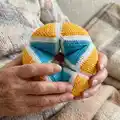
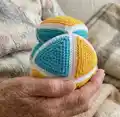
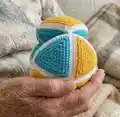
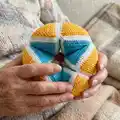
About This Crochet Flexagon Amigurumi Pattern
This pattern teaches you how to crochet a flexible hexagonal fidget toy (flexagon) built from small triangular pieces. You'll make 24 equilateral triangles, edge them, form pyramids and sew them together to create the moving toy. The instructions include shaping rows, edging, and clear assembly steps so you can reproduce the toy exactly.
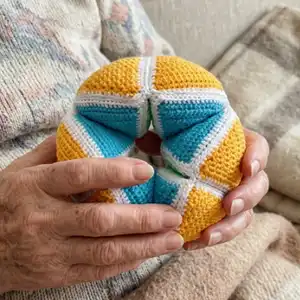
Perfect for makers who like small projects with assembly and hand-sewing. The finished toy is approximately 15 cm across using the recommended materials.
Why You'll Love This Crochet Flexagon Amigurumi Pattern
I absolutely love this pattern because it turns small simple crochet triangles into a clever, interactive toy you can twist and transform. I love how bright colors and a little edging turn basic pieces into a polished object. I enjoyed designing the assembly so each seam contributes to the final movement of the flexagon. I hope you feel the same delight when your piece starts to flex and fold — it is very satisfying to finish.
Switch Things Up
I love how easy it is to change the character of this toy by swapping yarn colors — try a monochrome scheme or bold contrasting colors for different moods.
You can make the flexagon larger or smaller by changing yarn weight and hook size; bulky yarn with a larger hook yields a chunky, tactile version and fine yarn makes a mini keychain-sized flexagon.
I often add embroidered symbols or small appliques on each triangle to personalize faces or patterns for kids and friends.
Try a variegated yarn for the triangle body and a solid contrasting edge for a marbled effect that still reads clearly when assembled.
Use a cotton yarn for a firmer, more stable toy or a softer acrylic for a squishier feel and easier washing.
Experiment with adding a small loop and metal keyring to make a portable mini flexagon keychain version for jackets and backpacks.
You can change the edge stitch color to white for contrast or to match the body for a seamless, understated finish.
For a special sensory version, stitch tiny seed beads into the edge (securely) or use textured yarn for one color to introduce more tactile interest.
I sometimes add light stuffing variations — very firm for stable pyramids or slightly soft for a more squeezable toy depending on the recipient.
When sewing pieces, try different seams (invisible mattress stitch vs half cross) to see which gives the best movement and cleanest look for your materials.
Common Mistakes & How to Fix Them
✗ Not keeping consistent tension across rows; this can make triangle sides uneven, so maintain even tension and practice on a small swatch before making all pieces.
✗ Skipping stitch counts during shaping leads to misshapen triangles; count your stitches after each row and mark key points to ensure accuracy.
✗ Understuffing or overstuffing pyramids causes poor shape and instability; stuff gradually and use small amounts until the pyramid holds shape without bulging.
✗ Rushing the edge row or changing hook size will affect final size and fit when joining; use the recommended hook and finish all triangles with the same tension to ensure consistent seams.
✗ Failing to pin or align pieces before sewing results in misaligned seams; always pin or hold pieces in the intended position and check alignment before stitching.