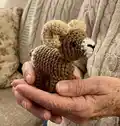
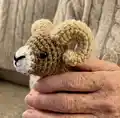
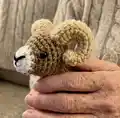
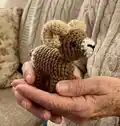
About This Bobby the Bighorn Sheep Amigurumi Pattern
This pattern creates a small, realistic bighorn sheep amigurumi with curled horns and a weighted body for stability. You will work in the round using worsted weight yarn and simple shaping increases and decreases. The pattern includes clear placement notes for eyes, nose stitching, and assembly tips to make sewing parts easy and neat.
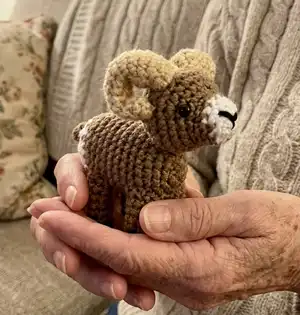
Written in US terms with full round-by-round instructions for each piece. Perfect for making a collectible toy or a charming handmade gift.
Why You'll Love This Bobby the Bighorn Sheep Amigurumi Pattern
I absolutely love this pattern because it captures the personality of a bighorn sheep in a compact, satisfying project. I enjoy the sculpting techniques used for the head and the way the horns are crocheted separately then shaped for a dramatic effect. The weighted body trick gives the finished piece a pleasing, sturdy stance that I find irresistible. Making multiple legs and sewing them in place is a simple assembly that always results in a charming, balanced toy.
Switch Things Up
I love changing up yarn colors to create different breeds; try a darker brown body with cream horns for a distinct look.
I sometimes substitute sport weight yarn and a smaller hook to make a tiny keychain version that fits in the palm of my hand.
I recommend experimenting with hook size and yarn weight to adjust the final scale — larger yarn and hooks make a chunkier, more display-sized sheep.
I have added embroidered eyebrows or stitches to create character variations; a tiny stitched patch over one eye gives a playful personality.
I often try faux fur or boucle yarn for the body while keeping smooth yarn for the head to create a fluffier appearance.
I will occasionally add a collar or a tiny bell to make the sheep a decorative ornament or gift tag accessory.
I sometimes use felt pieces for different nose shapes or to add reinforced hooves if the toy will be handled a lot.
I like to swap the penny weight trick for a small washers pack if I need more weight to help larger versions stand sturdier.
I recommend trying different horn placements and rolling techniques to get the most natural curl — test before sewing permanently.
I also suggest creating multiple sets of legs and trying alternate spacing to adjust gait and stance; small changes make the pose more dynamic.
Common Mistakes & How to Fix Them
✗ Skipping the color change at the exact stitch will leave an uneven nose transition; change color on the last stitch as instructed to get a clean nose edge.
✗ Placing safety eyes too high or low changes the expression drastically; follow the placement note between rows 5 and 6 and space eyes 8 stitches apart for the intended look.
✗ Understuffing or overstuffing the body causes imbalance or distortion; stuff gradually and add a penny for weight as instructed to help the sheep stand properly.
✗ Not counting stitches after increases or decreases will lead to incorrect shaping; count your stitches at the end of each round to ensure accuracy and adjust before proceeding.