🧢 Beautiful ✨ Detailed πŸ’ Adorable

Baby Bat Amigurumi Pattern

Baby Bat Amigurumi Pattern
4.3β˜… Rating
5-7 Hours Time Needed
1.6K Made This
βœ‚οΈ

Intermediate Level

Ideal for those with basic crochet experience, featuring slightly more advanced stitches and techniques to expand your skills.

⏱️

Weekend Treat

Takes 5-7 hours, making it an enjoyable project to finish over a couple of days.

🧸

Cute Companion

An adorable friend to cherish, handcrafted with love to bring comfort and joy for years to come.

About This Baby Bat Amigurumi Pattern

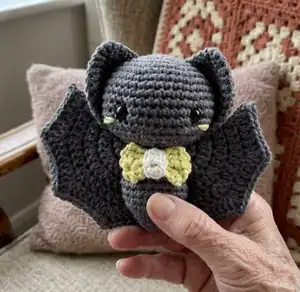
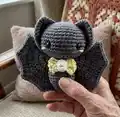
This pattern creates a small, charming baby bat amigurumi with wings and a sweet bow-tie detail. It uses a compact yarn and a small hook to create a neat, firm fabric ideal for toys. The design focuses on simple shaping and clear step-by-step rounds so you can follow along easily.

Baby Bat Amigurumi Pattern crochet pattern - detailed view of completed project

Includes full round-by-round instructions for the head, body, ears, wings and bow-tie, plus assembly and stuffing tips. Perfect as a gift or nursery decor.

Why You'll Love This Baby Bat Amigurumi Pattern

I absolutely love this pattern because it turns simple crochet stitches into a character with personality and charm. I enjoy the small, focused pieces β€” they crochet up quickly and give a huge cuteness payoff. The wing shaping is one of my favorite parts; it adds personality without complicated sewing. I also love that the bow-tie accessory lets you add color pops and personalization. Making a whole flock in different colors is one of my favorite ways to gift handmade joy.

Baby Bat Amigurumi Pattern step 1 - construction progress Baby Bat Amigurumi Pattern step 2 - assembly progress Baby Bat Amigurumi Pattern step 3 - details and accessories Baby Bat Amigurumi Pattern step 4 - final assembly and finishing

Switch Things Up

I love changing the colour palette to make each bat unique; try pastels for a nursery-friendly version or bright contrasting bows for playful characters.

I often switch to a thicker yarn and a larger hook to make a chunky, huggable batβ€”just remember to increase eye size and adjust stuffing.

I sometimes embroider little eyelashes or mouths to add personality instead of using felt or safety eyes.

For a keychain, use finer yarn and a smaller hook, add a keyring to the top loop and reduce stuffing slightly to keep it lightweight.

I like to make matching sets with alternating accent colours for the bow-tie so they look great displayed together.

Try using sparkly or variegated yarn for the wings for a whimsical, magical take on the bat.

I sometimes add wire to the wings’ inside seam before stitching closed for a slightly poseable wing edge.

To make a sleepy expression, place eyes slightly lower and stitch a relaxed mouth with embroidery thread.

Make a winter-themed bat by sewing a tiny crocheted scarf in a contrasting colour around the neck.

I recommend experimenting with different hook sizes for a tighter or looser fabric until you get the look you love before making multiple copies.

Common Mistakes & How to Fix Them

βœ— Skipping the safety eye placement step can lead to uneven spacing between eyes; count back the stitches as instructed and check you have eight visible stitches between eyes before securing the backs. βœ— Stuffing too firmly early on will distort shaping during decreases; stuff gradually and focus on stuffing rounds 12 and above lightly before final shaping. βœ— Not matching the ch2 points when folding the wing can create an asymmetrical wing shape; fold the wing and ensure each ch2 point lines up directly opposite before stitching. βœ— Sewing the head and body through both loops can change the look of the seam; stitch the head and body together through the front loops only for a cleaner join and correct alignment. βœ— Pulling tension inconsistently between SC and DC stitches will change the size of the wing relative to the body; try to keep DC stitches neat and compact and maintain consistent tension throughout.

Baby Bat Amigurumi Pattern

Make your own cuddly baby bat with this detailed crochet pattern. You will learn how to crochet the head, body, ears, wings and a tiny bow-tie, then assemble them into an adorable finished toy. The pattern includes step-by-step rounds, placement tips for safety eyes, stuffing and shaping guidance, and clear assembly instructions so you can make a polished little companion.

Intermediate 5-7 Hours

Materials Needed for Baby Bat Amigurumi Pattern

β€” Main Fabric

  • 01
    Approx. 25g yarn for your main colour (Scheepjes Catona Anthracite - 501)
  • 02
    Approx. 25g yarn alternative main colours: Dark Olive - 387, Bridal White - 105
  • 03
    Small amount of yarn for accent colour (bow/blush): Scheepjes Catona Lime Juice - 392
  • 04
    Small amount of yarn for accent colour options: Apricot - 524, Light Orchid - 226
  • 05
    Small amount of white yarn for the bow-tie knot (approx. 10cm tail)

β€” Tools Required

  • 01
    Crochet hook size 2.25mm (use a hook suitable for the yarn you choose)
  • 02
    6mm safety eyes (2 pieces) - you may need to use larger eyes depending on hook/yarn size
  • 03
    Stuffing (polyester fibrefill)
  • 04
    Darning / tapestry needle for sewing and weaving in ends
  • 05
    Pins for positioning ears and wings while assembling
  • 06
    Scissors

Progress Tracker

0% Complete

β€” Head :

Info :

IMPORTANT : Try to maintain a consistent tension throughout the whole project, including the wings (dc). Only make very tight sc stitches if you can also make very tight dc stitches.

Info :

In your main colour, make 6sc in mr.

Round 1 :

(inc) x 6 (12)

Round 2 :

(sc, inc) x 6 (18)

Round 3 :

(sc 2, inc) x 6 (24)

Round 4 :

(sc 3, inc) x 6 (30)

Round 5 :

(sc 4, inc) x 6 (36)

Round 6-7 :

sc in each - 2 rounds (36)

Round 8 :

(sc 5, inc) x 6 (42)

Round 9-12 :

sc in each - 4 rounds (42)

Info :

Insert safety eyes as shown. Do not add the backs yet, as it may be difficult to crochet the next round.

Info :

STEP 1: Count 7 stitches back from hook. 2 rows up, between rounds 10 + 11. Place first eye here. STEP 2: Count 10 stitches back. Place second eye here. You should have 8 visible stitches between the eyes.

Round 13 :

(sc 4, dec) x 7 (35)

Info :

stuffing step 1

Round 14 :

(sc 3, dec) x 7 (28)

Info :

stuffing step 2

Round 15 :

(sc 2, dec) x 7 (21)

Round 16 :

(sc, dec) x 7 (14)

Info :

stuffing step 3

Info :

Slst, FO, and weave in tail.

Info :

STUFFING & SHAPING: STEP 1. Place the backs on your safety eyes and begin to stuff. Tuck plenty of stuffing above the eye area. This helps to keep the eyes looking 'straight and forward' later. STEP 2. Stuff rounds 12 and above. Gently pad out the area between, and around, the eyes. Don't stuff too firmly just yet. STEP 3. Add stuffing a little at a time until you have a nice rounded shape. Take care to not dislodge the eyes, and don't overstuff your decrease rounds!

β€” Body :

Info :

Continue with your main colour and make 6sc in mr.

Round 1 :

(inc, sc) x 3 (9)

Round 2 :

(inc, sc 2) x 3 (12)

Round 3 :

(inc, sc 3) x 3 (15)

Round 4 :

(inc, sc 4) x 3 (18)

Round 5 :

(inc, sc 2) x 6 (24)

Round 6-8 :

sc in each stitch - 3 rounds (24)

Info :

Begin to stuff the body. From here, stuff as you go.

Round 9 :

(dec, sc 6) x 3 (21)

Round 10 :

sc in each stitch (21)

Round 11 :

(dec, sc 5) x 3 (18)

Round 12 :

(sc 3, dec, sc 2, dec) x 2 (14)

Info :

Sc in the next 3 stitches, Slst in the next. Cut yarn, leaving a long tail for sewing, and pull through.

Info :

Ensure the body is stuffed firm to maintain the shape. Line up the slst on the body, with the slst on the head. Stitch the head and body together through the front loops only.

β€” Ears :

Info :

3sc = make 3 sc into the same stitch. 2sc = make 2 sc into the same stitch. Start with 6sc in mr.

Round 1 :

(3sc, sc) x 3 (12)

Round 2 :

Sc, (3sc, sc 3) x 2, 3sc, sc 2 (18)

Round 3 :

Sc 2, (3sc, sc 5) x 2, 3sc, sc 3 (24)

Round 4 :

Sc 3, (3sc, sc 7) x 2, 3sc, sc 4 (30)

Round 5 :

Sc 4, (2sc, sc 9) x 2, 2sc, sc 4, slst (33)

Info :

Cut yarn, and pull through - leaving approx. 40cm tail. Make the second ear.

β€” Wings :

Info :

Ch3 counts as 1 dc. Dc-inc = make 2 dc in the same stitch. 2dc ch 2 2dc = make 2 dc in the next stitch, chain 2, then make another 2 dc in the same stitch. Make 2.

Info :

Into mr . . . Fold your work in half to create the wing shape. **Be sure that the ch2 points match the opposite side** Stitch together through the back loops only. Once you reach the end, thread your needle back through the wing, to your starting point.

Round 1 :

Ch3, dc 15, slst into ch2 (16)

Round 2 :

Ch3, dc in same ch2 space, (dc, dc-inc) x 7, dc, slst in ch2 (24)

Round 3 :

Ch3, dc in same ch2 space, (dc 2, dc-inc) x 7, dc 2, slst in ch2 (32)

Round 4 :

Ch3, dc in same ch2 space, (dc 3, dc-inc) x 7, dc 3, slst in ch2 (40)

Round 5 :

Ch3, dc in same ch2 space, ch2, 2dc in the same space then... (dc 4, 2dc ch2 2dc) x 7, dc 4, slst in ch2 (80)

Info :

Cut approx. 60 cm of yarn and pull through.

Info :

Fold your work in half to create the wing shape. Be sure that the ch2 points match the opposite side. Stitch together through the back loops only. Once you reach the end, thread your needle back through the wing, to your starting point.

Info :

IMPORTANT : Try to keep your dc stitches neat and compact. The finished wing should be almost as tall as the head and body. Small differences should not matter. If your wing is much larger - you may need to try a smaller hook.

β€” Bow-tie :

Info :

The bow-tie should look slightly oversized. As a guide, it should fall roughly the same width as the eyes. You can add/remove chains, or use a different hook, to achieve the right size (if you need to).

Info :

In your accent colour...

Round 1 :

Ch 8, hdc in 3rd ch from hook, hdc in each space (6)

Round 2-4 :

Ch 2, turn, hdc in each stitch - 3 rows (4 rows in total) (6)

Info :

Fasten off and weave in ends.

Info :

In white... Ch 7 with a 10cm tail. Dc in 3rd ch from hook, dc in each space (4). Slst into ch1, cut 10cm and pull through. Go to step 1.

Item Name (P1) :

1. Thread your chain tail through the middle of the opposite end. Creating a loop at the back. 2. Pinch the coloured piece, place face down inside the loop and pull gently. 3. Thread your ends through the middle loops on the opposite side. Pull tight and knot. Weave and trim one loose end, leaving the other for sewing.

β€” Assembly :

Point A :

The front corner of the ear should be placed in the second stitch back from the blush, one row down, between rounds 12 and 13.

Point B :

The back corner should go between rounds 8 and 9. Approx. 3 stitches apart.

Point C :

Gently pinch the top tip of the ear, then flatten against the head. Pin between rounds 3 and 4.

Info :

Always check how the ears look from the front before sewing. You may need to adjust the positioning slightly. If you need to adjust, first check point C - pinning/unpinning an extra stitch or two may fix it. If that doesn't help, leave point A the same, and adjust points B and C to achieve the desired look.

Info :

To attach, pick up both loops on the ear, and go directly under the corresponding stitch on the head. Pull tight for a neat finish. Work through each stitch. Then fasten off discretely and weave in the end.

Info :

If you are making a very small bat, like mine, the pins will be sticking out through the body. Please take care handling until the pins are removed!

Info :

Pin the wings to the body, creating a narrow V-shape. The starting rings should be positioned where the body meets the head, 3-4 stitches apart. You can bend the wing back slightly to get the correct position. The bottom points of the wing should meet towards the tail.

Info :

Thread your needle and attach the wing from bottom to top, the same way we attached the ears. One stitch every 2-3 body rows should be enough. Once you've secured the top, bring your needle through to the side of the body - roughly in line with the ear. Pick up a stitch from the wing and attach to the body. Pull tight. Work your needle towards the bottom part of his body, pick up another stitch from the wing and attach, pull tight. Fasten off discretely and weave in the end.

Info :

Attach the bow-tie between the 2nd and 3rd rows beneath the head. Gently squish him back into shape with your fingers and you're all done!

Assembly Instructions

  • Attach the head to the body by aligning the slst on the body with the slst on the head, then sew together through the front loops only using the long tail from the body.
  • Position ears: front corner (Point A) in the second stitch back from the blush between rounds 12 and 13, back corner (Point B) between rounds 8 and 9, and pinch the top tip (Point C) and pin between rounds 3 and 4 before sewing.
  • Pin the wings to the body creating a narrow V-shape with starting rings positioned where the body meets the head (3-4 stitches apart), then stitch the wings from bottom to top picking up one stitch every 2-3 body rows.
  • Attach the bow-tie between the 2nd and 3rd rows beneath the head, using the remaining tail to sew it securely and trim excess thread.
  • Check the placement of ears and wings from the front before final sewing; adjust pin positions as needed for symmetry prior to permanently sewing and weaving in ends.

Important Notes

  • πŸ’‘Try to maintain a consistent tension throughout the whole project, especially when switching from sc to dc stitches for the wings.
  • πŸ’‘Keep dc stitches neat and compact for the wings so the finished wing size matches the body and head proportion.
  • πŸ’‘Fold the wing and ensure the ch2 points match the opposite side before stitching; stitch together through the back loops only.
  • πŸ’‘Stuff gradually and shape the head during decreases; overstuffing early can distort the overall shape.
  • πŸ’‘Pin parts in place and check symmetry from the front before final sewing to avoid misplaced ears or wings.

This little baby bat is a delightful handmade companion that makes a perfect small gift or decor item. The pattern balances simple rounds with a few shaping tricks to create maximum personality with minimal fuss. Try different yarn colors for seasonal or themed bats and enjoy the smiles it brings! πŸ§ΆπŸ¦‡

You ask,

we answer.

FAQs

What size will the finished piece be?

The finished amigurumi is small β€” roughly palm-sized when using Scheepjes Catona and a 2.25mm hook, though exact size will vary with yarn and hook choice.

Can I use different yarn weights for this pattern?

Yes, you can change yarn weight, but this will affect the final size; use an appropriate hook for your yarn and be prepared to adjust eye size and stuffing accordingly.

Do I need prior crochet experience for this pattern?

This pattern is rated intermediate; you should be comfortable with sc, inc, dec, dc and basic shaping techniques to follow the rounds and assembly instructions.

How long does this project typically take to complete?

Most crocheters finish this baby bat in about 5-7 hours spread over a weekend, depending on experience and assembly time.

What size safety eyes should I use?

The pattern recommends 6mm safety eyes; you may need larger eyes depending on your hook and yarn size, so check placement visually before inserting backs.