🧢 Beautiful ✨ Detailed πŸ’ Adorable

Watermelon Coleus Pattern

Watermelon Coleus Pattern
4.3β˜… Rating
5-7 Hours Time Needed
3.2K Made This
βœ‚οΈ

Intermediate Level

Ideal for those with basic crochet experience, featuring slightly more advanced stitches and techniques to expand your skills.

⏱️

Weekend Treat

Takes 5-7 hours, making it an enjoyable project to finish over a couple of days.

🏑

Cozy Accent

A warm touch for your space that transforms ordinary corners into inviting nooks filled with handmade charm.

About This Watermelon Coleus Pattern

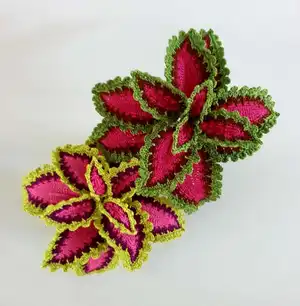
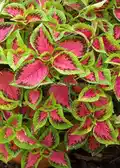
This pattern teaches you how to crochet a realistic Watermelon Coleus plant using small, wired leaves and layered colorwork. You will create multiple leaf sizes with a long-stitch decorative edge to capture the plant's distinctive look. The instructions include how to insert and crochet over florist wire for sturdy stems and shaping.

Watermelon Coleus Pattern crochet pattern - detailed view of completed project

Includes full round-by-round leaf instructions, long-stitch explanations, and suggested materials for finishing in a pot. Photographs and tips are provided to help you shape and assemble a 12-leaf plant.

Why You'll Love This Watermelon Coleus Pattern

I absolutely love this pattern because it transforms simple crochet stitches into a lifelike botanical piece that looks stunning on display. I enjoy the process of working the long stitches β€” they give each leaf a beautiful scalloped edge that really catches the eye. The wired stems let you pose and shape the plant for natural curves, which makes each finished plant unique. Making a set of 12 leaves and arranging them in a pot is so satisfying and makes a lovely handmade gift.

Watermelon Coleus Pattern step 1 - construction progress Watermelon Coleus Pattern step 2 - assembly progress Watermelon Coleus Pattern step 3 - details and accessories Watermelon Coleus Pattern step 4 - final assembly and finishing

Switch Things Up

I love how easy it is to customize this pattern by changing colors; try pastel tones for a softer, vintage look or vivid neons for a modern statement.

I often switch yarn weight and hook size to make a miniature keychain version or a large chunky display piece; adjust the wire gauge accordingly for stability.

I sometimes embroider tiny veins down the center of each leaf using a contrasting thread to add more realism and texture.

Try adding tiny crocheted flowers or buds to the same stems for a mixed potted arrangement that feels more botanical.

I also experiment with different border stitches instead of the long-stitch scallops β€” picots or shells change the leaf silhouette dramatically.

Want a hanging plant? Use longer wire stems and a small hanging basket, then arrange leaves to spill over the edge for a trailing effect.

I recommend testing one leaf first if you plan on mixing yarn brands or weights so you can tweak tension and wire choices before making the full set.

To create a fuller plant, make more small Leaf B pieces and fewer large Leaf A pieces; stacking and layering will give depth and density.

For a seasonally themed display, switch the color palette: autumn shades for a fall arrangement or bright greens and pinks for spring vibes.

Don't forget to add small felt pads or pebbles at the base inside the pot for extra weight and a polished finishβ€”this helps keep taller stems steady.

Common Mistakes & How to Fix Them

βœ— Skipping the stitch-count checks during shaping leads to uneven leaf edges; count stitches at the end of each round to ensure symmetry and correct shaping. βœ— Not securing the wire properly before crocheting over it can cause the wire to slip out; thread the wire through the stitch on your hook and hold it taut as you work the round over it. βœ— Changing tension dramatically between color changes will distort your leaf shape; keep a consistent, moderate tension and practice the long stitches slowly until you feel comfortable. βœ— Forgetting to pull the wire round and down equally at the tip will create a crooked petal point; gently pull the wire evenly to close the tip and maintain the leaf shape.

Watermelon Coleus Pattern

Create a realistic Watermelon Coleus plant with this detailed crochet pattern. You will make layered, wired leaves with vivid color changes and decorative long-stitch edges to mimic real coleus foliage. The pattern uses DMC Petra no5 thread and includes step-by-step instructions, photos, and wire assembly tips so you can craft a lifelike potted plant. Perfect for adding handmade botanical charm to your home or gifting to plant lovers.

Intermediate 5-7 Hours

Materials Needed for Watermelon Coleus Pattern

β€” Main Fabric

  • 01
    DMC Petra no5 (3ply) crochet cotton - recommended yarn for this model
  • 02
    Color 53607 - deep pink/magenta (Plant color options)
  • 03
    Color 5550 - plum/purple (Plant color options)
  • 04
    Color 53803 - bright fuchsia (Plant color options)
  • 05
    Color 5938 - brown/deep accent (Plant color options)
  • 06
    Color 5907 - light chartreuse/green (border/leaf edge)
  • 07
    Color 5905 - medium green (border/leaf edge)

β€” Tools Required

  • 01
    Crochet hook size 1.5mm
  • 02
    Recommended yarn: 3ply (DMC Petra no5)
  • 03
    Alternative: 4ply or crochet cotton 10 with appropriate hook size
  • 04
    Garden wire: 2mm, 3mm or 3.5mm (stem) optional - 3.5mm used in examples
  • 05
    Florist wire: gauge 26 or thicker
  • 06
    Green floral tape
  • 07
    Styrofoam or dry florist sponge (for pot filling)
  • 08
    Scissors
  • 09
    Yarn needle for sewing and weaving ends
  • 10
    Stitch markers
  • 11
    Pliers for cutting and bending wire (optional)

Progress Tracker

0% Complete

β€” Pattern Notes :

Info :

Notes: When you see stitches in brackets, it means that all the ones in the bracket are worked in to one stitch. Example: (sc inc) means: 2sc worked in to one stitch. (3sc) means: 3sc in the same stitch. (3sc) x 2 means: 3sc in each of the next 2 stitches. Alternate (dc inc) and 1dc x 3 means: work 2dc in to the first stitch, then work 1dc in the next, then repeat the last 2 steps 2 more times.

Info :

Following the tutorial and using the recommended yarn, your finished plant will measure approx. 7" (18cm) tall without plant pot and 9" (23cm) in width depending on how you shape the leaves. This plant is made of 12 leaves in total as shown in the image. You can make it larger by making more leaves or smaller by making less leaves.

β€” Leaf A :

Round 1 :

Ch25 Skip1 2sc 1hdc 1dc (dc inc) x 2 9dc 4hdc 3sc (3sc) in the last chain

Round 1 Continued :

3sc 4hdc 9dc (dc inc) x 2 1dc 1hdc 2sc (3sc) in the skipped chain from the beginning

Round 2 :

2sc 2hdc 1dc (dc inc) (1dc, 1tc) 1tc (tc inc) repeat the last 2 steps 1 more time 3tc 4dc 4hdc 3sc

Round 2 Continued :

(3sc) center stitch, Going down the other side, 3sc 4hdc 4dc 3tc (tc inc) 1tc repeat the last 2 steps 1 more time (1tc, 1dc) (dc inc) 1dc 2hdc 3sc slst base chain

Round 3 :

ch1 8sc (sc inc) 1sc repeat the last 2 steps 2 more times 17sc

Round 3 Info :

Work all the following stitches in to the center stitch at the tip of the leaf: (1hdc, ch4, skip1, 1sc, 1hdc down the chain, 1hdc) Pull the wire round and down equally

Round 3 Continued :

17sc 1sc (sc inc) repeat the last 2 steps 2 more times 8sc Slst in 1st stitch on the opposite side CHANGE COLOUR

Round 4 :

ch1 4sc 1hdc Then work the first Long stitch sequence. Work 1hdc, Yarn over as to work another hdc but don't work it in to the next chain. Instead insert the hook in to the round below (underneath the wire round) and 1 stitch back (p1). Pull the yarn through as you would usually do (p2) and pull the long stitch up (p3). Now pull through to complete the Long hdc the same as you would usually do (p4). So now you have done this sequence: (1hdc, 1Long hdc). In the next chain work 1slip stitch (p5). This chain may be hidden under the Long stitch so just check to make sure the slip stitch is worked in to the correct chain.

Round 4 Continue :

Continue to work 1dc (1dc, 1Long dc) Slst

Round 4 Continue :

1dc (1tc, 1Long tc) Slst Repeat 3 more times

Round 4 Continue :

1dc (1dc, 1Long dc) Slst Repeat 1 more time

Round 4 Continue :

1hdc (1hdc, 1Long hdc) Slst Repeat 1 more time

Round 4 :

2sc (3sc) center stitch

Round 4 Going down other side :

ch1 4sc slst 1hdc (1hdc, 1Long hdc) Repeat 1 more time slst 1dc (1dc, 1Long dc) Repeat 1 more time slst 1dc (1tc Long tc) Repeat 3 more times slst (1dc, 1Long dc) Repeat 1 more time slst (1hdc, 1Long hdc) 1hdc 5sc slst in 1st stitch on the opposite side

Round 5 :

ch1 4sc slst (in to the row below) (p1)

Round 5 Continue :

1sc (p2) 1hdc (p3) (hdc inc) (p4) slst (side of slst from the row below) (p1) Repeat 9 more times

Round 5 Continued :

3sc (1sc, ch3, skip1, 1sc, 1sc) Center stitch. Going down the other side, 3sc slst (side of slst) (hdc inc) 1hdc 1sc Repeat 9 more times slst (row below) 5sc CHANGE COLOR

Round 6 :

ch1 4sc Now work, 1dc next to the slip stitch from the previous round, push the hook in at the side of the slst we made in the previous round, pull the yarn up and complete the dc (p1). This stitch is repeated all around the petal where the slip stitches from the previous round are.

Round 6 Continue :

Continue to work: 1hdc (p2) (sc dec) (p3) 1hdc (p4) 1dc (side of slst) (p1) Repeat the last 4 steps 9 more times 3hdc 2sc

Round 6 Continued :

Work (3sc) in to the unworked skipped chain at the tip of the petal.

Round 6 Going down other side :

2sc 3hdc 1dc (side of slst) 1hdc (sc dec) 1hd 1dc (side of slst) Repeat 9 more times 5sc Slst in the 1st chain on the opposite side.

Round 7 :

(ch1, 1sc) 7sc

Round 7 Edge :

(slst, ch2, 1dc, ch1) (1dc, ch2, slst) 2slst Repeat the last 4 steps 10 more times

Round 7 Center :

(1dc, 1tc, ch1, slst, 1dc) center

Round 7 Other side :

Going down the other side 2slst (slst, ch2, 1dc, ch1) (1dc, ch2, slst) Repeat the last 4 steps 10 more times 8sc Leave a long tail, Wrap tight around the wire To cover approx. 2"(5cm).

Info :

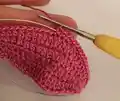
Leaf A Wire: We will now crochet over the florist wire. Cut a piece of approximately 20"(50cm) and thread it through the stitch on your hook (p1 & 2). Crochet this whole next round over the wire (p3).

β€” Long Stitch Explanation :

Info :

In this round I am using a few unusual stitches that I call the Long hdc, the Long dc and the Long tc. Those stitches are almost worked the same as the normal hdc, dc and tc just with a slight difference. Each Long stitch comes in a sequence of one normal hdc, dc or tc followed by the Long stitch. For example the hdc sequence will be described as (1hdc, 1Long hdc). The dc sequence (1dc, 1Long dc) and the tc sequence (1tc, 1Long tc). On average there will be a space of approximately 2 stitches on that previous round in between each long stitch.

Info :

Rnd.4: ch1, 4sc, 1hdc Then work the Long stitch sequence by inserting the hook into the round below (underneath the wire round) and 1 stitch back, then pull the long stitch up and complete as usual. After the Long stitch complete a slip stitch in the next chain to secure it.

β€” Leaf A continued :

Info :

Continue the Long stitch sequences as described: (1hdc, 1Long hdc) then slst; 1dc (1dc, 1Long dc) slst; 1dc (1tc, 1Long tc) slst repeat sequences as instructed on both sides to form the scalloped edge. Change colour and work additional rounds as written above. Finish with edge scallops and leave long tail to wrap wire.

β€” Leaf B :

Round 1 :

Ch20 Skip1 2sc 1hdc 1dc (dc inc) x 2 6dc 3hdc 2sc (3sc) last chain

Round 1 Continued :

2sc 3hdc 6dc (dc inc) x 2 1dc 1hdc 2sc (3sc) in the skipped chain from the beginning

Round 2 :

2sc 2hdc 1dc (dc inc) x 2 1dc (dc inc) 1dc (dc inc) 3dc 3hdc 3sc (3sc) center 3sc 3hdc 3dc (dc inc) 1dc (dc inc) 1dc (dc inc) x 2 1dc 2hdc 3sc slst in to base chain

Info :

Insert Wire approx. 20"(50cm): Rnd.3: ch1 5sc Alternate (sc inc) and 1sc x 3 15sc (1hdc, ch4, skip1, 1sc,1hdc, 1hdc) center stitch 15sc 1sc and (sc inc) x 3 5sc Slst in 1st on opposite side. Change Color

Info :

Leaf B continued: follow similar long stitch and edging sequences as Leaf A when changing colour for the border. Work rounds as for Leaf A but using the shorter base chain counts for the smaller leaf.

Assembly Instructions

  • If you are using a plant pot then use either styrofoam or dry florist sponge cut to fit your pot; place it inside and push the stem wires of your leaves into it starting from the centre and working out in a circle.
  • Wrap the long tail left on the leaf wire tightly around the florist wire to cover approximately 2" (5cm) and secure with floral tape before inserting into the pot.
  • Arrange the 12 finished leaves (combination of Leaf A and Leaf B sizes) in a pleasing composition, adjusting each wired stem to create layered depth and natural overlap.
  • Cover the top of the foam or sponge with pebbles or soil to hide the base and hold stems in place, and use floral tape to bind groups of stems if making a small bouquet.

Important Notes

  • πŸ’‘Use stitch markers to keep track of rounds and center stitches, especially when working the long-stitch sequences to maintain consistent spacing.
  • πŸ’‘Be careful when inserting and threading the wire through the stitch on the hook; hold the wire steady as you crochet the round over it to prevent slippage.
  • πŸ’‘Change colours neatly and weave ends in as you go to avoid bulky joins that can distort the scalloped edge of the leaves.

This Watermelon Coleus crochet pattern brings a splash of botanical color to your home with detailed leaf shaping and decorative edges. Make a cluster of wired leaves and arrange them in a pot for a lifelike display that never needs watering. Whether for your own shelf or as a heartfelt gift, these handmade coleus leaves are a joyful, long-lasting accent. 🧢🌿

You ask,

we answer.

FAQs

What size will the finished piece be?

The finished plant measures approximately 7" (18cm) tall and 9" (23cm) wide using the recommended DMC Petra no5 and a 1.5mm hook; size will vary with yarn and hook choice.

Can I use different yarn weights for this pattern?

Yes, but changing yarn weight will affect final size and stitch definition; if you use heavier yarn, increase your hook size and expect a larger, chunkier leaf.

Do I need prior crochet experience for this pattern?

This pattern is rated intermediate and introduces long-stitch techniques and crocheting over wire, so basic crochet skills and experience with increases, decreases and reading rounds is recommended.

How long does this project typically take to complete?

Most crocheters complete a full plant (about 12 leaves) in 5-7 hours total, depending on experience and how many leaves you make.