🧢 Beautiful ✨ Detailed πŸ’ Adorable

Planter Crochet Amigurumi Pattern

Planter Crochet Amigurumi Pattern
4.8β˜… Rating
5-7 Hours Time Needed
3.7K Made This
βœ‚οΈ

Intermediate Level

Ideal for those with basic crochet experience, featuring slightly more advanced stitches and techniques to expand your skills.

⏱️

Weekend Treat

Takes 5-7 hours, making it an enjoyable project to finish over a couple of days.

🧸

Cute Companion

An adorable friend to cherish, handcrafted with love to bring comfort and joy for years to come.

About This Planter Crochet Amigurumi Pattern

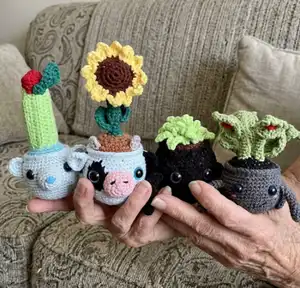
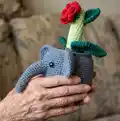
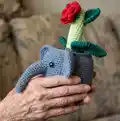
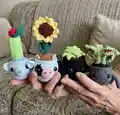
This pattern creates a family of tiny planter amigurumi with different plant tops including sunflower, cactus, venus fly trap, and succulents. Each planter has charming animal faces (cow, polar bear, spider) and interchangeable plant pieces. The instructions include pot construction, individual plant parts, and detailed assembly photos so you can replicate the look exactly.

Planter Crochet Amigurumi Pattern crochet pattern - detailed view of completed project

Youll work in continuous rounds and use simple shaping techniques like increases and decreases. The pattern encourages creativity so you can mix colors and customize eyes and details for each planter.

Why You'll Love This Planter Crochet Amigurumi Pattern

I absolutely love this pattern because it blends cute amigurumi faces with fun plant details to create charming decor pieces. I enjoy how each plant top can be swapped to give a totally different personality to the same pot, which keeps the project fresh and playful. The pattern taught me clever ways to attach small pieces securely while keeping a clean finish. I also love that the pieces are small and quick to make, perfect for gifts or a themed set. Finally, assembling the parts and seeing the planter come to life is genuinely rewarding and fun.

Planter Crochet Amigurumi Pattern step 1 - construction progress Planter Crochet Amigurumi Pattern step 2 - assembly progress Planter Crochet Amigurumi Pattern step 3 - details and accessories Planter Crochet Amigurumi Pattern step 4 - final assembly and finishing

Switch Things Up

I love how easy it is to customize these planters by swapping plant tops and changing colors; try pastel tones for a softer nursery look or bright hues for playful designs.

Want a larger statement piece? Use a bulky yarn and a larger hook to scale up the pot and plant pieces for a chunky, huggable planter.

For mini keychains, use a smaller weight yarn and a correspondingly smaller hook to shrink the pattern into adorable palm-sized versions.

I often add embroidered freckles, tiny felt accessories, or small crochet scarves to give each planter a unique personality and story.

Change eye types to alter expression: plastic safety eyes create a glossy look, while embroidered eyes make the piece suitable for babies and wash-friendly projects.

Try using textured yarn for succulents to mimic fuzzy leaves, or variegated yarn for a speckled, natural dirt effect in the pot.

For more structure in tall stems, insert a wooden dowel or cake dowel into the stem and sew around it to secure; this helps display dramatic flowers upright.

I sometimes add tiny beads or seed beads as decorative pollen centers for the sunflower, sewn securely with matching thread.

Mix and match animal faces with different plants: a sunflower on a spider pot looks whimsical, and a cactus on a polar bear pot is adorably unexpected.

When sewing pieces in place, I pin first and use small whipstitches so parts sit flush; adjusting placement before final stitching helps perfect the overall balance.

Common Mistakes & How to Fix Them

βœ— Skipping the stitch marker when working in a continuous spiral makes it hard to track rounds; always place a stitch marker at the beginning of each round to keep your stitch count accurate. βœ— Not stuffing gradually causes lumps or uneven shaping in the pot and plant pieces; add small amounts of stuffing as you go and shape steadily to maintain a smooth surface. βœ— Using inconsistent tension leads to mismatched sizes between parts; maintain even, moderate tension and count stitches often to ensure pieces line up for assembly. βœ— Forgetting to change colors exactly as noted will shift pattern placement for cow spots or eyes; follow the color-change rounds precisely and use pins to mark where eyes and details go before sewing.

Planter Crochet Amigurumi Pattern

Make adorable planter amigurumi with customizable plants and cute animal pots. This pattern gives full step-by-step instructions for pots, plant pieces, and assembly so you can create a sunflower, cactus, spider, cow, and more. Youll love the mix-and-match design that lets you swap plants and faces to craft unique little companions.

Intermediate 5-7 Hours

Materials Needed for Planter Crochet Amigurumi Pattern

β€” Main Fabric

  • 01
    Worsted weight yarn (#4), approximately 75g of main color
  • 02
    Accent colors: approximately 25g each depending on plant and details
  • 03
    Bulky yarn option for larger planters (adjust hook accordingly)
  • 04
    Colors vary depending on planter (brown for dirt, green for plants, white/black/pink for animals)

β€” Tools Required

  • 01
    Crochet hook size 3.25 mm (D) (recommended for worsted weight)
  • 02
    Crochet hook size 3.75 mm (F) (optional for bulky yarn)
  • 03
    Safety eyes: 16 mm (worsted pot), 21 mm (bulky spider), 24 mm (cow), 20 mm (polar bear)
  • 04
    Scissors
  • 05
    Yarn needle for sewing
  • 06
    Stitch markers
  • 07
    Polyester fiberfill stuffing
  • 08
    Pins for assembly
  • 09
    Wooden dowel or cake dowel for stems (optional)
  • 10
    Pipe cleaners for leg shaping (optional)

Progress Tracker

0% Complete

β€” Pot :

Info :

Crocheted from bottom to top. For the spider, if you want to attach the legs as you work, make the legs first (pg. 4). The cow color changes are located below.

Round 1 :

Make 8 sc into a magic ring= 8

Round 2 :

Increase in each st around= 16

Round 3 :

(sc, inc) x 8= 24

Round 4 :

(3 sc, inc) x 6= 30

Round 5 :

(4 sc, inc) x 6= 36

Round 6 :

BLO sc in each st around

Round 7 :

sc in each st around

Round 8 :

(5 sc, inc) x 6= 42

Round 9 :

sc in each st around

Round 10 :

(6 sc, inc) x 6= 48

Info :

*for the spider, The no sew version: Round 14: 2 sc, (work 3 sc on the leg and pot, sc) x 4, 11 sc, (work 3 sc on the leg and pot, sc) x 4, 3 sc

Round 11-16 :

sc in each st around

Info :

For spiders: Place eyes between rounds 14 and 15, leaving 8 holes apart. For Cow: Place eyes between rounds 14 and 15, leaving 10 holes apart. For Polar Bear: Place eyes between rounds 14 and 15, leaving 10 holes apart.

Round 17 :

(6 sc, dec) x 6= 42

Round 18 :

(5 sc, dec) x 6= 36

Round 19 :

sc in each st around

Round 20 :

FLO ch 1, hdc in each st around

Info :

F/O

β€” Cow Pot :

Round 12 :

White: 20 sc, Black: 3 sc, White: 25 sc

Round 13 :

White: 19 sc, Black: 7 sc, White: 22 sc

Round 14 :

White: 19 sc, Black: 7 sc, White: 22 sc

Round 15 :

White: 19 sc, Black: 6 sc, White: 23 sc

Round 16 :

White: 20 sc, Black: 5 sc, White: 23 sc

Round 17 :

White: (6 sc, dec) x 2, 5 sc, Black: sc, dec, White: (6 sc, dec) x 3= 42

β€” Spider Legs(Make 8) :

Round 1 :

Make 7 sc into a magic ring= 7

Round 2-12 :

sc in each st around

Info :

Do not stuff the legs (if you want, add a pipe cleaner into the legs for some shaping). Fold the legs in half and sc the opening closed.

Info :

F/O and leave a long tail for sewing if you did not want to make the no sew version

β€” Polar Bear Ears(Make 2) :

Info :

With White:

Round 1 :

Make 6 sc into a magic ring- 6

Round 2 :

Increase in each st around= 12

Round 3 :

(sc, inc) x 6= 18

Round 4 :

sc in each st around

Round 5 :

(sc, dec) x 6= 12

Info :

Do not stuff the ears. Fold the ears in half and sc the opening closed. F/O and leave a long tail for sewing

β€” Dirt on Pot :

Info :

Attach dirt colored yarn to back loops of round 20

Round 1 :

(4 sc, dec) x 6= 30

Info :

*for the cow the round will make the horns: Dirt color: 4 sc, dec, 3 sc, Horn Color: Ch 4, inc3 in 2nd ch from hook, hdc in next ch, dc in next ch, Dirt Color: sc, dec, 4 sc, dec, 2 sc, Work a horn, Dirt color: 2 sc, dec, (4 sc, dec) x 2= 30

Round 2 :

(3 sc, dec) x 6= 24

Round 3 :

(2 sc, dec) x 6= 18

Round 4 :

(sc, dec) x 6= 12

Round 5 :

dec x 6= 6

Info :

If you are making the cow, do not F/O! If you are not making the cow, F/O and sew the hole closed

Info :

Change to green:

Round 1-18 :

sc in each st around

Info :

Insert a wooden dowel or something similar inside the stem. F/O and sew the hole closed.

β€” Polar Bear Nose :

Info :

With white:

Round 1 :

Make 6 sc into a magic ring= 6

Round 2 :

Increase in each st around= 12

Round 3 :

(sc, inc) x 6= 18

Round 4-5 :

sc in each st around

Info :

Place 18 mm nose between rounds 1 and 2. F/O and leave a long tail for sewing

β€” Cow Ears(Make 2) :

Info :

One in black, one in white:

Round 1 :

Make 6 sc into a magic ring= 6

Round 2 :

Increase in each st around= 12

Round 3 :

(sc, inc) x 6= 18

Info :

Skip 4 st, sl st in next st. Sl st across the top to give the ear a pinched look. F/O and leave a long tail for sewing

β€” Cow Nose :

Info :

With Pink: Ch 4

Round 1 :

inc in 2nd ch from hook, sc, inc3, Working on the opposite side of the chain: 3 sc= 9

Round 2 :

inc x 2, 2 sc, inc x 3, sc, inc= 15

Round 3 :

(sc, inc) x 2, 2 sc, (sc, inc) x 3, 2 sc, inc= 21

Round 4-5 :

sc in each st around

Info :

F/O and leave a long tail for sewing

β€” Sunflower :

Info :

With Brown:

Round 1 :

Make 5 sc into a magic ring= 5

Round 2 :

Increase in each st around= 10

Round 3 :

(sc, inc) x 5= 15

Round 4 :

(2 sc, inc) x 5= 20

Round 5 :

(3 sc, inc) x 5= 25

Info :

Change to Yellow:

Round 6 :

(Ch 5, sc in 2nd ch from hook, hdc in next ch, dc in next ch, tr in next ch, Sl st in next 2 st)around

Info :

F/O and leave a long tail for sewing

β€” Sunflower Leaf #1 :

Info :

With Green: Ch 7

Round 1 :

Dc + tr in 3rd ch from hook. 2 tr in next ch. 2 dc in next ch. Hdc in next ch. sc in last ch

Info :

F/O and leave a long tail for sewing

β€” Sunflower Leaf #2 :

Info :

With Green: Ch 7

Round 1 :

Sc in 3rd ch from hook

Round 2 :

Hdc in next ch

Round 3 :

2 dc in next ch

Round 4 :

2 tr in next ch

Round 5 :

tr + dc in last ch

Info :

F/O and leave a long tail for sewing

β€” Spider Succulent :

Info :

Attach green yarn with a sl st in between rounds 2 and 3.

Info :

*Ch 7

Round 1 :

sl st in 2nd ch from hook, sc in next ch, hdc in next ch, dc in next 2 chains, tr in next ch, sl st in next 2 stitches.

Info :

Repeat from * to * around until you get to the middle of the pot.

β€” Venus Fly Trap :

Info :

Stem (make 4): With Green:

Round 1 :

Make 6 sc into a magic ring= 6

Round 2-16 :

sc in each st around

Info :

Do not stuff the stems. If you want, place a cake dowel in the stem.

Info :

F/O and leave a long tail for sewing

Info :

Trap (Make 4 in red, 4 in green): Starting with Red:

Round 1 :

Make 6 sc into a magic ring= 6

Round 2 :

Increase in each st around= 12

Info :

Do not F/O the green! Place back sides of green and red pieces together.

Round 3 :

With green: (sc, inc) x 6= 18

Round 4 :

(2 sc, inc) x 6= 24

Round 5 :

(ch 3, sl st in same st, sl in next 2 st) around

Info :

F/O and leave a long tail for sewing

Info :

Leaves (Make 3): Ch 15

Round 1 :

sc in 2nd ch from hook, 2 hdc, 2 dc, 4 tr, 2 dc, 2 hdc, inc in last ch, Working on the opposite side of the chain: sc, 2 hdc, 2 dc, 4 tr, 2 dc, 2 hdc, sc

Info :

F/O and leave a long tail for sewing

β€” Polar Bear Cactus :

Info :

With Green: Ch 20

Round 1 :

sc in 2nd ch from hook and across= 19

Round 2-16 :

BLO Ch 1, turn, sc in each st across

Info :

F/O and leave a very long tail for sewing

Section :

Holly Leaves (Make 2): With green: Ch 10

Round 1 :

sc in 2nd ch from hook, sc, hdc, dc, dc-inc, dc, hdc, sc, inc3 in last ch, Working on the opposite side of the chain: sc, hdc, dc, dc-inc, dc, hdc, sc, sl in last st

Round 2 :

sc, *ch 3, sl st in same st*, 4 sc, * to*, 4 sc, * to*, 2 sc, * to *, 4 sc, * to *, 3 sc, sl st to 1st st

Info :

F/O and leave a long tail for sewing

Section :

Berries (Make 2): With red:

Round 1 :

Make 6 sc into a magic ring= 6

Round 2 :

Sc in each st around

Round 3 :

Dec x 3= 3

Info :

Sew the berry closed. F/O and leave a long tail for sewing

β€” Assembly :

Item Name (P1) :

Head: 1. Pin the cow nose onto the front of the pot between the eyes. Sew the nose onto the pot. Embroider 2 nostrils. 2. Pin the ears onto the side of the pot. Sew the ears onto the pot. 3. Pin the polar bear nose onto the front of the pot. Sew the nose onto the pot. 4. Pin the ears onto the side of the polar bear pot. Sew the ears onto the pot.

Item Name (P2) :

Spider: 1. If you chose not to work the spider legs into the pot. Pin the legs onto the side of the spider pot. 2. Sew the legs onto the side of the pot. 3. Embroider the face onto the spider if you would like.

Item Name (P3) :

Plants: 1. For the cow: Pin the leaves onto the bottom of the stem. Sew the leaves onto the stem. 2. Pin the flower onto the top of the stem. Sew the flower onto the stem. 3. Sew the cactus together in a tube. Stuff the cactus. Sew the top of the cactus together. 4. Sew the cactus onto the top of the pot. Sew the holly berry onto the top of the cactus. 5. For the venus fly trap: Sew the stems onto the top of the pot. Fold the trap in half and sew the back to give it a closed look. Sew the trap onto the top of the stem. Sew the leaves onto the top of the pot.

Assembly Instructions

  • Attach head pieces: Pin the nose between the eyes, sew it on securely, and embroider nostrils; then pin and sew ears to the sides of the pot for symmetry.
  • For the spider: Pin or work legs into the pot opening; if not worked in, position and sew eight legs evenly around the side of the spider pot.
  • Position plant stems in the dirt opening and secure by sewing through the back loops of the dirt round; insert a dowel into tall stems before closing if extra support is needed.
  • Sew cactus panels into a tube shape, stuff firmly, close the top neatly and sew the cactus to the top center of the pot; add holly berries or accessories by sewing them into place.
  • Pin all parts before sewing to check placement and balance, then sew using a yarn needle and matching yarn, weaving in tails securely for a clean finish.

Important Notes

  • πŸ’‘Do not join rounds unless stated; work in a continuous spiral for smooth amigurumi shaping.
  • πŸ’‘Use a stitch marker to mark the beginning of each round to keep your rounds and increases accurate.
  • πŸ’‘All stitches are worked in both loops unless stated otherwise in the pattern.
  • πŸ’‘Place safety eyes between the rounds specified for each animal before stuffing the pot to ensure correct placement.

This planter amigurumi pattern brings tiny plant friends to life with adorable faces and interchangeable tops. Create a sunflower cow, a cactus polar bear, or a spidery succulent to brighten any shelf or desk. Share them as handmade gifts or keep a whole collection to enjoy at home! 🧢🌿😊

You ask,

we answer.

FAQs

What size will the finished piece be?

The planter measures approximately 6 inches from bottom to top of the plant when using worsted weight yarn and a 3.25 mm hook, depending on the plant chosen.

Can I use different yarn weights for this pattern?

Yes, you can use different yarn weights but this will affect the final size. Adjust hook size accordingly (for example bulky yarns with a larger hook) and expect differences in proportions.

Do I need prior crochet experience for this pattern?

This pattern is rated intermediate and assumes knowledge of basic stitches like sc, inc, dec, hdc and working in continuous rounds; experience with small amigurumi pieces will help.

How long does this project typically take to complete?

Most crocheters finish a single planter in about 5-7 hours, though time varies with experience, yarn choice, and complexity of the plant top.

Where should I place safety eyes?

Place safety eyes between rounds 14 and 15 for spiders, cows, and polar bears; spacing differs by characterβ€”8 holes apart for spiders, 10 holes apart for cows and polar bears.