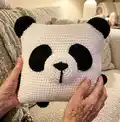
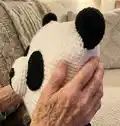
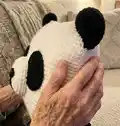
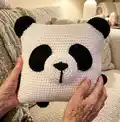
About This Pillow-panda Amigurumi Pattern
This pattern teaches you how to crochet a square panda pillow with plush yarn and simple amigurumi pieces. Youll make the pillow panel, ears, arms, legs, spots and a round nose, then assemble and embroider the facial details. The finished pillow is soft and child-friendly, sized around 29x29 cm depending on yarn and hook. It uses basic crochet stitches and provides clear, photographed steps for guidance.
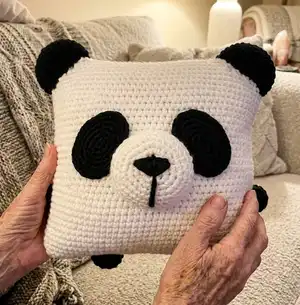
Perfect for gifting or brightening your home, this pillow combines soft texture with playful panda details. The pattern is written with round-by-round instructions and helpful assembly notes.
Why You'll Love This Pillow-panda Amigurumi Pattern
I absolutely love this pattern because it transforms simple stitches into a lovable, tactile character that feels delightful to hold. I enjoy working with plush yarn for its luxurious, squishy finish and this design highlights that texture beautifully. Sewing the little ears, spots and nose brings the pillow to life, and I find the assembly process relaxing and rewarding. Making these small details lets me personalize each pillow — I often experiment with eye placement and embroidery to create different expressions.
Switch Things Up
I love customizing this pillow by changing the color palette to create different animal friends; swapping black for brown or gray gives charming variations.
Try using a thicker plush yarn and a larger hook to make a chunkier, more cushioned pillow thats great for toddlers.
Make a mini version by using a smaller hook and thinner plush yarn to create keychain-sized pandas or small decorations.
I often add embroidered eyelashes or a small mouth to change the panda's expression and give each pillow a unique personality.
For a safer childrens version, replace beads with embroidered eyes and firmly secure all parts with extra stitching.
Experiment with textured stitches on the pillow panel to add visual interest, like alternating rows of single crochet and half double crochet.
I sometimes create coordinating accessories like a tiny scarf or bow tie using leftover yarn to make a set of matching decor pieces.
Try adding a zipper closure on the back panel so you can remove the stuffing for washing or to change filling firmness as needed.
You can also embroider initials or a small name above the nose to personalize the pillow as a gift for babies or kids.
If you want posable limbs, insert a small gauge wire into the arms and legs before stuffing, then close and hide the wire ends securely inside the pillow.
Common Mistakes & How to Fix Them
✗ Skipping stitch markers during the pillow rounds makes counting difficult; use a marker at the start of each round to maintain consistent stitch counts.
✗ Overstuffing the pillow can distort the square shape and make seams hard to close; stuff gradually and evenly, checking the corners carefully to keep the shape balanced.
✗ Not leaving long sewing tails for parts like ears and nose will make assembly fiddly; leave long thread ends and use them to securely attach pieces before hiding the ends.
✗ Forgetting to secure and hide embroidery threads can cause loose ends later; fasten the thread well and hide it inside the nose or pillow to prevent unraveling.