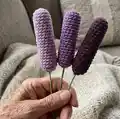
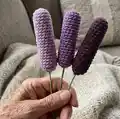
About This Lavender plant Pattern
This pattern makes a small, realistic-looking lavender flowerhead using DK weight yarn and simple stitches. You will chain a foundation, work textured loops along both sides, and finish by attaching a wire stem for display. The result is a charming, delicate plant perfect for arrangements or gifts.
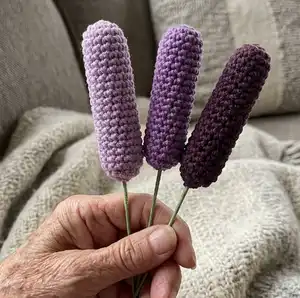
The instructions are written in US crochet terms and designed for confident beginners. Minimal materials are required and the assembly is straightforward.
Why You'll Love This Lavender plant Pattern
I absolutely love this pattern because it creates a beautiful, realistic lavender flower with very few materials and simple stitches. I enjoy how quickly a finished bloom comes together, making it perfect for gift-making or last-minute decor. The pattern is forgiving of tension, so I find it relaxing to work on while watching TV or chatting. I also love that the wire stem makes the finished piece poseable and easy to combine into arrangements.
Switch Things Up
I love experimenting with different yarn weights to change the size and texture of the lavender flowerhead.
You can use a thicker DK or worsted yarn and a larger hook to make chunky, statement blooms.
I sometimes substitute cotton yarn for a firmer finish that holds shape better in arrangements.
Try using variegated purple yarn for a more natural, tonal effect across the petals.
I like to add a tiny dab of glue or a few stitches of embroidery for a darker centre for added detail.
Wrap floral tape or green embroidery thread around the wire to create a more realistic stem finish.
I often make multiple flowerheads and cluster them together on separate wires to form a fuller bouquet.
Consider adding tiny crocheted leaves using green DK yarn to enhance realism and coverage on the stem.
For a mini keychain, use thinner yarn and a smaller hook then attach a split ring to the base of the wire instead of making a long stem.
I also enjoy dyeing small amounts of yarn slightly lighter or darker to achieve ombre bouquets that look hand-gathered and natural.
Common Mistakes & How to Fix Them
✗ Skipping the final slip stitch at the end of round 1 can leave your chain edge loose and unfinished; always slst into the final chain to secure the row.
✗ Not working into the opposite side of the chain will make your piece flat and incomplete; after finishing the first side, flip and work along the opposite side as instructed.
✗ Cutting the yarn too short at the end will make it hard to sew the wire in place; leave a long tail so you can wrap and secure the bent wire end properly.
✗ Pulling loops too loosely for the ch-6 loops will cause the petals to look floppy; keep consistent tension so each ch-6 loop creates a neat petal.