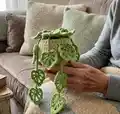
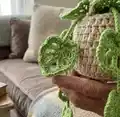
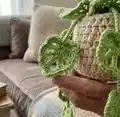
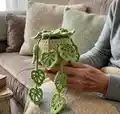
About This Drooping Leave Crochet Pattern
This pattern shows you how to crochet a hanging pot with a soil insert and many drooping leaves to create a Monstera-inspired hanging plant. It uses common crochet stitches and clear row-by-row instructions for each piece. You will finish with a lovely hanging decoration perfect for small spaces, car decor, or gifts.
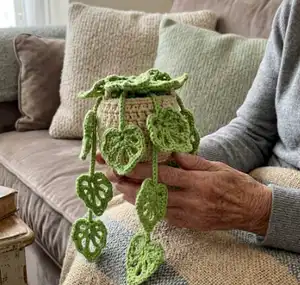
Includes instructions for the pot, soil insert, individual leaves, hanging ropes, and final assembly. Photos and tips throughout help you position and sew leaves for a natural drape.
Why You'll Love This Drooping Leave Crochet Pattern
I absolutely love this pattern because it turns simple stitches into a lush, trailing plant that brings life to any small space. I enjoy the mix of small pieces and repetitive leaf-making — it feels meditative and rewarding. Sewing the leaves into the soil and arranging them is where the piece really comes to life, and I always feel proud of the final drape. The pattern is versatile, letting me play with colors and lengths to make unique hanging plants for friends.
Switch Things Up
I love how easy it is to customize this pattern by changing yarn color and weight; try darker greens for a realistic look or bright pastels for a whimsical planter.
You can make the piece larger by using a thicker yarn and a larger hook; this will create a chunkier pot and larger leaves for a bold statement piece.
I often alter the number and length of chains between leaves to create different droop effects; longer chains give you longer trailing vines while shorter chains look bushier.
Try adding tiny embroidered veins on the leaves with contrasting thread for extra detail and texture; I find it really makes the leaves pop.
For a more structured look you can insert a thin floral wire inside longer leaf chains to pose and shape the leaves exactly how you want them.
I sometimes add a small button or bead to the center of some leaves for a decorative focal point, which gives the plant a unique handmade accent.
If you want a hanging mobile version, make many mini leaves and string them on a ring; this pattern adapts well to keychains and car charms.
Try mixing yarn fibers — cotton gives crisp leaves while acrylic has a softer drape; I choose based on how stiff or floppy I want the leaves to be.
I also enjoy making clusters of leaves in graduated sizes so the largest leaves sit near the pot and the smallest hang at the tips, creating a natural fall.
Finally, experiment with different pot stitch textures (front post, back loop) to create contrasting rims and body textures — I often combine BLO rounds with DC rounds for a decorative rim.
Common Mistakes & How to Fix Them
✗ Skipping the slip stitch at the end of rows can misalign your stitches; always slip stitch into the first stitch when a row ends to maintain even edges.
✗ Not counting increases correctly will change the pot circumference; count stitches after each increase round and mark the start of the round with a stitch marker.
✗ Overstuffing the soil insert can distort the pot shape; stuff gradually and check fit inside the pot frequently so the soil sits naturally.
✗ Attaching leaves without pinning first results in uneven placement; pin or loosely place several leaves before sewing to balance the droop and symmetry.
✗ Using a hook that is too large will make holes and floppy leaves; use the recommended 2.5-3.0 mm hook for crisp stitches and defined leaf shapes.