๐Ÿงถ Beautiful โœจ Detailed ๐Ÿ’ Adorable

Cotton Flower Bouquet Crochet Pattern

Cotton Flower Bouquet Crochet Pattern
4.6โ˜… Rating
5-7 Hours Time Needed
3.7K Made This
โœ‚๏ธ

Intermediate Level

Ideal for those with basic crochet experience, featuring slightly more advanced stitches and techniques to expand your skills.

โฑ๏ธ

Weekend Treat

Takes 5-7 hours, making it an enjoyable project to finish over a couple of days.

๐Ÿก

Cozy Accent

A warm touch for your space that transforms ordinary corners into inviting nooks filled with handmade charm.

About This Cotton Flower Bouquet Crochet Pattern

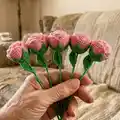
This pattern teaches you to crochet a full decorative bouquet made of cotton yarn, including roses, daisies, blue flowers, buds and carnations. You will make stems, leaves and sepals, and learn how to wind yarn around floral wire for neat stems. The instructions include photo steps and simple charts so you can follow along easily.

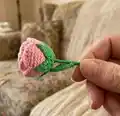
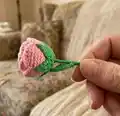
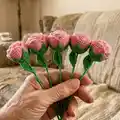
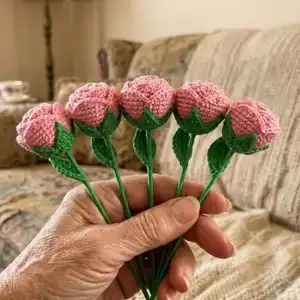
Cotton Flower Bouquet Crochet Pattern crochet pattern - detailed view of completed project

The bouquet is designed using YarnArt Begonia cotton and a 2.0 mm hook for delicate detail. Finished stems are approximately 25 cm long and flowers range 4.5โ€“6 cm in diameter depending on yarn thickness.

Why You'll Love This Cotton Flower Bouquet Crochet Pattern

I absolutely love this pattern because it transforms simple yarn into a lasting bouquet that never wilts. I enjoy the way small details like the sepal and leaf give each flower a lifelike finish. The step-by-step photos and charts make it easy for me to follow and to teach others. Making a whole bouquet is so satisfying โ€” each completed flower feels like a tiny victory that stacks into a beautiful finished arrangement.

Cotton Flower Bouquet Crochet Pattern step 1 - construction progress Cotton Flower Bouquet Crochet Pattern step 2 - assembly progress Cotton Flower Bouquet Crochet Pattern step 3 - details and accessories Cotton Flower Bouquet Crochet Pattern step 4 - final assembly and finishing

Switch Things Up

I love customizing this bouquet by changing yarn colors and textures; try pastel shades for a soft vintage look or bright brights for a contemporary arrangement.

I sometimes switch yarn weight and an appropriately larger hook to create jumbo flowers for a dramatic centerpiece; conversely, thinner yarn and a small hook make tiny flowers perfect for corsages or brooches.

I often add embroidered veins to leaves or bead centers to flowers to give them extra personality and detail; these small touches make the bouquet uniquely mine.

You can vary stem lengths to create a loose, organic bouquet or keep them uniform for a neat, modern look; mix and match by eye as you assemble the stems.

Try making entire sets in one color family for elegant tonal bouquets, or mix several contrasting colors for a playful, garden-like bunch.

I also like to use wired ribbon instead of glued yarn on the stems for a different finish โ€” it gives a polished, floral-shop look and is easy to wrap tightly.

For posable stems, I sometimes insert a thinner gauge wire inside the wrapped wire for increased flexibility and adjustability.

Try combining these crochet flowers with dried foliage or real twigs for mixed-media bouquets and centerpieces that last even longer.

Experiment with adding tiny buttons, faux stamens, or felt rounds to the centers of flowers to produce vintage or whimsical styles.

If you want to make a set of gifts, scale the pattern up or down by swapping yarns and hooks; small versions make lovely keychains or bag charms while larger ones become lovely home decor pieces.

Common Mistakes & How to Fix Them

โœ— Not securing the yarn to the wire firmly can cause the yarn to unwind while wrapping; apply glue to the edge of the wire and fasten the yarn firmly before winding to prevent slippage. โœ— Skipping stitch placement details when working the leaf causes an uneven shape; follow the stitch sequence (HDC, DC, TR, DTR) for each chain exactly and count stitches. โœ— Using an incorrect wire thickness may make stems too stiff or too loose for flowers; choose the recommended 1.1 mm wire (or 0.8โ€“0.9 mm for small flowers) and test the sepal hole before gluing. โœ— Forgetting to check the sepal hole size makes assembly difficult; check the hole and if necessary slightly expand or tighten the magic ring to fit the stem before fastening. โœ— Overstuffing or under-placing glue on assembly points can make the flower bulk or detach later; use small amounts of glue at each join and press parts firmly until set.

Cotton Flower Bouquet Crochet Pattern

Create a charming bouquet of crocheted cotton flowers you can arrange and gift. This pattern shows roses, daisies, blue flowers, buds and carnations with detailed step-by-step photos and charts. You will learn how to make stems, sepals, leaves and assemble each flower for a long-lasting handmade bouquet.

Intermediate 5-7 Hours

Materials Needed for Cotton Flower Bouquet Crochet Pattern

โ€” Main Fabric

  • 01
    Cotton yarn YarnArt 'Begonia' 169m/50g (main choice)
  • 02
    Green yarn for leaves, stems and sepals - approx 50g (adjust as needed)
  • 03
    Bright pink yarn for roses - small balls (make 5 roses)
  • 04
    White yarn and yellow yarn for daisies - small amounts for each daisy center and petals
  • 05
    Two shades of blue yarn for blue flowers - small amounts each shade
  • 06
    Soft pink yarn for buds - small amount
  • 07
    Purple yarn for carnations - small amount

โ€” Tools Required

  • 01
    Crochet hook size 2.0 mm
  • 02
    Scissors
  • 03
    Needle for finishing
  • 04
    Floral wire 1.1 mm (recommended) and alternatives 0.8 - 0.9 mm
  • 05
    Measuring tape
  • 06
    Pliers for cutting wire
  • 07
    Universal or hobby glue (silicone glue suggested)
  • 08
    Small pair of pliers or wire cutters
  • 09
    Pins for assembly (optional)

Progress Tracker

0% Complete

โ€” General Info :

Info :

The bouquet includes 25 flowers: 5 roses, 5 daisies, 5 blue flowers, 5 buds and 5 carnations

Info :

Colors used: for leaves, stems and sepals - green. For roses - bright pink. For daisies - white and yellow. For blue flowers - two shades of blue. For buds - soft pink. For carnations - purple.

Info :

Necessary materials: yarn (YarnArt 'Begonia' 169m/50g recommended), 2.0 mm hook, scissors, needle, floral wire, measuring tape, pliers and glue.

โ€” Stem :

Info :

I will make each flower 25 cm (10 inches) long. The length of the stem is selected according to the size of the flowers that will be planted on the stem. Using pliers, cut the required length of wire for the stem.

Step 1 :

Apply glue to the edge of the wire and fasten the yarn firmly.

Step 2 :

Gradually apply glue to the wire and wind the yarn tightly around the wire until the stem is fully covered.

Step 3 :

Fasten the yarn on the edge of the wire, cut the yarn and press the edge firmly. Trim any excess and set the stem aside to dry.

โ€” Leaf :

Row 1 :

CH 7

Row 1 detail :

CH 1, SC 1 in the first chain (I perform the second row in the back side of the chains, you perform as convenient for you)

Row 1 :

HDC 1 in the second chain

Row 1 :

DC 1 in the third chain

Row 1 :

DC 2 in the fourth chain

Row 1 :

TR 2 in the fifth chain

Row 1 :

DTR 3 in the sixth chain

Row 1 :

DTR 7 in the seventh chain

Info :

Then we perform stitches in the same chains, according to the stitches that have already been made, the edge of the yarn that sticks out can be pressed to each subsequent chain, so it will be fixed and add solidity to the middle part of the leaf.

Row 2 :

CH 1, SC 1 in the same SC

Row 2 :

SC 1 in HDC

Row 2 :

SC 1 in the first DC of three, SC 1 in the second DC, SC 1 in the third DC, SC 1 in the first TR of two, SC 1 in the second TR

Row 2 :

SC 2 in the first DTR of thirteen

Row 2 :

SC 2 in the second DTR, SC 2 in the third DTR, SC 2 in the fourth DTR, SC 2 in the fifth DTR

Row 2 :

SC 3 in the sixth DTR, SC 1 in the seventh DTR

Row 3 :

CH 2, SC 1 in HDC and continue around: SC 1 in the first DC where DC1 have already been made, HDC 1 in the next chain, SC 1 in last chain

Row final :

ST in the first SC of this row, done. Fasten and trim the ends of the yarn. (the same leaves are made for each type of flower). If cotton yarn is used the leaf can be easily ironed.

โ€” Sepal :

Row 1 :

Magic ring, CH 1, SC 14 in the magic ring

Row 2 :

CH 3 from the first SC, DC 1 in the first SC, DC 2 in the second SC, repeat DC 2 in each SC as directed by chart

Info :

Tighten the magic ring, ST in the first SC. Fasten and trim the ends. Check whether the size of the hole of the sepal is suitable for the thickness of the stem, if not, the magic ring can be slightly expanded or tightened.

Info :

If cotton yarn is used, the sepal can be easily ironed. Fasten and trim the ends of the yarn. (the same sepals are made for each type of flower)

โ€” Rose (spiral ribbon) :

Row 1 :

CH 41

Row 2 :

CH 2, HDC 1 in the second chain, HDC 1 in the third chain, HDC 1 in the fourth chain, repeat HDC 1 in each chain until the end of the row

Row 3 :

Since the second row began with CH 2, so the last (forty-fifth) HDC of the third row should be performed in the second chain of the beginning of the second row. CH 3 from the first HDC

Row 4 :

DC 1 in the first HDC, CH 3, DC 1 in the next HDC and continue. Repeat until the end of the row so that a twisted ribbon is created.

Row 5 :

CH 1, DC 9 under the first arch of CH3 (I call a chain of three chains an arch). Repeat under each arch to create petals. Continue making petals along the spiral until the ribbon forms a spiral rose.

Assembly :

Determine the edge of the wire on which the yarn began to be wound. Apply glue to the first petal and on the areas shown here, then gradually wind the ribbon on the stem with the first petal, close the stem well so that it is not visible. Fasten and trim the ends of the yarn.

โ€” Flower (simple 5-petal) :

Central :

Magic ring, CH 1, SC 6 in the magic ring; tighten and fasten the edges of the yarn.

Flower Row 1 :

From the central part, CH 3 from the first SC, TR 2 in the second SC, CH 2, TR 2 in the fourth SC and repeat to form 5 arches (make 3 more petals in the same way). ST in the beginning of this row.

Flower Row 2 (second layer) :

Make 3 more arches in the same way, ST to the place of the beginning of the first arch. Continue according to the photos to form a two-layer flower. Fasten and trim ends.

โ€” The central part of the flower :

Row 1 :

Magic ring, CH 1, SC 6 in the magic ring

Row 2 :

CH 1, SC 2 in the first SC, repeat SC 2 in each SC to make SC 12 total

โ€” The blue small flower and bud :

Flower / Bud :

Follow the same central part and 5-petal pattern as the small flower above; make central part, then 5 small petals using TR and CH arches and attach to stem. Fasten and trim ends.

โ€” Assembly :

Assembly 1 :

Check whether the size of the hole of the sepal is suitable for the thickness of the stem; if not, adjust the magic ring. Then apply glue to the first petal and wind the rose ribbon around the stem, pressing petals and gluing where needed.

Assembly 2 :

Apply glue to the narrow edge of the leaf and glue to the stem. Glue the sepal onto the base of the flower head and insert the stem into the sepal hole, pressing to glue so parts are secure.

Assembly 3 :

For each flower type repeat the same leaves and sepals as required, then assemble on stems and allow glue to dry. Group stems into a bouquet and secure as desired.

Assembly Instructions

  • Cut floral wire to the desired stem length (25 cm recommended), apply glue to one end and wind yarn tightly around the wire to make a neat stem, then fasten and trim the yarn.
  • Make leaves and sepals separately; check the sepal hole size against the stem thickness and, if needed, slightly tighten or expand the magic ring before gluing the sepal in place.
  • For roses, form the spiral ribbon (CH 41 base) then apply glue to petal edges and wind the ribbon around the stem, pressing each petal into place for a tidy spiral; fasten the ends securely.
  • Attach the flower to the sepal and stem by applying a small amount of glue to the sepal and pressing the flower head onto the stem; glue the leaf edge to the stem for a finished look.
  • Assemble the full bouquet with 25 flowers (5 roses, 5 daisies, 5 blue flowers, 5 buds, 5 carnations), arrange stems and secure together or wrap with decorative ribbon.

Important Notes

  • ๐Ÿ’กUse a 2.0 mm hook with the recommended YarnArt Begonia to reproduce the sample size; changing yarn weight or hook size will change the finished flower proportions.
  • ๐Ÿ’กUse a small amount of glue at each join and press firmly until set; too much glue can show on the finished pieces and too little will not hold.
  • ๐Ÿ’กCheck sepal hole fit with the stem before final assembly; a sepal hole that is too tight or too loose will make attaching the flower difficult.
  • ๐Ÿ’กWork the second row of chain-based pieces on the back side of chains if this is more comfortable for you, but maintain consistent stitch orientation for even shaping.

This bouquet pattern is a delightful project to brighten any room and does not fade like fresh flowers. ๐ŸŒธ You will love making each small flower and assembling them into a full handmade arrangement. ๐Ÿงถ Follow the charts and photo steps closely and enjoy the meditative process of making a floral keepsake.
You ask,

we answer.

FAQs

What size will the finished piece be?

The finished stems are approximately 25 cm (10 inches) long and the flowers range from about 4.5 cm to 6 cm depending on yarn and tension.

Can I use different yarn weights for this pattern?

Yes, you can use different yarn weights but the size and number of stitches will change; use an appropriate hook size for your yarn and expect a different finished size.

Do I need prior crochet experience for this pattern?

This pattern is rated intermediate and requires familiarity with basic stitches (SC, HDC, DC, TR, DTR) and reading simple charts, plus some assembly and gluing skills.

How long does this project typically take to complete?

Most crocheters complete a small bouquet like this in 5-7 hours, though time will vary depending on experience and how many flowers you make.