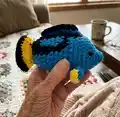
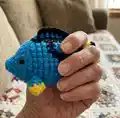
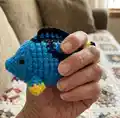
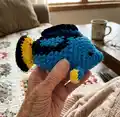
About This Blue Tang Fish Amigurumi Pattern
This pattern teaches you how to crochet a Blue Tang (Dory-style) amigurumi from the body up to the tail with no sewing required on the main seam. It features clear round-by-round instructions, color-change cues, and photos to guide the process. You will make dorsal fins, attach safety eyes and finish with tidy weaving of ends for a professional look.
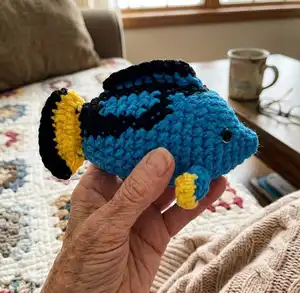
The piece is worked mostly in single crochet with increases and decreases to form the shape, then accented with black and yellow color details. Ideal for gifting or display, this amigurumi has friendly proportions and a fun textured finish.
Why You'll Love This Blue Tang Fish Amigurumi Pattern
I absolutely love this pattern because it combines simple shaping with charming color details to make a recognizable Blue Tang character. I enjoy how the no-sew body-to-tail construction keeps the piece tidy and durable for play or display. The dorsal fin pickup technique is clever and gives a neat, attached look without bulky seams. I also love that the pattern includes clear color-change cues so the striking black markings are easy to follow. It feels rewarding to see the fish come together quickly while still offering a satisfying crochet challenge.
Switch Things Up
I love how easy it is to customize the colors in this pattern — try pastel blues and mint for a soft nursery-friendly fish.
You can change the yarn weight and hook to make a mini keychain version or a much larger plush; a thinner yarn with a smaller hook gives a tiny charm, while bulky yarn yields a chunky buddy.
I often experiment with different eye sizes to change expression; swap the 8mm safety eyes for smaller 6mm or embroider eyes for a baby-safe toy.
Try embroidering a small smile or spots instead of using safety eyes for a different personality on your fish.
For a sturdier toy, consider inserting a small piece of felt between the safety eye and fabric backing or use a washer if your eyes require extra security.
I sometimes add a tiny loop on top with a few chains to turn the fish into an ornament or keyring — handy for gifts or bag charms.
Mixing yarn textures can add interest; a boucle or plush yarn for the body with smooth yarn for fins creates a playful contrast.
If you want posable fins, insert a thin piece of wire wrapped in yarn when sewing the fins in place to allow slight movement.
Make a school of fish by varying colors and sizes — it is a great way to practice the pattern and create a set for decoration or gifting.
I recommend trying different finishing touches like a little felt seaweed base or tiny crocheted bubbles to style a display for your amigurumi fish.
Common Mistakes & How to Fix Them
✗ Skipping the stitch marker when working continuous rounds leads to lost row starts; place a marker at the first stitch of each round and move it up after completing the round.
✗ Not stuffing at the right time can make shaping difficult; stuff progressively as you approach decreases so the body keeps its intended form without lumps.
✗ Pulling color change joins too tight will pucker the fabric; when switching yarns leave a little slack and weave ends neatly to keep the surface even.
✗ Forgetting to count stitches after increases or decreases causes the shape to go wrong; count every round, especially after groups of increases or decreases, to keep the stitch total correct.
✗ Attaching safety eyes too late or too close to the edge can distort the face; attach eyes between the recommended rounds (R5-R6) and space them apart as instructed to keep facial proportions accurate.